
What’s next for Revelstoke’s short-term rental future?
Here’s what city staff heard from residents about future short-term rental regulations.

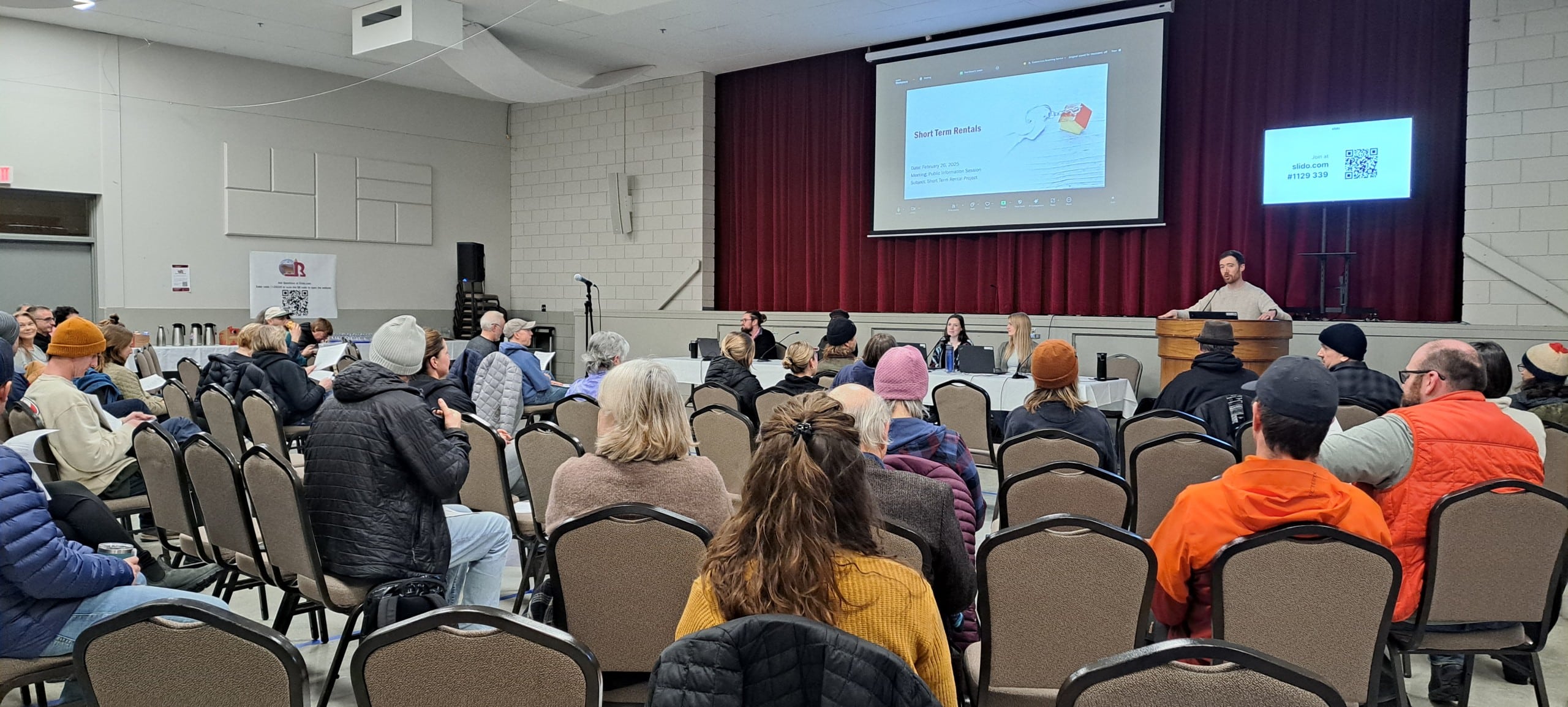
City staff are working through resident feedback following a series of in-person and online group sessions with roughly 60 participants regarding future short-term rental (STR) regulations.
From narrowing in on how STRs could impact specific neighbourhoods to discussing what a “good neighbour” STR would be, staff heard about the regulation nuances residents want the city to consider. In turn, attendees learned of the fine details about current and future Revelstoke STR regulations to this point.
“We wanted neighbours to hear from each other and hear different perspectives,” Paul Simon, director of development services said.
Revelstoke STR operators, long-term renters, home owners and real estate agents were some of the groups represented in the conversations, which spanned five sessions in the last week of January.
“We were hearing an appreciation for the complexity of this issue,” Simon added. “The city has been trying to regulate short term rentals for the better part of 15 years now.”
Following a Feb. 26, 2025 information session, staff and council have been focused on developing a “Revelstoke solution” for STR regulations. Currently, three options are on the table:
- Allowing STRs in specific low-density residential areas deemed appropriate to supporting STRs.
- Allowing STRs in all low-density residential areas within Revelstoke.
- Allowing STRs in all low-density residential areas with a cap on approved business licenses.
Discussing those options during the group sessions, attendees and staff noted positives and negatives for each scenario.
“This question of equity really was front and centre,” Simon said.
While attendees were open to discussing various situations, moods were still split between increasing Revelstoke’s STR stock and stabilizing long-term housing options.
Some agreed work is being done to increase housing and rental stock, but wondered if opening up more STR options could impact that progress.
“We always ask, ‘what can you ultimately live with?” Simon said, noting compromises on all sides might be needed, including accepting what types of STR operators set up in Revelstoke, whether it’s local residents or larger businesses able to purchase multiple units.
Although the city can regulate how land is zoned and what it can legally be used for, there’s no way for staff to entirely regulate who operates STRs in Revelstoke if the land is properly zoned.
While opening allowances up to the entire city could be the easiest way to guarantee everyone in Revelstoke has a chance to participate in the tourism sector, many residents wished to know what would be the best way to still regulate things.
A cap on business licenses seems an obvious answer. But some pointed out the additional staff resources needed to manage licensing, and the chance for some property owners to hoard licenses. Surprisingly to some, parking regulations could be the solution, with current rules requiring one parking spot per bedroom.
“It would actually kind of keep the reins on it,” Simon said, explaining some properties automatically wouldn’t qualify for STR operations because of a lack of parking spaces.
Staff have been working on the three different regulation policies, but there is a fourth option that could be on the table.
“It might be that we stick with the regulations as they are,” Simon said, explaining some attendees expressed that Revelstoke’s current collection of spot zones and bylaws fit the city’s STR needs.
Depending on the option council directs staff to work on and the extent of bylaw rewrites needed, staff could be presenting the option to the public at a future public hearing for more input.
Residents had until Friday, Feb. 13 to fill out an online survey about the STR options and reach out to [email protected] with additional comments. Staff will present survey results to council at an upcoming meeting.
Those looking to keep updated on the project can subscribe on the TalkRevelstoke page for the update newsletter.
What about the provincial principal residency?
One option not in the mix? Revelstoke opting into the provincial principal residency requirement.
Resort municipalities, regional district electoral areas and other specific communities can choose to opt in or opt out of the requirement, which mandates STRs only be operated out of someone’s main property in the span of a year.
The majority of council and many residents have been vocal about Revelstoke staying out of the requirement and instead building a city-specific policy, Simon explained.
While staff aren’t presenting that option, they’re still working on economic impact reports and other data pieces on what a primary residency requirement could mean for Revelstoke. Even though the current council isn’t interested in that option, future council and community members might ask staff what the outcome could be, Simon said.
“Here’s the data that shows what the impact of the community could be if we did that. The potential positives from a housing front and the potential negatives from an economic front as well,” he explained.
The Columbia Shuswap Regional District electoral area B, the regional district surrounding Revelstoke, opted into the principal residency requirement in November 2025. Area B director David Brooks-Hill has vocally encouraged Revelstoke council and staff to follow suit, but at all the group sessions Simon attended, Brooks-Hill’s comments and the principal residency policy weren’t brought up.
“I think people saw that we’re trying to craft something that makes sense for the context of Revelstoke,” Simon said.
What did you think of this story?
Your feedback after we publish a story helps ensure we're always improving our reporting to better serve you
Author
Related Articles

Commercial bear attractant bylaws need update, Bear Aware Society executive director says
Residents ask what the future of commercial wildlife attractant bylaws are following long weekend garbage mix up.

Birch and Lace salon offers apprenticeship-style academy for future hair stylists
The skills program aims to keep residents in town and learning in-house as salon founder focuses on accessible education opportunities.

Revelstoke hosts inaugural Indigenous Artisan, Creator and Fashion Gathering
Indigenous creators and artists came from across Canada to celebrate Indigenous Peoples Day Saturday, June 20 and Sunday, June 21.