
Commercial bear attractant bylaws need update, Bear Aware Society executive director says
Residents ask what the future of commercial wildlife attractant bylaws are following long weekend garbage mix up.
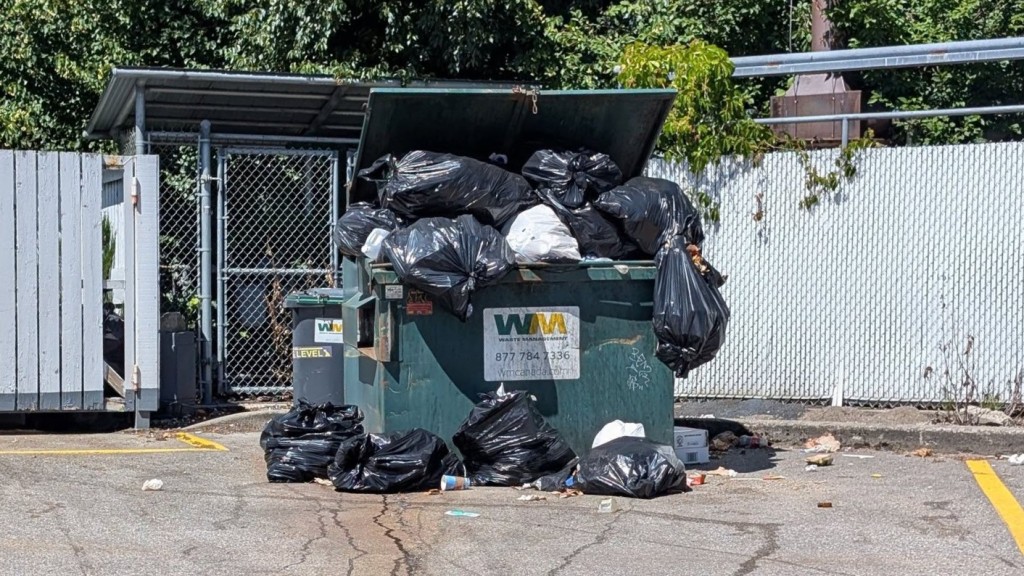
Revelstoke Bear Aware Society is calling for strengthened city policies managing commercial waste management as the summer months bring increased wildlife activity.
As written, the Garbage Collection and Wildlife Attractant bylaw focuses primarily on residential waste, which manager of development services Kenny Gipps explained has historically been a challenge. From unpruned fruiting trees to garbage bins being left out overnight, the current bylaws are a response to key attractants.
However, after a recent incident which saw a commercial waste bin overflowing following the Canada Day long weekend, Kait Nicol, Revelstoke Bear Aware Society executive director is pushing for more accountability.
“My hope is that everyone, including businesses and individuals, can take responsibility for the waste that is produced,” she said. “It is an aspect of living and running a business [in Revelstoke].”
Under the provincial Wildlife Act, conservation officers can issue public and private property owners a dangerous wildlife protection order, but the lack of full-time conservation officers in Revelstoke means some attractants go unnoticed, Nicol said.
“Those resources are very limited, and they’re not able to patrol garbage on top of all of the other things that they’re doing,” she said.
As the city prepares to roll out the new residential compost program, the initial 3,800 bear resistant compost bins and 3,800 new bear resistant garbage bins will help curtail some of the residential attractants, Gipps said. The city is also working with Revelstoke Bear Aware to develop future bylaw updates for residential and commercial waste alongside the new residential compost bylaws.
Revelstoke could also focus on earning a Bear Smart designation, Nicol said, but the program has been on hold since the start of 2026. Nicol recommended the city take inspiration from communities such as Canmore, which regulates that all commercial properties acquire and maintain animal-proof containers and enclosures for waste.
Bylaw officers can be contacted if commercial bear attractants such as restaurant cooking oil or fresh produce are left outside and the city will work with businesses to fix the situation. Similarly to the lack of conservation officers in Revelstoke, Gipps said staffing capacities impact how quickly complaints are dealt with and what future bylaws might roll out.
“As much as we’d love to be able to bring forward all of these different programs or certifications, it does take time and staff resources,” he said.
What did you think of this story?
Your feedback after we publish a story helps ensure we're always improving our reporting to better serve you
Author

Related Articles

Revelstoke Mountain Resort provides updates on infrastructure upgrades and partnerships
Resort president Jason Kelder shared planned changes coming to the resort, which include a new warming hut.

Regional district board backs sale of Revelstoke airport
The City of Revelstoke is seeking to retake ownership of the airport, which was sold in 1980.
‘It impacts my whole life’: Residents share concerns with wastewater treatment plant stench
With wastewater treatment plant smells expected to last through the summer during construction, residents want the health impact acknowledged.