
Regional district starts seasonal mosquito larvae treatment around Revelstoke
Irregular water levels were a key factor to the mosquito boom in Revelstoke last year, mosquito biologist says.
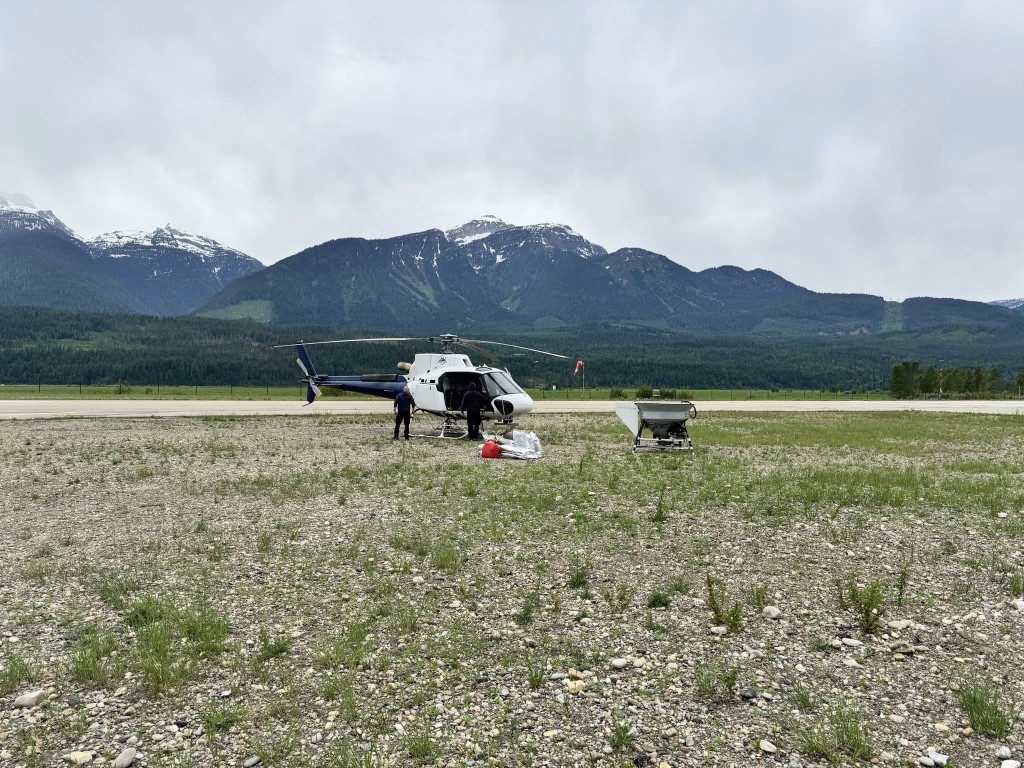
Mosquito larvae treatment has started up in Revelstoke and throughout the Columbia Shuswap Regional District as contractors try to stay on top of potential nesting areas. Helicopters were out Monday, June 1 spreading Bacillus thuringiensis variation israelensis (Bti) protein-laced corn cob over areas of standing water.
Setetkwe Environmental technicians, the company contracted by the regional district for mosquito control, has been monitoring nesting spots in and around Revelstoke since early May and treating areas with the cob mix by hand. Now after a week of rain and rising river levels, Setetkwe Environmental is working with helicopter pilots to hit larger areas.
While last year’s mosquito population prompted events such as Revy.Live Outside to change concert locations due to the amount of bugs, Cheryl Phippen, mosquito biologist and Setetkwe Environmental co-owner explained it wasn’t a lack of available treatment but a series of environmental factors which led to the swarms.
Water levels along the Columbia River and in areas where the protein-laced cob is spread remained low throughout June last year, she explained, giving the team a chance to stay on top of nesting spots. But the lower water levels also meant some standing bodies of water were hidden by vegetation, oftentimes getting missed by the cob spreader.
“It’s not something that’s never happened for us, that very low water, and we really thought it was going to be a lot better than it was,” Phippen said.
Setetkwe Environmental was available for more cob spreading and funds were accessible, she said, addressing concerns last year that the treatment program was short on funding.
“The regional district has been amazing. If I say we need more, they’ve always been able to pony up,” she said.
While Phippen encourages residents to monitor bodies of standing water on their property, she added that oftentimes the mosquito species found in those smaller pools are less aggressive than the species hatching from along the river. Treating and emptying standing water on private properties might help a bit, but won’t solve for population spikes like the one seen last summer.
“Once they emerge as adults, that’s obviously when they start to become a nuisance,” she said. “If they have some place that’s nice and cool and shady, they live way longer. And what is Revelstoke? It’s this gorgeous, lush, moist, forest.”

What did you think of this story?
Your feedback after we publish a story helps ensure we're always improving our reporting to better serve you
Author

Related Articles

Revelstoke Mountain Resort provides updates on infrastructure upgrades and partnerships
Resort president Jason Kelder shared planned changes coming to the resort, which include a new warming hut.

Regional district board backs sale of Revelstoke airport
The City of Revelstoke is seeking to retake ownership of the airport, which was sold in 1980.
‘It impacts my whole life’: Residents share concerns with wastewater treatment plant stench
With wastewater treatment plant smells expected to last through the summer during construction, residents want the health impact acknowledged.