
Avalanche danger around Revelstoke ‘considerable’ with reactive snowpack
Avalanche Canada senior forecaster advises caution as February ends with unstable snowpacks in the region.
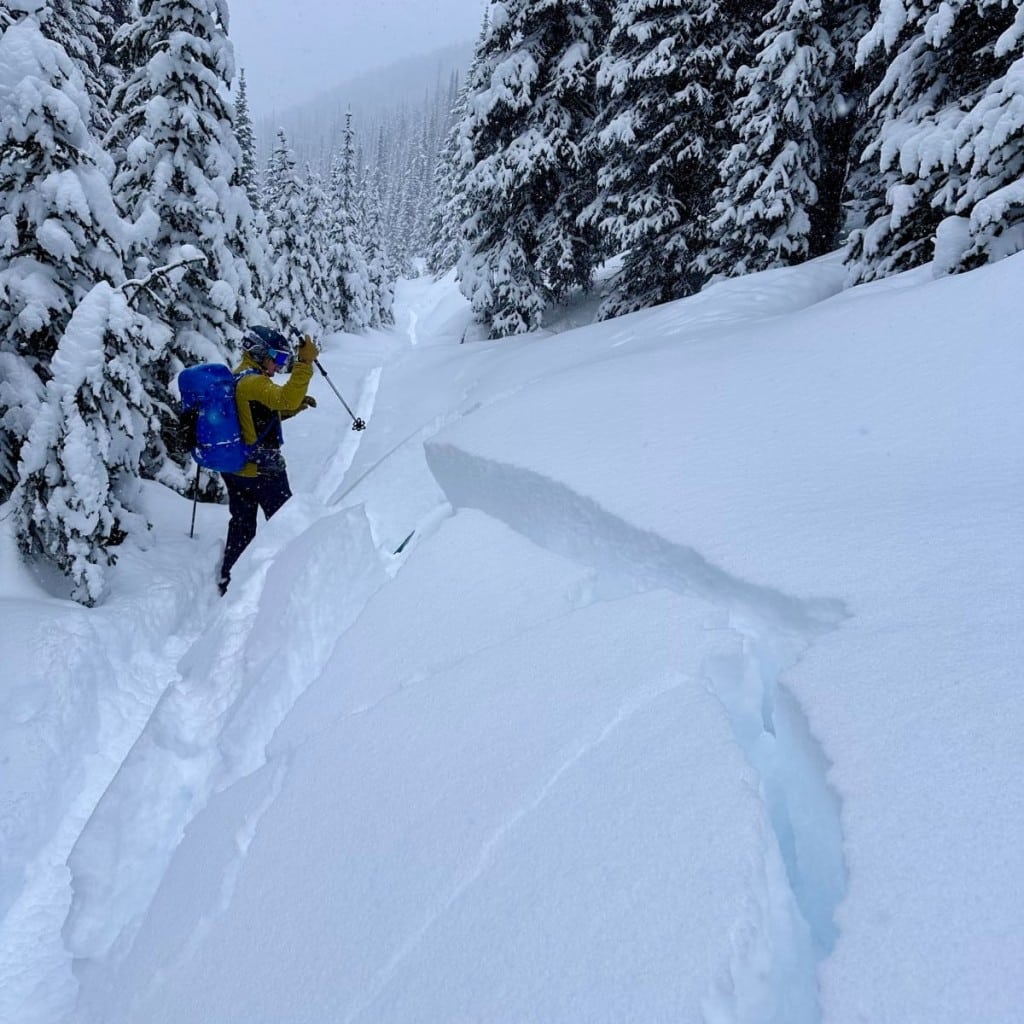
Weak snow layers, fluctuating temperatures and fresh storms are keeping avalanche risk levels considerable in most regions, with Avalanche Canada recording numerous incidents in the later half of February.
On Thursday, Feb. 19, an avalanche in the Selkirk Mountains claimed the life of one skier while out touring with Selkirk Tangiers Helicopter Skiing, operating out of Revelstoke. Selkirk guides were able to recover the guest and evacuate them, where they were then transported to Queen Victoria Hospital before being pronounced deceased.
“It is impossible to put into words the sorrow we feel; that sadness is shared by everyone impacted as well as our staff,” Dave Pehowich, Selkirk Tangiers Heli Skiing general manager said in a statement.
Natural and human-triggered avalanches have been frequent in the region surrounding Revelstoke, Avalanche Canada reported on its terrain map as of Wednesday, Feb. 25.
A combination of factors has kept the overall risk level considerable, with alpine and treeline terrain expected to be at high risk following another storm.
Considerable risk is rated 3 out of 5 on the avalanche danger scale, which means human-triggered avalanches are likely.
“The danger scale is more of a blanket statement over a geographical area, to give you a general idea of what the conditions are,” Mark Bender, Avalanche Canada senior forecaster said.
Past precipitation and melt can build up ice layers before fresh snow falls from a storm or blows in from sheltered terrain. These sections of ice create weak layers, a term describing slabs of snow that can more easily detach from the layers underneath and create an avalanche.
Risk levels change depending on future temperature fluctuations, additional storms and how long snow has had to settle in the terrain.
“How all those things interact together gives us an idea of the current avalanche danger level,” Bender said.
How to monitor risk with Avalanche Canada’s forecasts and trends
Outdoor recreationists and those travelling on highways can monitor Avalanche Canada’s forecasts, current conditions and previous trends to gauge avalanche dangers and personal risks.
By familiarizing themselves with avalanche risk levels and triggering conditions, they can adjust plans accordingly.
Avalanche Canada’s website lists the conditions of weak layers for each region as part of the snowpack summary and supplies a weather forecast for the specific area.
“We can talk about the danger level, but the risk aspect is when you place yourself in the terrain,” Bender said.
Knowing what condition the snow is in is only part of staying safe when in avalanche zones, he said, adding that knowledge of the region and local terrain, avalanche safety training and touring with other experienced recreationists are key tools.
“In the Selkirks and the Monashee [mountains], there’s really a high level of variability,” he said. “The more you arm yourself with knowledge, the less vulnerable you are to whatever dangers are out there.”
There is no way to entirely erase the risk tied to backcountry recreation and travel, Bender added.
“Our guides are experts and undergo extensive training over many years to certify for their roles so they can minimize risks,” Selkirk Tangiers’ Pehowich echoed in his statement. “However, avalanches are one of many risks to people in mountains and, similar to many outdoor activities, it’s impossible to eliminate 100 per cent of the risks in the backcountry.”
That continuous risk assessment is just as important as the appropriate rescue gear and knowledge of the terrain, Bender explained.
“When we have conditions like this, it’s just good to take a step back and approach things more conservatively than you normally would,” he said
That more conservative approach could mean touring easier terrain, gentler slope angles and keeping out of areas you’re not entirely familiar with. While the snowpack and avalanche conditions might always be changing, terrain stays largely unchanged.
Bender also advises sticking to inclines less than 25 degrees in highly reactive zones, since slopes at a 30 to 40 degree angle are prime for avalanche build-up and travel. Being aware of the terrain and angles above you is also key in assessing avalanche risks.
“What is sitting up above you? You might be in a low angle terrain, but you might be exposed to steep avalanche terrain above that would come down towards you.”

What did you think of this story?
Your feedback after we publish a story helps ensure we're always improving our reporting to better serve you
Author
Related Articles

Birch and Lace salon offers apprenticeship-style academy for future hair stylists
The skills program aims to keep residents in town and learning in-house as salon founder focuses on accessible education opportunities.

Revelstoke hosts inaugural Indigenous Artisan, Creator and Fashion Gathering
Indigenous creators and artists came from across Canada to celebrate Indigenous Peoples Day Saturday, June 20 and Sunday, June 21.
‘It impacts my whole life’: Residents share concerns with wastewater treatment plant stench
With wastewater treatment plant smells expected to last through the summer during construction, residents want the health impact acknowledged.