
How food secure is Revelstoke?
Since adopting its food charter 10 years ago, Revelstoke has taken a stride forward for the community’s food security, but challenges remain.
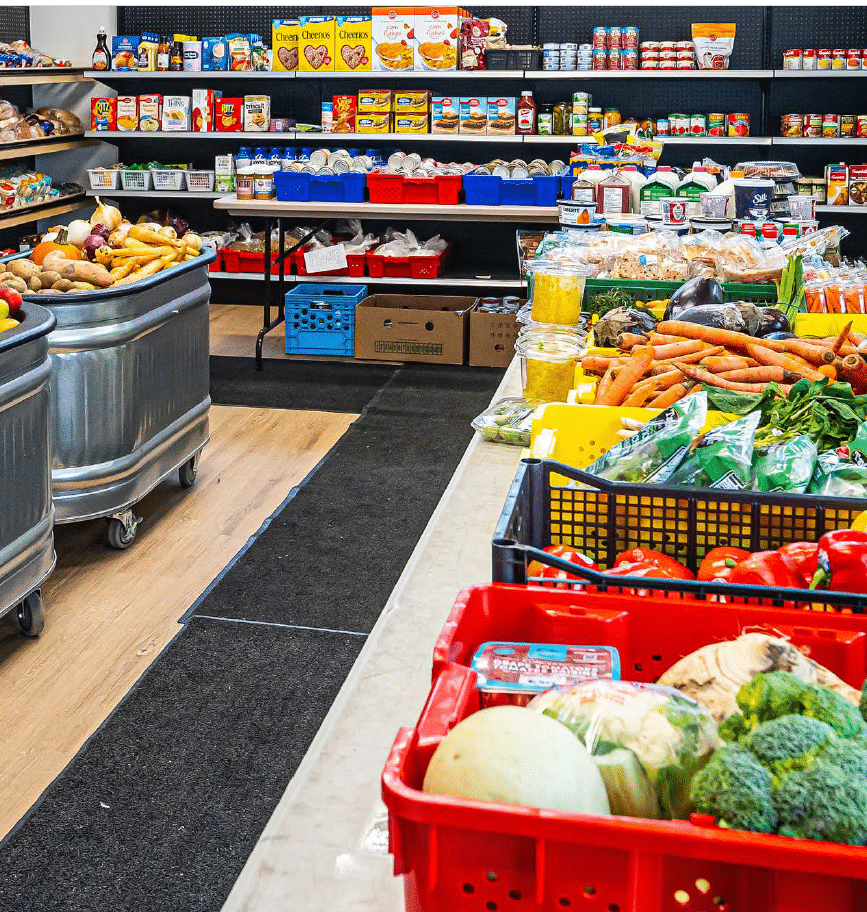
Food security in Revelstoke has been a longstanding topic. In February 2014, the city took the first significant step by adopting a Food Charter. Since then, the local food scene has flourished, witnessing not only a rise in local food producers, processors and suppliers but also an increase in regional small food businesses.
Still, Revelstoke “only produces 1.76 per cent of the food it consumes,” Revelstoke Food Security Strategy (FSS) reported in 2022.
Recognized as a top concern and priority for action by community members and Revelstoke’s Official Community Plan, “food security is [still] tough to measure,” Revelstoke Local Food Initiative (LFI) executive director Amanda Cockburn pointed out.
City council unanimously adopted an updated version of the FSS earlier in 2024. The data-based and insightful document aims to better understand where Revelstoke stands out and where it can do better regarding food security. Out of 193 recommendations, 15 have been highlighted as very high priority.
New food security coordinator Samantha Green is committed to continuing the work her predecessors initiated. Funded by the City of Revelstoke, the food security coordinator position was previously under Community Connections Revelstoke Society (CCRS) leadership.
“My role is to support community stakeholders to implement the recommendations from the FSS,” Green told Revelstoke Mountaineer. “In the next couple of months, I will be focused on recreating the Food Security Advisory Committee made up of community and regional stakeholders to help guide my work, reconvening the farmers network and building our regional network and connections.”
The Food Security Advisory Committee has taken on identifying the opportunities and challenges to make Revelstoke “a secure food system rooted in the community and centered on good, nourishing, fair, sustainable, affordable, accessible food and that honours Indigenous food cultures.”
Although more food is being produced in Revelstoke, with 86 kilograms in 2022 compared to 76 kilograms in 2014, overall measurements and data collected show Revelstoke is far from achieving 100 per cent food self-sufficiency at the uber-local and local foods scales.
The demand for the food bank has also increased since CCRS opened Revelstoke Food Bank in 2000. From 2014 to 2021, the facility, which initially opened once a week, saw a 17 per cent increase in households served with more and more folks in need. According to the FSS, inadequate wages were cited as the primary reason compelling community members to seek assistance from the food bank.
How to increase food security in Revelstoke
In light of Revelstoke not currently being an agricultural hub, the FSS explained three local foodsheds – where food comes from – have been established to help measure Revelstoke’s level of self-sufficiency on an uber-local level, a local level and a regional level.
Mapping exercises have also revealed there are 743 hectares of land with agricultural potential within city limits and 1,446 hectares in an extended study area. This land holds great promise for both individual food self-sufficiency and commercial food production, although there are certain limitations to consider, such as the cost of real estate, which is a significant challenge to overcome.
While Revelstoke may not have enough farmland, it has a substantial number of backyards. The FSS estimates that these backyards could potentially provide approximately four per cent of the total annual amount of vegetables required per person. This estimation was based on measuring the amount of arable land within Revelstoke, including active backyard gardens. It was determined that these gardens could yield 28 kilograms of food from a total of 33 meters squared of garden space, equivalent to 224 large carrots.
Despite a strong local food culture, “Revelstoke continues to operate as an island; without the Trans-Canada Highway operating smoothly, our grocers clear out quickly,” previous food security coordinator Melissa Hemphill highlighted. She now sits on the LFI board of directors.
Food security is a multifaceted issue with environmental, social and economic factors.
“Our food system is fragile, and everyone is taking food for granted,” Cockburn said.
It takes time and the support of policies to improve this system and ensure fresh food is a priority for everyone.
The Revelstoke zoning bylaw rewriting project and the renegotiations of the Columbia River Treaty bring some hope for agricultural opportunities. At the same time, Green and Cockburn explained they are building better relationships with the city, particularly with the Community Economics Development service.
While optimistic, they do not hide their concerns about some big tourist-focused development projects, such as the new golf course complex.
“These tourists will have high expectations and expect every need to be met, so I am concerned about that push and pull when we already have so many strains on how many people are at the food bank,” Cockburn mentioned.
In the Revelstoke Destination Management Plan, long-term resident Cathy English said she believes anyone who comes into a community with the intention of contributing is a local. In the wake of this idea, Thanksgiving Back, an initiative by Tourism Revelstoke, offers visitors the opportunity to volunteer with local organizations in exchange for an accommodation voucher.
LFI was a partner in the 2024 project, offering a chance to connect with passionate local farmers and stakeholders of Revelstoke’s food resiliency. Moving beyond the mountain culture that Revelstoke is known for, she added that producers are “great ambassadors and play a crucial role in ensuring food security in our community.”
If the focus on investing and growing brings notable vibrancy, the idea of stepping back and looking at the bigger picture is supported by LFI.
What did you think of this story?
Your feedback after we publish a story helps ensure we're always improving our reporting to better serve you
Author

Related Articles

Revelstoke Mountain Resort provides updates on infrastructure upgrades and partnerships
Resort president Jason Kelder shared planned changes coming to the resort, which include a new warming hut.

Regional district board backs sale of Revelstoke airport
The City of Revelstoke is seeking to retake ownership of the airport, which was sold in 1980.
‘It impacts my whole life’: Residents share concerns with wastewater treatment plant stench
With wastewater treatment plant smells expected to last through the summer during construction, residents want the health impact acknowledged.