
From gravel lot to growing ground, the Food Commons Project blooms in Revelstoke
Recently granted a 10-year lease from the city, the Indigenous Friendship Society of Revelstoke and Revelstoke Local Food Initiative dig in to improve food security.
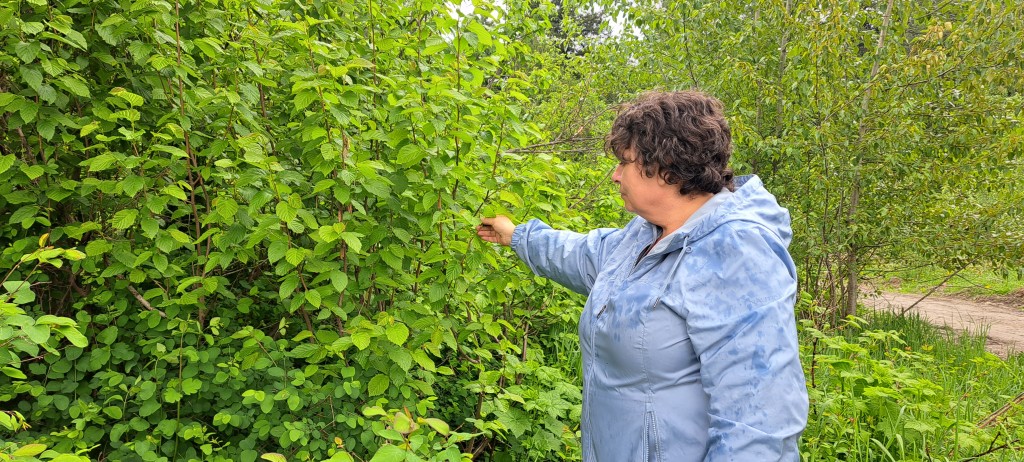
On a 2.5 acre piece of land off Powerhouse Road, hazelnut trees frame the site of the Food Commons Project, where roses, spirea and more are already helping steward Revelstoke’s latest food security project.
Lisa Moore, Michif woman and chair of the Indigenous Friendship Society of Revelstoke (IFSR) walks through the lot, previously used for demolition derbies and road gravel, painting a picture of what the future holds for this space.
Cultivating the Indigenous plants already located on the site, planning for a smokehouse alongside a greenhouse, mapping out a market garden beside accessible community garden beds, all of the plans showcase an intermingling of Indigenous agricultural practices and small-scale sustainable farming. That partnership of techniques has been the vision from the start.
“It was a bit hard to imagine in the beginning, but I had this fuzzy picture in my mind of rosehips growing beside potatoes. That’s where we’re headed with this,” Moore said.
That picture is becoming more clear thanks to a 10-year lease granted to the project at a Tuesday, April 22 general council meeting.
A collaboration between IFSR and the Revelstoke Local Food Initiative, the project will not only give Revelstoke one more point of food security but it will also be a learning space to highlight the agricultural practices Indigenous nations throughout the region use.
“There’s reconciliation in that. Especially reconciling with the land and rebuilding that connection,” Moore said.
The team wasted no time getting infrastructure and gardening resources installed after the lease was officially signed, with volunteers coming out to the site Monday, May 19 to build fencing and raised garden beds. Emcon Service donated vehicles and staff time to help clear out gathering areas and where underground utilities will be laid as the city works to set up the site with power and water.
“That freed up so many resources for us, money that can go towards soil and other supplies,” Moore said.
The project received another surprising update that will help stretch some resources farther than originally planned.
“Structurally, the soil is in way better shape than we were expecting,” Moore said, adding work is being done to increase the health of the soil. Nitrogen-rich chicken manure has been spread throughout sections of the Food Commons, followed with an oat and pea cover crop designed to protect the soil from high temperatures and rain erosion this summer. The cover crop will later on be mulched, providing needed “green manure” to continue building the nutrient profile in the soil.
A return on community investment
At just $10 a year, The 10-year lease on the plot is a community investment with expectations for returns. Neighbouring the Revelstoke Disc Golf course, the goal is for the Food Commons to become a community hub for everyone in Revelstoke.
“It’s the kind of project that will evolve with the community and be in constant flux,” Teal Randle, Food Commons infrastructure coordinator told Revelstoke Mountaineer. “I believe that after the 10-year lease comes up, the benefit it provides to the community will carry it forward into the next phase.”
Moore and Randle are eager to see the space used by community members of all ages and throughout the year. Raised garden boxes will help with accessibility and the planned greenhouse will extend Revelstoke’s growing season, giving folks a chance to stay connected to the space even as winter settles in.
“I think of my mom, as she got older she just wanted to garden, but it’s hard keeping up with the care of some gardens.” Moore shared. “To make this space, we’re all sharing in the weeding, the cultivating, the care. How many more people will get to enjoy gardening because it’s not all on their shoulders?”
With trips for the local schools in the works and students from Revelstoke Secondary School already testing soil samples, Moore sees the Food Commons project connecting generations.
Volunteer opportunities have already started for the community to help out with the Food Commons, and Randle encourages folks to keep an eye out for more projects throughout the summer and into the fall. Youth ages 12 to 30 will get the chance to join upcoming summer youth-led projects and a community survey is available through the LFI website to map out volunteer opportunities and community visions.
Those interested in volunteering are encouraged to join the IFSR and LFI mailing lists for future projects.
“It’s so exciting,” Moore mused. “We’ve been talking about this for so long.”
What did you think of this story?
Your feedback after we publish a story helps ensure we're always improving our reporting to better serve you
Author

Related Articles

Birch and Lace salon offers apprenticeship-style academy for future hair stylists
The skills program aims to keep residents in town and learning in-house as salon founder focuses on accessible education opportunities.

Revelstoke hosts inaugural Indigenous Artisan, Creator and Fashion Gathering
Indigenous creators and artists came from across Canada to celebrate Indigenous Peoples Day Saturday, June 20 and Sunday, June 21.
‘It impacts my whole life’: Residents share concerns with wastewater treatment plant stench
With wastewater treatment plant smells expected to last through the summer during construction, residents want the health impact acknowledged.