
The Mountaineer sits down with the Ministry of Water, Land and Resource Stewardship
Ministry says affordable housing on Downie Street continues to progress through planning phase, with construction estimated to start in 2024.

Established in April 2022, the provincial Ministry of Water, Land and Resource Stewardship has a broad mandate to work “with other natural resource sector ministries to achieve British Columbia’s goals of reconciliation with Indigenous Peoples, economic development and environmental sustainability.”
The Ministry of Water, Land and Resource Stewardship reached out to the Revelstoke Mountaineer following Minister Nathan Cullen’s visit to Revelstoke in July. Due to scheduling conflicts, the Mountaineer sent questions to Cullen and staff via email.
Here’s what the Mountaineer learned about the new ministry, the work it’s doing and some of the potential benefits and impacts for Revelstoke. The interview has been edited for length and clarity.
Revelstoke Mountaineer: Could you provide an explanation of the scope of the work being completed as part of the ministry’s mandate?
Minister Cullen: Natural resources are central to B.C.’s economy, and are the backbone of many local economies across the province. B.C. is the most geographically and biologically diverse province in Canada and its ecosystems provide the essential clean water, air and food that people rely on.
Managing B.C.’s natural resources is one of our government’s greatest responsibilities.
We all want our natural resource sector to support reconciliation with Indigenous Peoples, provide long-lasting economic benefits to communities and ensure that B.C.’s natural resources are sustainably managed now and into the future.
The Ministry of Water, Land and Resource Stewardship was formed to improve collaboration across ministries, and to convene the people needed to tackle the transformative changes that will advance a more integrated approach to natural resource management.
To achieve [our] goals, the Ministry works with First Nations, stakeholders, partners and across government to strengthen relationships and make real progress towards shared decision making on the land base, use of water and stewardship of the coast,advance a new approach to land use planning and sustainable natural resource management,find new solutions to B.C,’s permitting and authorizations system to speed up approvals and cut down on the backlog of permit applications and bring decision-making to the landscape level to ensure we’re considering interconnected habitats and the cumulative effects of development.
Housing
RM: Housing is listed as a priority for the province with the Ministry of Water, Land and Resource Stewardship leading an initiative to streamline the permitting process for provincial housing applications and leading a Housing Action Taskforce. Could you explain what the purpose of the task force is, and what work has been done so far to streamline the permitting process? What is the definition of provincial housing?
MC: We are taking steps to tackle the housing crisis by creating a new permitting strategy for housing across the natural resource ministries.
We’ve allocated 42 full-time employees to the B.C. Housing Action Taskforce that will work across ministries to speed up approvals to build more homes for people faster.
The Taskforce is prioritizing Indigenous-led projects, projects that include multiple units and BC Housing projects. Budget 2023 builds on this strategy, providing $77 million to speed up natural resource permitting. This will support an additional 161 staff across several ministries to reduce permit backlogs, allow projects to move forward and unlock economic potential.
A single housing application service will be released over the coming months…[to] connect people to project experts…these experts will guide homebuilders through the permitting process and provide a personal, one-stop-shop that will speed up the process.
RM: When it comes to housing, regardless of the type, there is often the need for municipal approvals, as well as provincial. How is the ministry working with local governments and provincial bodies like BC Housing to ensure these projects are not bottlenecked by bureaucratic processes?
MC: Everyone should be able to build a good life in B.C. — and it starts with finding a good home, however, B.C. is in a housing crisis, and supply has not kept up with demand.
We know the best way forward is to work across all orders of government, ministries and sectors to address this crisis and act urgently in developing an approach that delivers housing that meets people’s needs, faster.
The Housing Action Taskforce has identified relevant applications that have been delayed or are currently sitting in queue. These applications will inform the next step towards prioritization and where accelerated efforts can be best applied.
At this time, transparency and availability of information are key initial targets. While the single housing application service is being established over the coming months, permit and authorization decisions will be expedited through a cross-ministry team focused solely on processing housing permits.
We’re continuing our work on better tracking housing projects to provide accurate information with respect to turnaround times. With that data we will be able to target improvements in areas where challenges are identified and report out on the progress made.
RM: Speaking of housing, BC Housing has yet to begin construction on a proposed 174-unit affordable housing development for Revelstoke. Will the Ministry be supporting this project in any way? If so, how and is there a timeline available?
MC: On the affordable housing project at 420 Downie St. in Revelstoke, the project continues to progress through the planning phase, with a call for partners to build and operate the housing expected later this year. BC Housing expects to apply for development and building permits in winter 2023, with construction estimated to begin in 2024.
In many B.C. communities, the local development approvals process has also increased in complexity and length without necessarily delivering better outcomes. That’s why the province is also actively working with municipalities to…streamline the local development approval processes.
The Development Approvals Process Review (DAPR) will help local governments reduce barriers to affordable housing and accelerate the construction of new homes by supporting a more effective and efficient approvals process…[which]is critical to building the homes people need. To help local governments do this work, we’ve undertaken early actions including: [revising] public hearing requirements for zoning matters that are consistent with official community plans, [supporting] local governments with $15 million in funding to streamline and implement best practices for their development processes; and gave elected officials the ability to delegate decisions on minor development variance permits to staff.
Further work on increasing the efficiency of development approvals continues, in partnership with local governments and with input from key stakeholders. Our goal is to increase overall housing supply by supporting local government partners to identify local housing needs and to move forward on approving housing as efficiently as possible.
The province is working to find solutions to help local governments, developers and housing advocates deliver more affordable housing for everyone in B.C.
We are also digitizing the building code and building permitting processes to help speed up approvals and construction…. It will also ensure that permitting improvements are integrated into a shared digital platform that connects provincial and local government approvals processes, allowing data and information to flow efficiently throughout the development process.
RM: You visited Revelstoke over the summer and had a chance to sit down with Mayor Gary Sulz. What are some of the challenges you see Revelstoke facing in terms of the work the Ministry is doing? What are some successes or positive partnerships you see being created to help meet the goals of the Ministry in partnership with other resource-based ministries in Revelstoke?
MC: Revelstoke is diversifying its economy by adding a great mixture of winter and summer recreation opportunities to its traditional transportation and resource focus. This diversification creates opportunities and challenges. For example, with an increasing population there is a need to ensure that water quality and quantity are provided for environmental, economic and residential needs.
Working with other resource-based ministries allows us to maximize opportunities and minimize challenges on B.C.’s landscape. We look forward to working with partners in local communities and other ministries to provide training and employment opportunities.
Partnerships
RM: One of the objectives listed in the 2023/24 -2025/26 Ministry Service Plan is to “strengthen partnerships and advance engagement with First Nations in the stewardship of B.C.’s natural resource values.” In Revelstoke, we lack the presence of a physical band office or Friendship Centre (although we do have an Indigenous Friendship Society). Does this lack of presence present any challenges when collaborating with other resource-based ministries? If yes, what is being done to work through these challenges?
MC: The Ministry of Water, Land and Resource Stewardship works closely with its partner ministries such as Ministry of Forests and Ministry of Indigenous Relations and Reconciliation. For example, ministries are working as a team with First Nations to collaborate on a stewardship vision for the Incomappleux Valley. We plan to invite local residents and stakeholders to add their voices to this vision in the near future.
The absence of a physical band office or Friendship Centre does not prevent us from working together to steward B.C.’s natural resources.
RM: Revelstoke is part of the traditional territory for four separate nations: the Sinixt, the Secwepemc, the Ktunaxa and the Syilx. How is the ministry ensuring that the voices of all four groups are included? What more needs to be done to ensure inclusivity of all Indigenous voices within the Revelstoke area?
MC: The Ministry engages with all Nations whose traditional territories are in the Revelstoke area and listens to – and incorporates — the input provided by their leaders, knowledge keepers and members.
The province works with each Nation on a wide variety of topics that are both short and long-term in nature. There are some scenarios, such as the Columbia River Treaty (at the border with the U.S.) when multiple Nations work closely together, and other times where a bi-lateral discussion between the province and an individual First Nation is more appropriate.
The province continues to seek ways to coordinate planning with these four Nations in forums that are both culturally respectful and effective for all parties.
What did you think of this story?
Your feedback after we publish a story helps ensure we're always improving our reporting to better serve you
Related Articles

Birch and Lace salon offers apprenticeship-style academy for future hair stylists
The skills program aims to keep residents in town and learning in-house as salon founder focuses on accessible education opportunities.
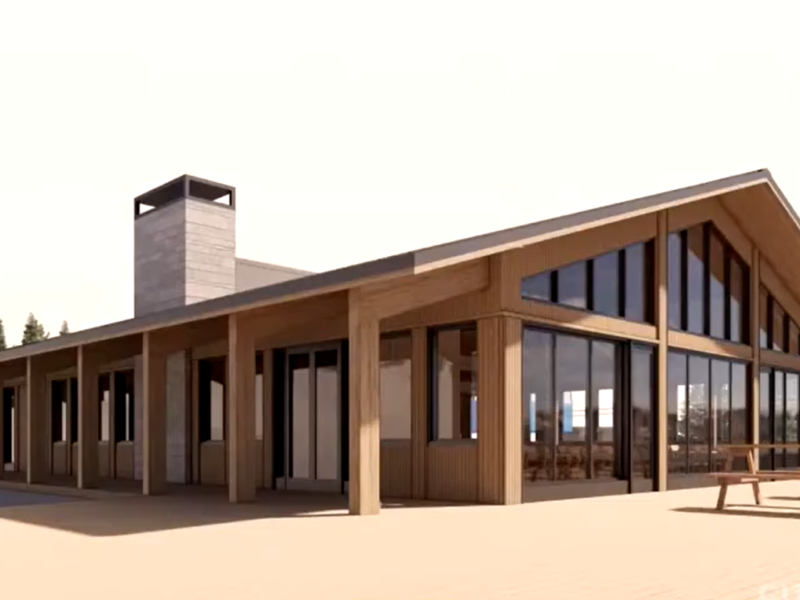
Revelstoke Mountain Resort provides updates on infrastructure upgrades and partnerships
Resort president Jason Kelder shared planned changes coming to the resort, which include a new warming hut.
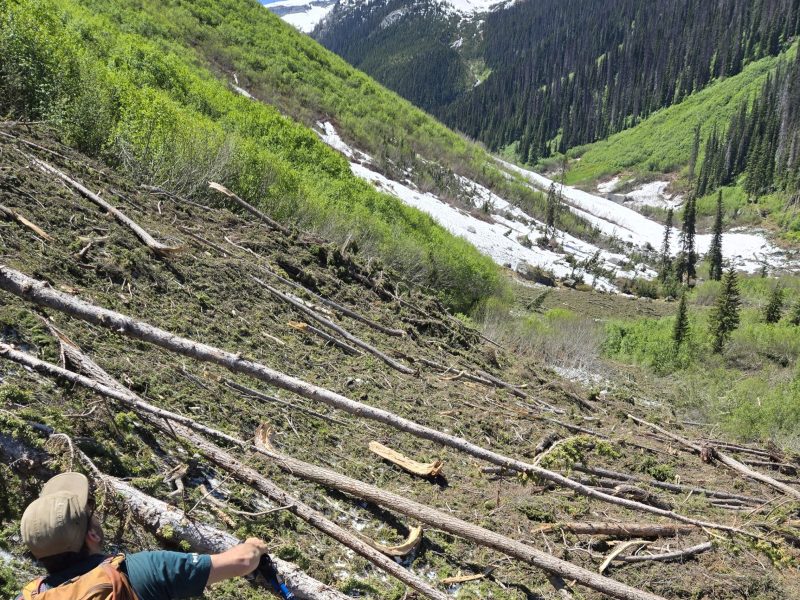
Glacier National Park trails remain closed following heavy avalanche season
Balu Pass trail, along with two others are closed indefinitely as Parks Canada staff evaluate how much of the popular trails will need to be rebuilt.