
Surprise report: Revelstoke sewage treatment plant upgrade won’t cure current smell problem
A brand-new engineer’s report says the filter system being installed at the Revelstoke Sewage Treatment Plant won’t address the causes of peak odour issues ongoing right now, because the current smell is coming from the lagoons. The filters address smells that escape from the pipes as liquid and gas waste enters the headworks building, but it doesn’t deal with lagoon issues.
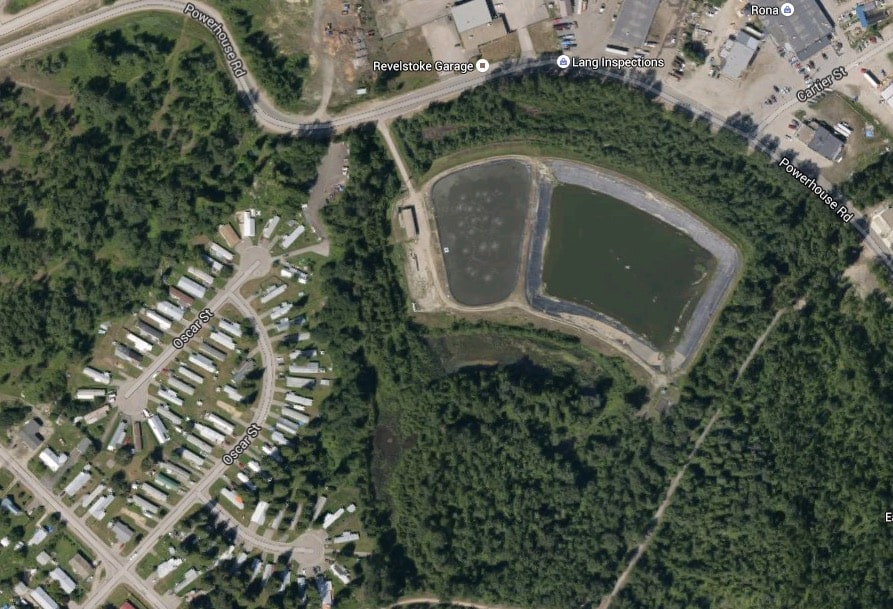
According to a new report released on May 22, a new $360,000 filter system being installed now at the Revelstoke Sewage Treatment Plant won’t solve the problem of harsh odours coming from the facility, because the primary issue causing the odours this time is the lagoons, not the headworks.
With an unusually warm spring and temperatures in the past couple of days hitting the 30 degree mark, this early season heat has spelled bad news for the city and its sewerage system, with numerous complaints received from unhappy residents.
The city is currently installing a filter system that will treat the smell coming out of the pipes. This has been a costly update of about $360,000 and is now scheduled to be completed by June 1. During installation, the smell is worse than normal as the building is vented to make it safe for workers, according to a May 22 report by AECOM, the engineering consulting company working on the project with city staff.
The new filter is designed to scrub the smells coming from the headworks building by treating the gas that comes out of the sewer pipes along with liquid waste. It scrubs it for gases, including hydrogen sulfide (H2S), the primary culprit responsible for the rotten egg smell permeating the Southside neighbourhood.
But this latest smelly problem lies with the lagoon. The early warm weather has changed conditions within the aerated lagoon, an issue with no quick fix as the large volume of sewerage needs about two weeks to be treated through the ponds.
According to the May 22 AECOM report, sludge that builds up in the lagoon over the winter was rapidly warmed due to unusually warm weather this spring, causing increased anaerobic reactions that create hydrogen sulfide gas in the lagoon.
City staff have adapted with remediation efforts, including increasing the aeration in the first lagoon, pumping effluent from the second lagoon back to the first lagoon and dosing the first lagoon with sodium nitrate to add oxygen to the mix.
These protocols have improved the health of the pond, but as temperatures have continued to increase so has the odour associated with excessive anaerobic reactions.
After discussions with an engineering consultant, the city is considering installing mixers in addition to the aeration in the first lagoon. Staff are currently gathering information from suppliers regarding suitability and operating costs and that information will then be brought to council.
However, the report says adding extra chemical agents, additional aerators, and potentially new mixers are only short-term fixes, and are not good long-term options due to cost.
In his report, AECOM engineer Stephen Horsman said the city should explore long-term fixes for the ongoing odours coming from the lagoons.
What did you think of this story?
Your feedback after we publish a story helps ensure we're always improving our reporting to better serve you
Related Articles
Wastewater treatment plant upgrades set to future-proof facility for 2 decades
Plans to include Big Eddy residents and businesses into the updated facility still in the early stages, city director of engineering says.

Revelstoke granted $200,000 to rework development guidelines
Clarifying building requirements is key in speeding up development approvals, director of development services says.

More childcare spaces needed as families face estimated $35,000 income impact annually
Revelstoke Child Care Society still has over 160 families waitlisted as plans to expand into Okanagan College building take shape.