
Revelstoke’s Agathe Bernard plans Atlantic crossing to document plastics pollution
Revelstoke-based geologist Agathe Bernard is gearing up for a fall scientific expedition from Africa to Brazil aboard the sailboat Sea Dragon that will explore plastic waste in the Atlantic. Bernard will participate in the experiments and document them as a photographer and filmmaker.
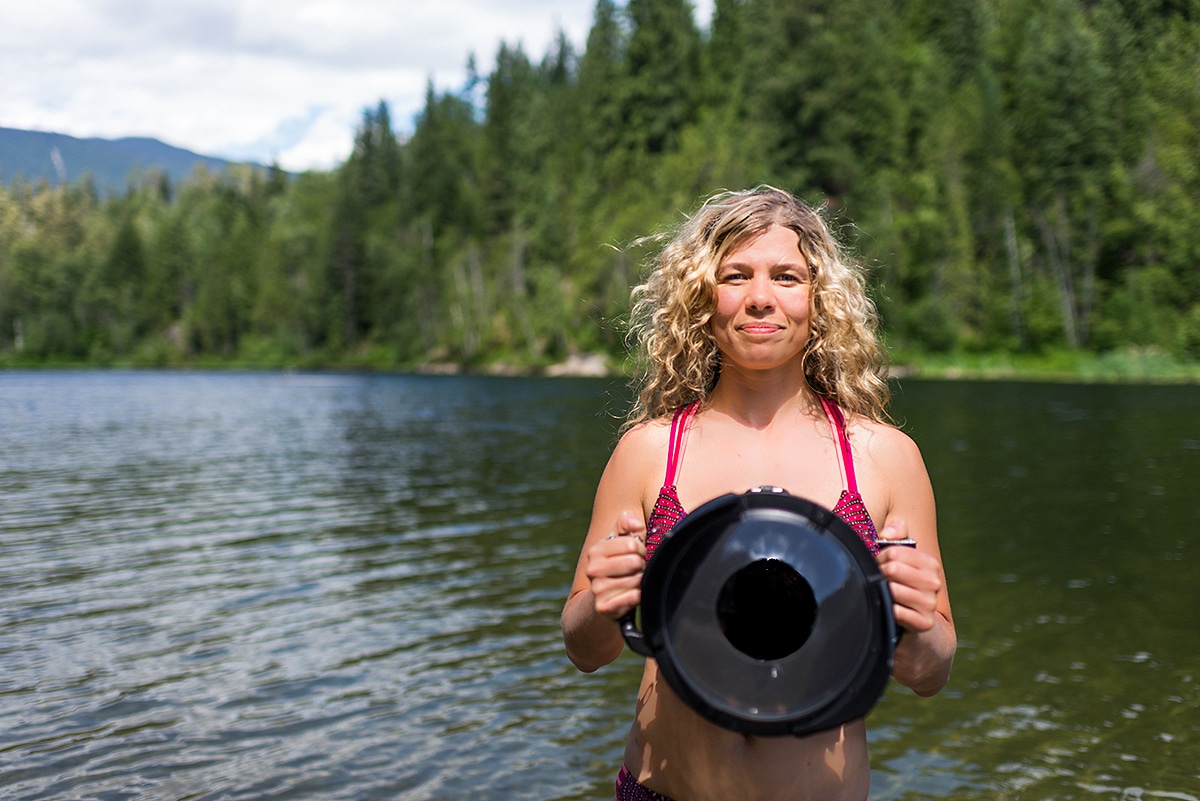
I meet Revelstoke-based geologist Agathe Bernard at Williamson’s Lake where we both plan a swim in the hot May heat. Agathe’s doing end-to-end laps in preparation for a planned November scientific voyage across the Atlantic from the Ivory Coast to Brazil. While in the ocean, she’ll be spending time underwater documenting the journey in video and stills.
She’ll be part of an exxpedition.com 14-person, all-female crew aboard the sailboat Sea Dragon taking samples and doing research on the effects of plastic pollution in the sea, charting pollution levels across their route.
Agathe shows me how her giant underwater camera enclosure works. She’ll use it to create a series of videos explaining the mission, which she’ll use for web outreach and youth education sessions when she returns.
“I am hoping to use the visual work I create to promote awareness,” she said.
The images of huge plastic garbage gyres in the Pacific Ocean have made their way into public awareness in the past few years. The non-biodegradables are trapped in massive swirling currents, circling endlessly until the sun breaks them down into smaller and smaller pieces.
But, they never truly go away — they just go somewhere, and can wind up back on your plate.
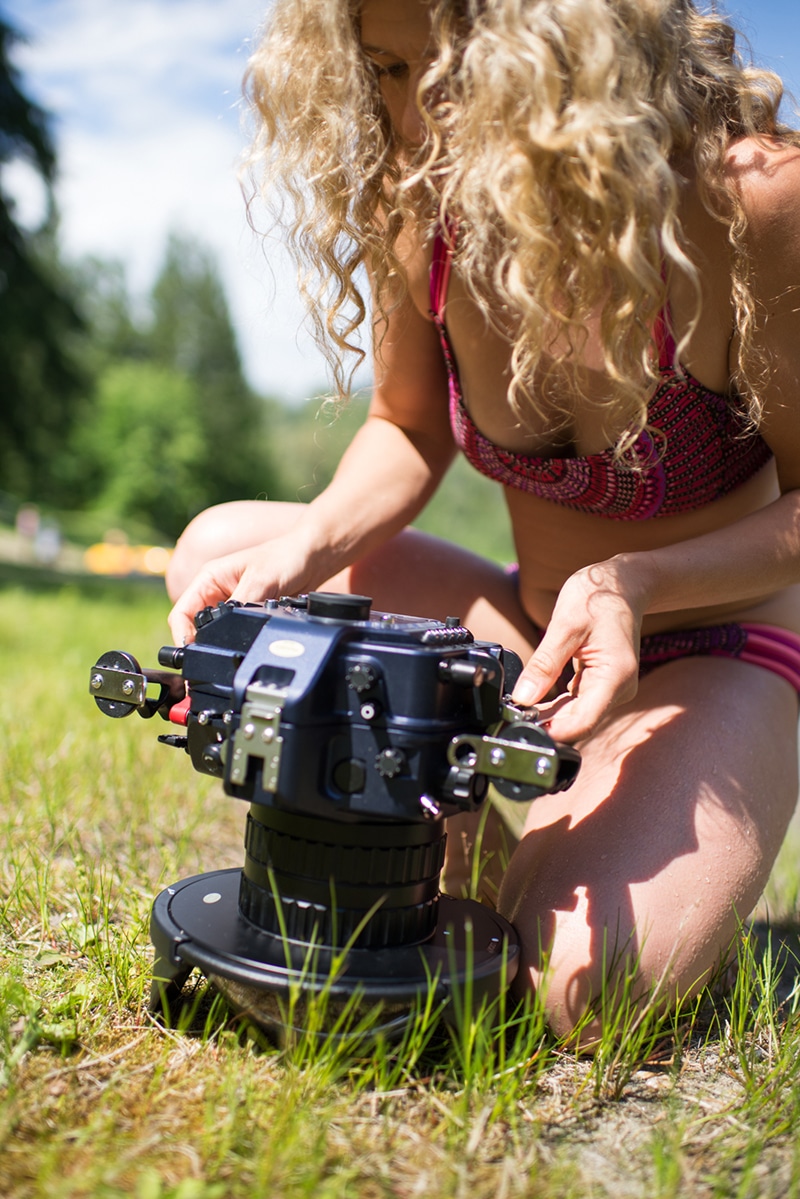
Agathe prepares the camera for underwater use. Photo: Aaron Orlando/Revelstoke Mountaineer
Images of snarled wildlife or avian and fish bellies clogged and suffocated on bits of plastic garbage are memorable. More recently, the focus has been directed on the effects of plastics on the microscopic level. The plastics break down, eventually ending up as microscopic bits, some of which are ingested by fish and marine wildlife. (Then there’s the needless plastic microbeads that come in commercial products like soap, that are washed right into the drain, some ending up in the ocean.)
It’s the effect of those microscopic bits that’s increasingly considered a health concern as the pollution comes full cycle back to us. The plastics can contain chemicals like phthalates, bisphenol-A and flame retardants, for example. Their chemical structure can act as an absorbant, attracting petrochemical structures that float along in the ocean.
This generates concerns about the materials’ impact on human health, especially their links to cancer, reproductive issues or human health regulatory systems, such as the endocrine system.
(Story continues below)
To hear the Revelstoke Mountaineer interview with Agathe Bernard, click the play button on our SoundCloud app below.
These bits can be ingested by organisms from the microscopic level up, bioaccumulating toxins that make their way into the food chain.
“By toxin entering the food chain in the ocean it ends up in our bodies in the end, so it’s everyone’s concern to have clean oceans,” Bernard explains.
Their research will sample the ocean, and their ‘mesearch’ will monitor levels of chemicals like pthalates, heavy metals, PCBs and other pollutants in their own bloodstream, charting the effects of diet and environment on their own personal exposure.
Bernard explains for her personally, research into the issue impacts practical health decisions, like diet.
“I’m not perfect. I’m like everyone,” Bernard explains. She makes practical decisions in her daily life.
“I really trying to do my best now to look at which fish I’m eating, first to see if it’s a sustainable fish,” she said. She uses the National Geographic Seafood Decision Guide (which is accessible on your smartphone when making decisions at the store or restaurant.)
“You can see what you’re going to eat and what chemicals they have in it. That’s a really good tool,” She said.
Like many, she’s stopped using microbeads — an easy first step.
“I believe that if you can eat it, you can use it on your face,” she said, sharing her recipe of coffee grinds mixed with coconut, sea salt and essential oil.
“You wouldn’t believe how soft my skin is,” she said with a laugh.
Currently, Bernard is raising funds to help support her journey. To pay for fuel, tickets, passage, insurance and more, she’s seeking $25,000 through a Kickstarter campaign that launched June 1.
To learn more and contribute, visit www.kickstarter.com/projects/exxpedition/exxpedition-2015
Agathe created the video below to introduce her journey:
What did you think of this story?
Your feedback after we publish a story helps ensure we're always improving our reporting to better serve you
Related Articles
Wastewater treatment plant upgrades set to future-proof facility for 2 decades
Plans to include Big Eddy residents and businesses into the updated facility still in the early stages, city director of engineering says.
Revelstoke granted $200,000 to rework development guidelines
Clarifying building requirements is key in speeding up development approvals, director of development services says.
More childcare spaces needed as families face estimated $35,000 income impact annually
Revelstoke Child Care Society still has over 160 families waitlisted as plans to expand into Okanagan College building take shape.