
Revelstoke snowmobile trade still setting high marks each year
But will Alberta’s economic slump impact put a regulator on the sledding trade? And how can the industry deal with increased congestion on popular riding areas?

There they are in the parking lot at Save-On-Foods. Gleaming snowmobiles side-by-side on the back of jacked up pickup trucks, waiting in quiet anticipation. Their riders, decked out in sledding gear, are inside the supermarket grabbing last minute snacks or lining up at nearby La Baguette for their early morning coffee.
The sledders chat to each other about where they’re headed. One is going for Sale Mountain, the other to Griffin. It’s a weekend in November and with snow overnight, they’re banking on a good day.
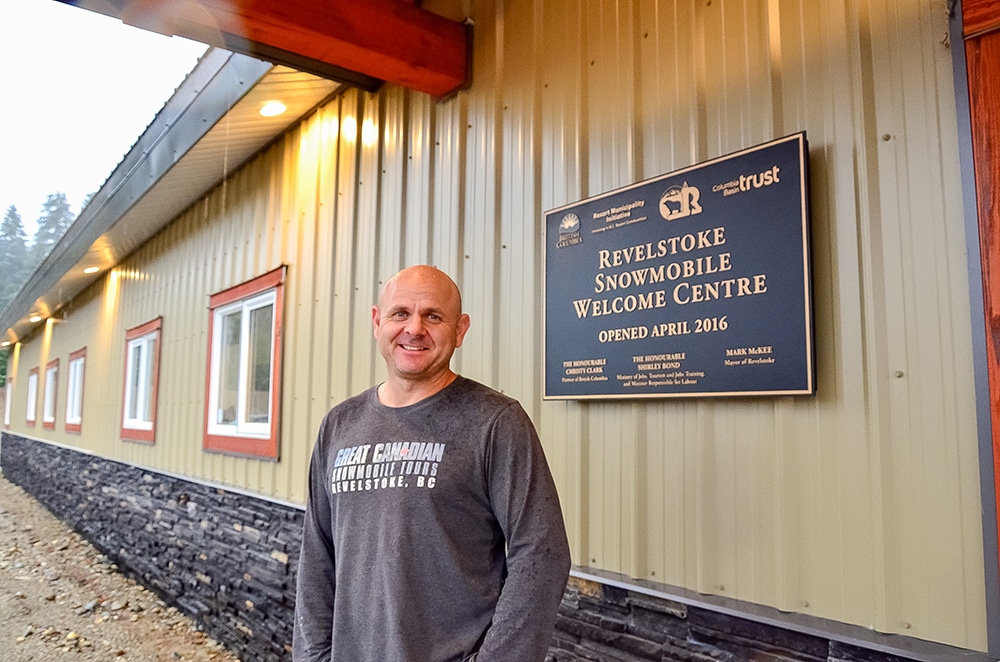
Revelstoke Snowmobile Club president Dan Kellie. Photo: Emily Kemp/Revelstoke Mountaineer
This is a common sight during winter in Revelstoke and when early season snow falls in the mountains, those with the means to do so get after it. Revelstoke is on the international bucket list — known for our big mountain sledding and access to the backcountry — both new challenges for visitors from the flat Prairie provinces.
City of Revelstoke economic development director Alan Mason conservatively estimates over $10 million is pumped into Revelstoke’s economy every winter from sledding. Since we became a resort municipality in 2009, every year has been a record year for tourism and even in bad years like 2014/15, Revelstoke’s conditions are is still the best.
“I think in B.C., we have the largest impact from snowmobile visitation,” Mason says. “Revelstoke is the place for snowmobiling.”
New moves for Revelstoke Snowmobile Club
The first flakes of snow had just started to fall in downtown Revelstoke. It was two weeks before Revelstoke Mountain Resort opened, but for the local sledding community, winter had already begun.

Sleds getting into the action on Frisby Ridge. Photo: Daniel Stewart/Tourism Revelstoke
I was headed to the new Revelstoke Snowmobile Welcome Centre on Westside Road to meet with Dan Kellie, the president of the Revelstoke Snowmobile Club.
The Revelstoke Snowmobile Club is the second oldest club in B.C, started in 1968, two years after the club in Vernon. We have the largest club in the province with over 700 members last year and growing (about 150 members are local and a large percentage are from Alberta).
The brand new $400,000 purpose-built building will be a warm place for sledders to meet and to grab some information. Funds for construction were pooled from the club, the city, the province and the Columbia Basin Trust — the joint effort an indication of the impact snowmobiling has on the local economy. The grand opening was in December.
The centre sits at the base of Boulder Mountain, the entry-point to acres and acres of powdery bliss. Nearby is their other tenure at Frisby Ridge. The club’s three groomers clear the access trails, which riders pay $20 to use.
Last year the club had 20,000 days of riders between Boulder and Frisby Ridge. They’re getting overused, with the numbers up by 6,000 last year. The snow gets tracked out earlier and earlier each year, causing some to complain. To deal with the growing number of visitors, the club has applied to expand their tenure to Sale Mountain, Mount Hall, Turtle Mountain and Griffin.
“We’re coping, but we want offer our market a wider selection,” Kellie says. “Give them easier access to the mountains.”
Kellie arrives in a truck emblazoned with red and black advertising for Great Canadian Tours (GCT), his adventure company based at Glacier House Resort.
A lot has changed since 2013 when Kellie didn’t know how to sled, yet took on the club president role three months after arriving in Canada. He came to Revelstoke for business. Before Revelstoke, he owned a successful pub in Sydney, Australia. He found Glacier House Lodge via a Google search for businesses for sale in B.C. He’s since expanded the club’s fleet of sleds to 26.
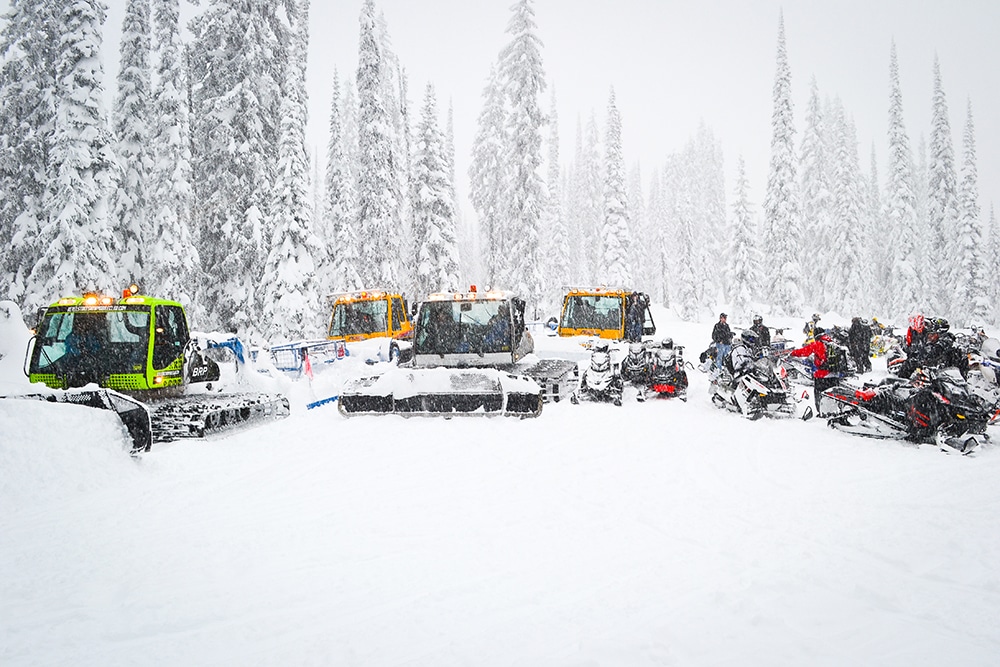
Groomers at work. Photo: Revelstoke Snowmobile Club/Tourism Revelstoke
In the last decade, the Revelstoke club has grown, evolving from a social club into a business — it employed 19 staff last winter. But the question everyone keeps asking is what effect has Alberta’s slumping economy had on our tourism? Not much. Yet.
Kathy Burke, the club’s event organizer, says some corporate advertisers have been more hesitant this year and some sledders have been more conscious of their membership cost.
“I’ve been told what you see is 18 months after the big change in the economy, so this will be our year,” Burke says.
But for some sledders out of work, it might mean they will stay longer. Glacier House Resort is already booked out for February and March. Revelstoke’s season is long, with sledders able to get into it as late as June. But it’s not a cheap sport. The estimated cost per day for the sled tourist to Revelstoke is $500, and that’s on top of the cost to get into the sport.
“It’s not a poor man’s sport, and it’s not a lazy man’s sport,” Kellie says.
Some things you maybe didn’t know about snowmobiling in Revelstoke
- How hard it is — sledding relies on upper body strength with the rider sitting in a forward bent posture, and heavy lifting of the 500-pound machines, pulling, and pushing when you need to get out of a jam.
- There are about 12 riding areas in the Revelstoke area. See if you can name them. (Boulder, Frisby, Turtle, Griffin, Caribou Basin, Sale, Keystone, Area 51, McCrae, Hall, Alkokolex, Wap Lake)
- Snowmobiling can be a dangerous extreme sport and those playing in the hazardous backcountry need skills, knowledge and proper equipment.
- Many skiers and snowboarders use snowmobiles to access backcountry ski areas.
- …And sometimes they like it more and ditch the skis.
- There’s a diverse range of people that do it — the enthusiast who sinks all their money into it, the family, and the sponsored professionals. There are a variety of styles too. Hill climbers (high marking), freestylers (tricks and ramps), Freeriders (jump off natural features), recreationists (ride for the scenery) and those who want ski and snowboard access.
- Dirt biking helps you snowmobile better, and is a preferred summer crossover sport for local sledders.
- It is one of the fastest growing winter sports in B.C.
The sled experience
Great Canadian Tours lead guide Steve Scott paints a picture of the sled experience.
“It’s amazing because you have this empty canvas of snow, that is totally up to your own creativity to do what you want with it,” he says. “It’s soft and forgiving and has beautiful landscapes.”
Scott’s other passion is ski touring but the difference he says with in snowmobiling is the variety of terrain, with snowmobilers doing up to 250 kilometres on a big day.
“You’re not limited to gravity,” Scott says. “You can play on flat terrain, uphill and downhill and mix it all together, without the interruption of a chairlift.”
Sleds have come a long way in toning down the impacts of vibration, noise and emissions. “The nice thing is in Revelstoke we have such a deep snow pack that there is zero impact on vegetation because it is blanketed — even with denning bears the sound is completely muffled,” Scott says.
“There is caribou, ungulate, interactions. The snowmobilers respect this and stop instantly and wait of them to leave. It’s mandated, and a good excuse to break.”
This story originally appeared in the December issue of Revelstoke Mountaineer Magazine.
What did you think of this story?
Your feedback after we publish a story helps ensure we're always improving our reporting to better serve you
Related Articles

Birch and Lace salon offers apprenticeship-style academy for future hair stylists
The skills program aims to keep residents in town and learning in-house as salon founder focuses on accessible education opportunities.
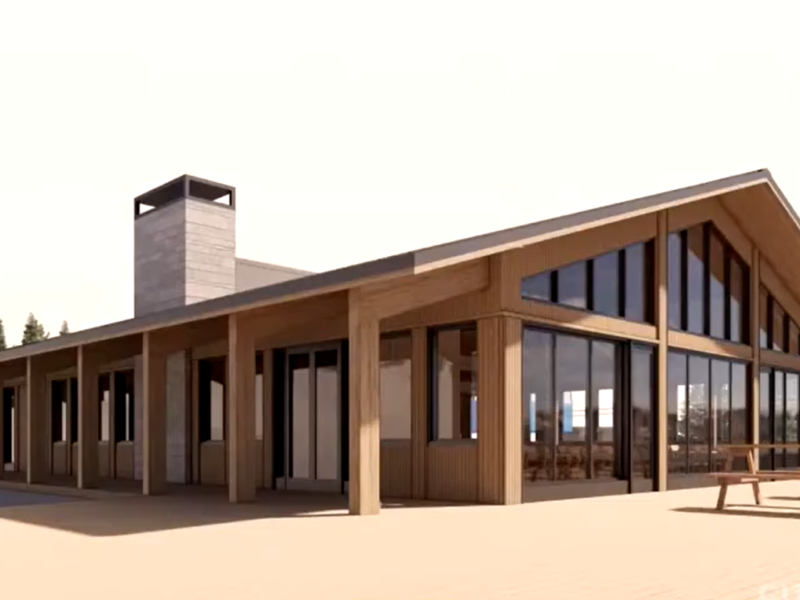
Revelstoke Mountain Resort provides updates on infrastructure upgrades and partnerships
Resort president Jason Kelder shared planned changes coming to the resort, which include a new warming hut.
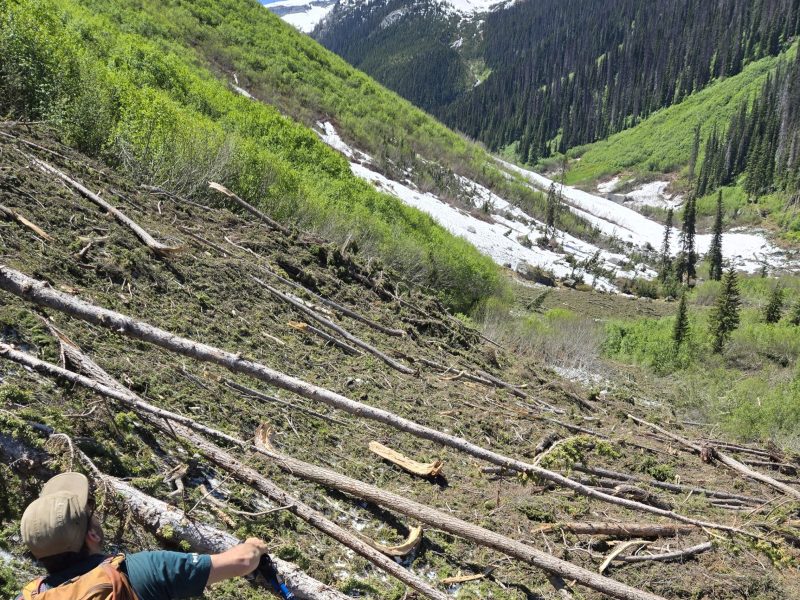
Glacier National Park trails remain closed following heavy avalanche season
Balu Pass trail, along with two others are closed indefinitely as Parks Canada staff evaluate how much of the popular trails will need to be rebuilt.