Revelstoke Osteopathy: Treating the mother and newborn through birth and early months
To help babies in their early development months (and in the same time help parents sleep), the osteopathic practitioner works with the mother and baby before and after birth, providing therapies that facilitate life-long health, such as correcting posture and muscle-skeletal issues.
This article is presented by William Jarrige and Anouk Sanchez, manual practitioners, and thesis candidates for the osteopathy practitioner program at the Canadian School of Osteopathy–Manual Practice–Vancouver. We are the owners of Revelstoke Osteopathy, the new clinic located at 111 Second Street East in Revelstoke. This is the third-part in a 10-part series exploring osteopathy.
In order for osteopathy to be the most effective at helping a young mother and her baby, it’s best to start treatment before birth. In our last article, we spoke about therapy for the mother before birth, learning that it is important that a mother’s diaphragm is free of tension, so that pressure is applied equally to the baby. This means ensuring that key internal stabilizing muscles called the piriformis and psoas major muscle are not tight, so they can properly guide the baby’s head in the pelvis without excessively pressuring it against the hip. Osteopathic practitioners also seek to ensure the pelvic floor has proper fluid levels, so that hormones can serve properly, allowing for maximum relaxation. These are just some of the elements on which the osteopath practitioner will work to help the mother have the best birth possible.
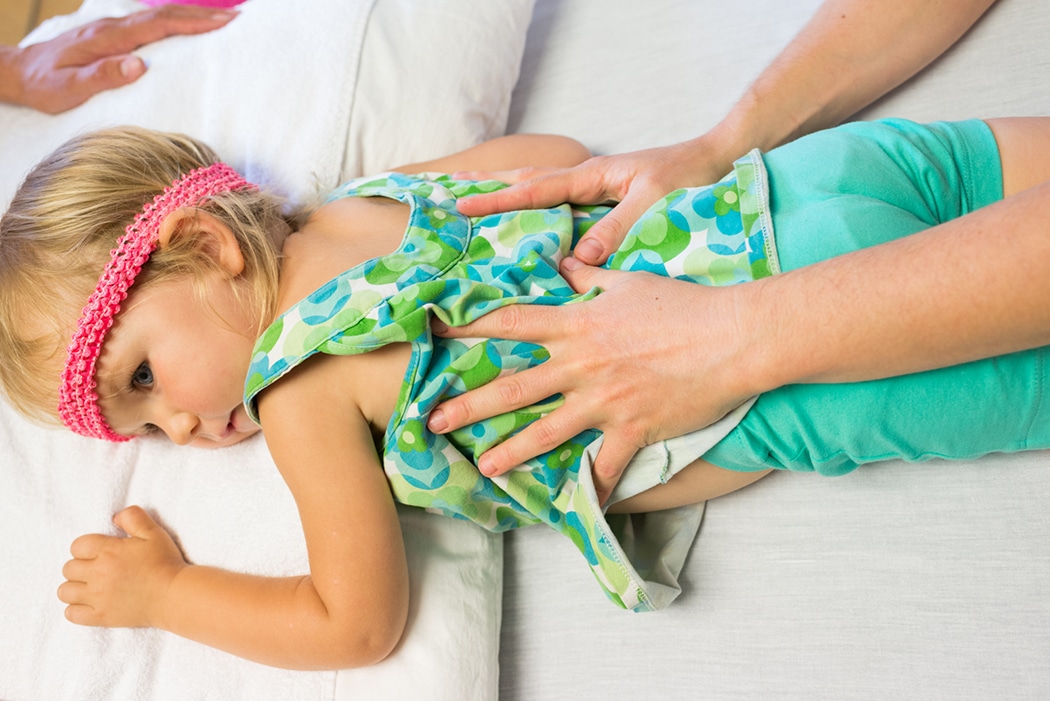
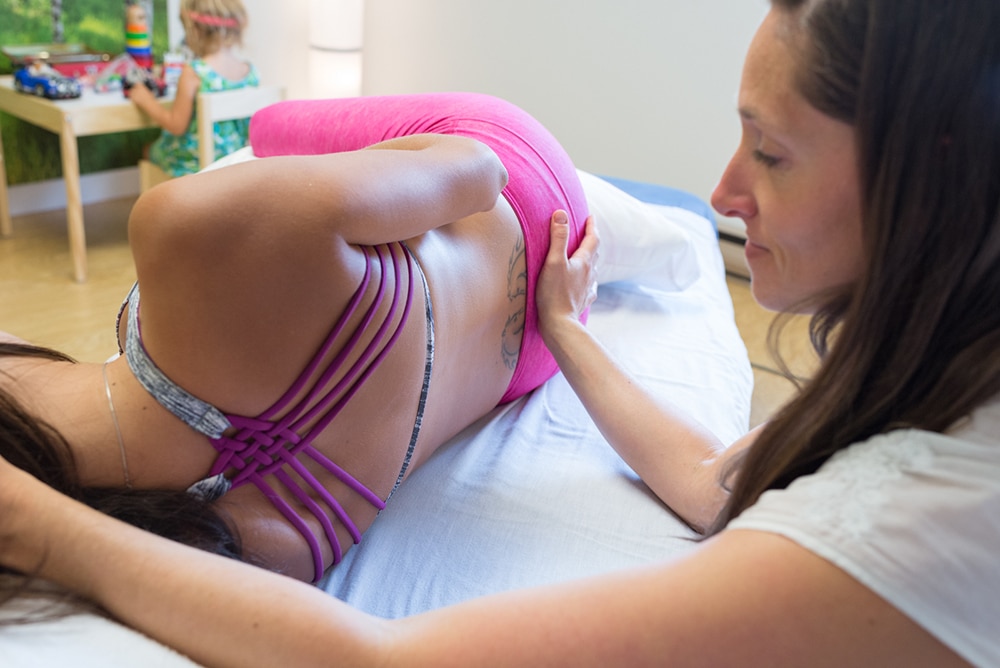
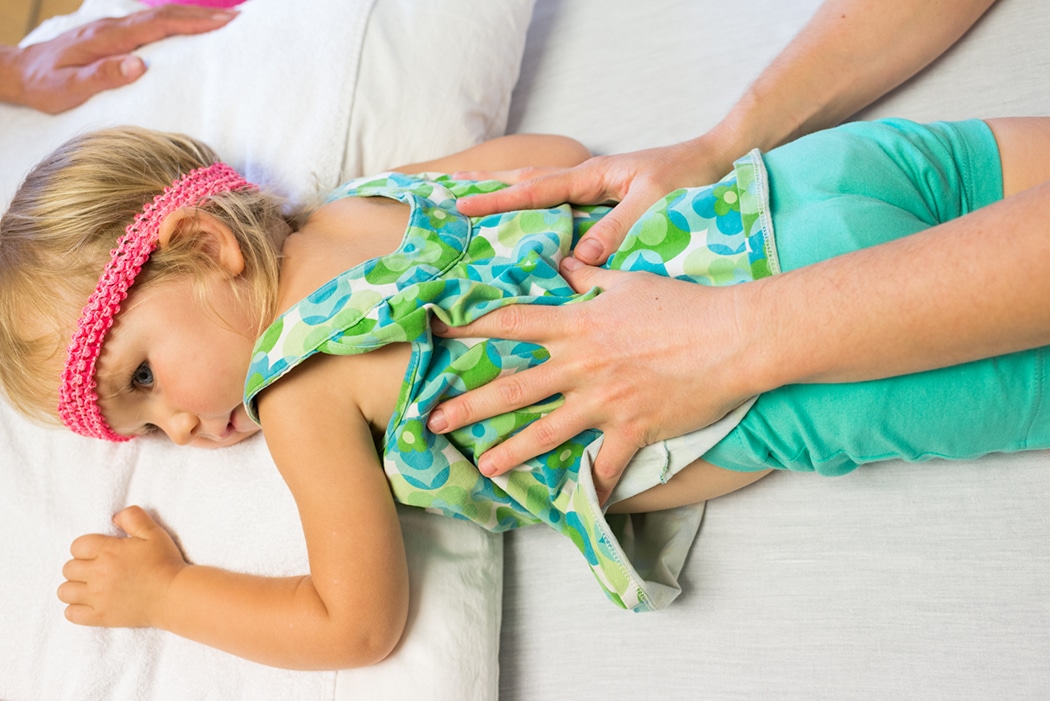
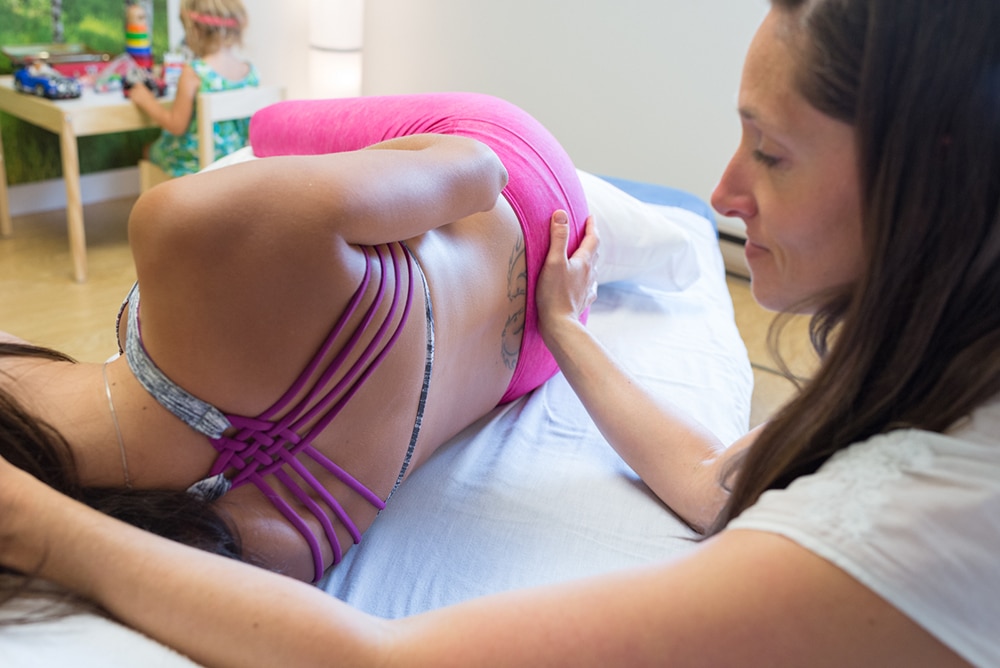
Although it’s an emerging trend here in western Canada, osteopathy treatment of newborns and young children to correct issues, such as with posture, is common in some countries. Photo: Agathe Bernard
Of course we also need to focus on the baby. Depending on where you’re from, it is surprising to learn that manual practitioners are involved directly with babies in other countries. Does the baby really need a ‘massage?’ After all, apart from crying, eating, peeing and sleeping, we assume the infant’s life seems quite simple — that’s not so! We know the mom experiences significant trauma by bringing her baby in the world, and it’s also a major ordeal for her baby.
[quote_right]”An osteopath is taught that Nature is to be trusted to the end.” – A.T. Still MD, DO, Autobiography, founder of Osteopathy[/quote_right]
The infant must adapt from an aquatic environment without gravity to a new environment where he has to breathe and feed through a new respiratory and digestive system. During birth, a newborn’s skull undergoes tremendous pressure while moving through a narrow birth canal. If the baby was uncomfortable during pregnancy due to a mother’s constipation issues, a tighter psoas muscle one side, and a more open iliac on the other, the posture of the infant will be unbalanced at birth. This will impact several of the newborn’s systems.
To help the baby in its development (and in the same time help parents sleep), the osteopathic practitioner will be able to work on the skull bones and ensure the integrity of cranial nerves. For example, the 10th cranial nerve is responsible for the innervation of the stomach, and can cause acid reflux if it is irritated.
The 12th cranial nerve serves muscles responsible for sucking and swallowing. These muscles are involved in the development of the palate and the skull base, and therefore can impact motor development in infants if they are poorly innervated.

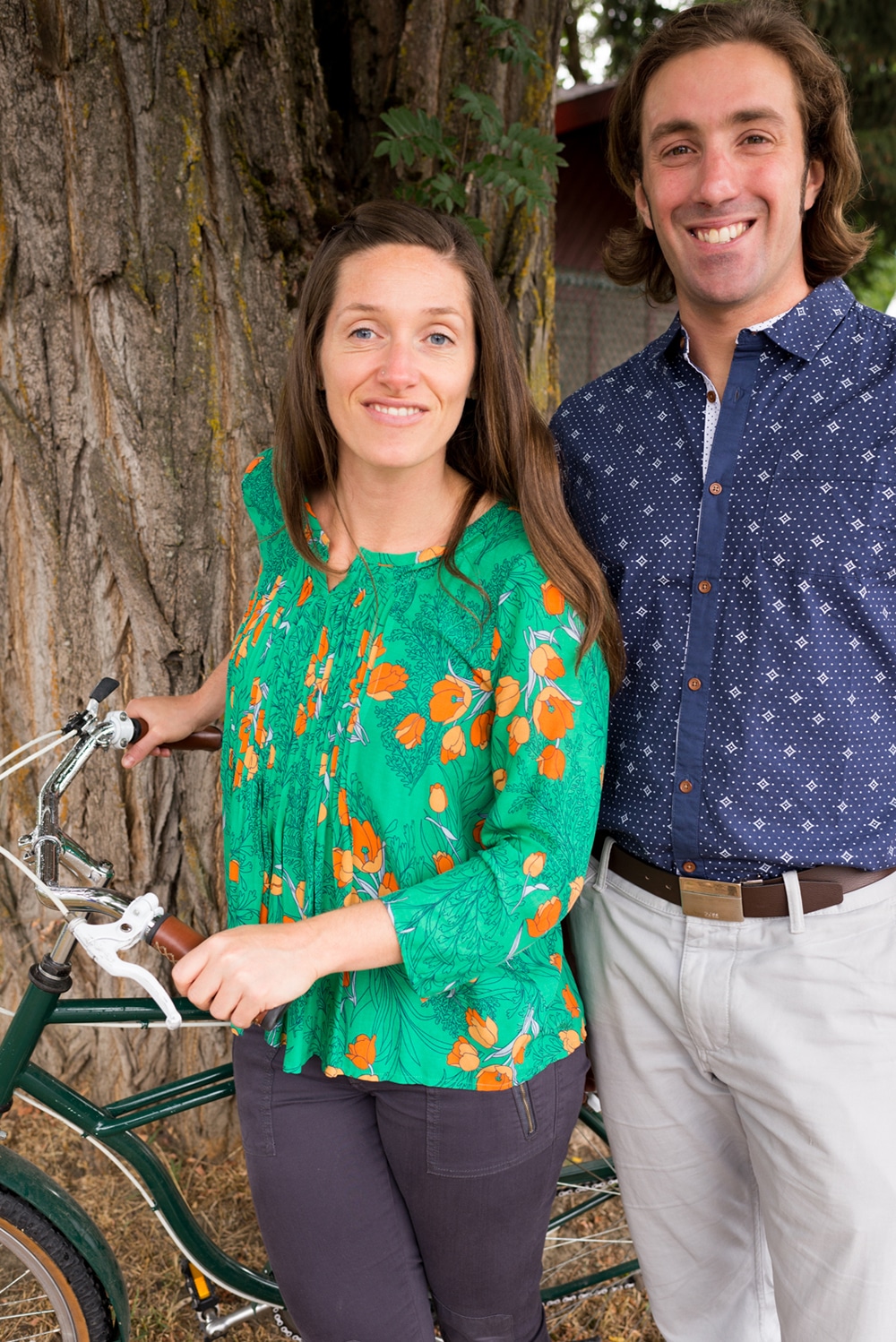
Anouk Sanchez and William Jarrige of the Revelstoke Osteopathy Clinic. Photo: Agathe Bernard
The therapist will also treat the infant’s digestive system to ensure against constipation.
A baby’s intrauterine experience influences the baby’s life much more than we think.
Factors such as emotional or physical stress during pregnancy, the baby’s morphology, the supply of amniotic fluid, and umbilical cord positioning are factors that can contribute to arched back, or ‘shrimp’ posture. Myofascial techniques will remove these postural patterns, so the baby can develop symmetrically.
In fact, a baby treated using osteopathy can prevent future problems in adulthood.
Their bones, joints and tissues are still very malleable. To avoid leaving lesions that will densify in their body, the osteopathic practitioner will release the tensions with very mild myofascial techniques for the baby. Thus, the baby will have every chance for successful, healthy development.
Of course other surprises await the newborn and the road to becoming an adult is full of adventure. We will see in the next article how the osteopath accompanies the children and teenagers throughout these changes.
For more information, please feel free to email us, the last article in the series will be devoted to your questions!
What did you think of this story?
Your feedback after we publish a story helps ensure we're always improving our reporting to better serve you
Related Articles

Birch and Lace salon offers apprenticeship-style academy for future hair stylists
The skills program aims to keep residents in town and learning in-house as salon founder focuses on accessible education opportunities.
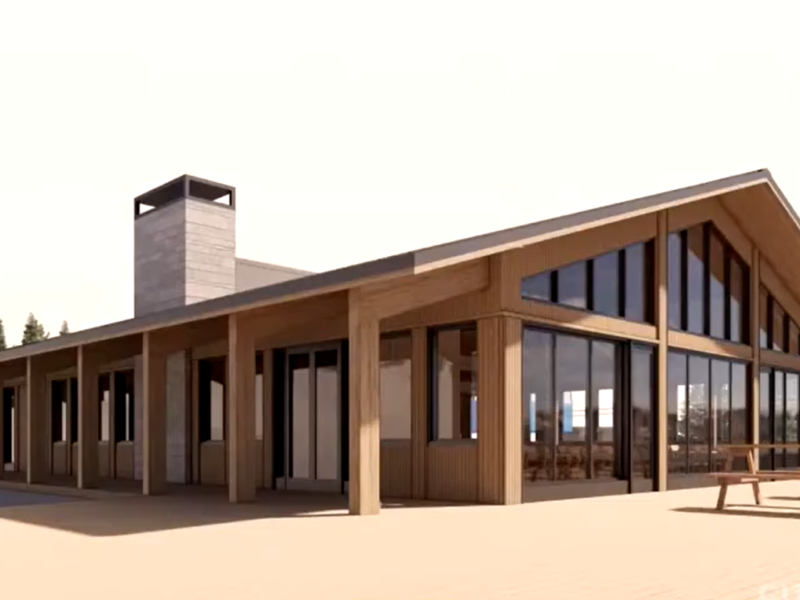
Revelstoke Mountain Resort provides updates on infrastructure upgrades and partnerships
Resort president Jason Kelder shared planned changes coming to the resort, which include a new warming hut.

Glacier National Park trails remain closed following heavy avalanche season
Balu Pass trail, along with two others are closed indefinitely as Parks Canada staff evaluate how much of the popular trails will need to be rebuilt.