
Revelstoke housing: Mountain town RV living, bliss or miss?
As part of an ongoing series exploring housing issues in Revelstoke, the Mountaineer finds out why some local residents opt to live out of their mobile RV homes.
Editorial note: This story is part of new series exploring Revelstoke housing issues done in partnership between the Revelstoke Current, the Revelstoke Mountaineer and the Revelstoke Review.
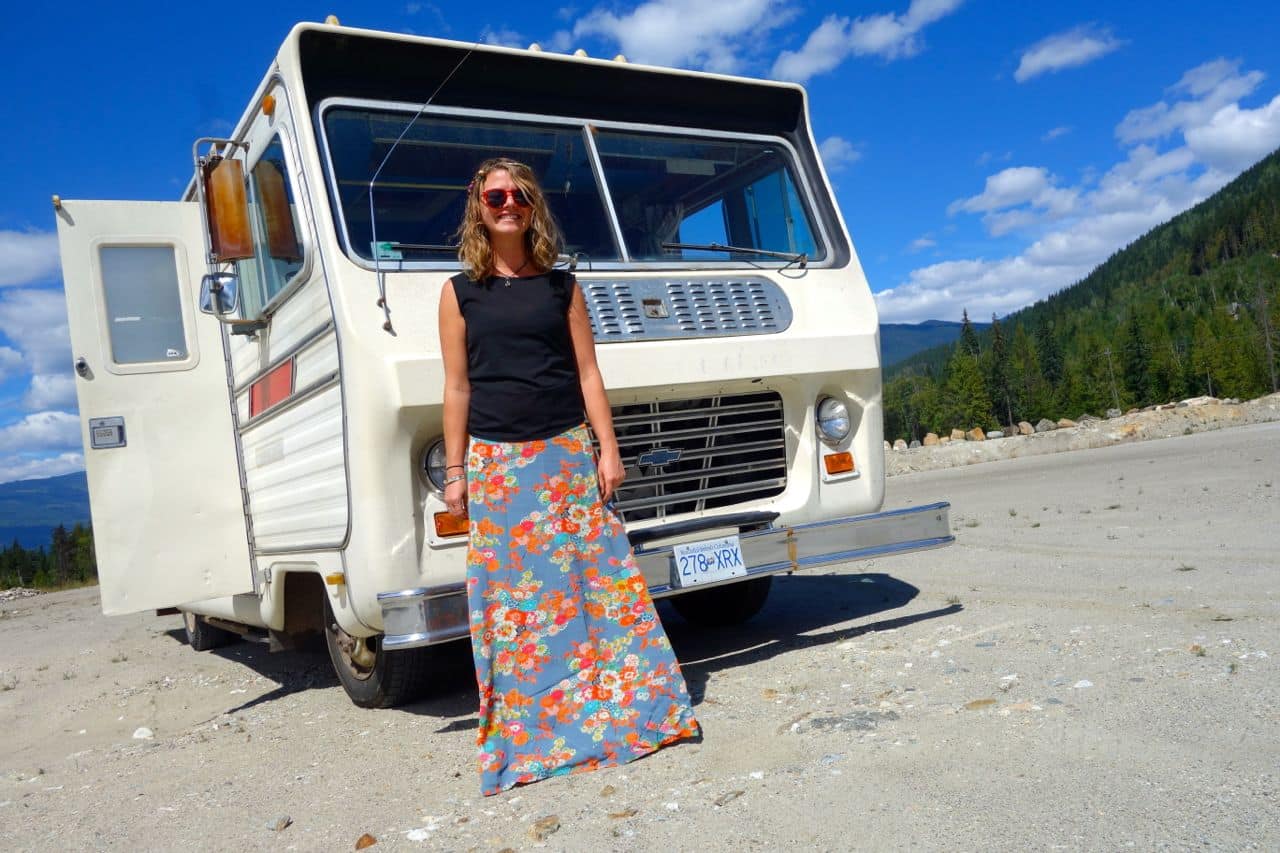
Tegan Dean is a travelling gypsy at heart so it’s no wonder that the lifestyle of living out of an RV appeals to her. The 28-year-old from Victoria, Australia, declares she never wants to go home and has made a 1976 Chevy Citation her mobile sanctuary.
Like most travelers, the emphasis is on as little expense possible and maximum enjoyment and flexibility. It’s an attractive option to those who want to live in Revelstoke and either can’t afford typical rent here, or in cases like early winter, the rental accommodation options are stretched.
Dean paid about $1,300 on her rather large mechanical beauty and poured another $1,700 or so into fixing up her up. When the Revelstoke Mountaineer came by for a look-see, Dean’s enthusiasm for her 28-foot home was palpable. “I just love it,” she exclaimed multiple times with a huge grin.

Tegan Dean sits in the driver’s seat of her 1976 Chevy Citation. Photo: Emily Kemp/Revelstoke Mountaineer.
It took a few months to get her RV road-ready and since it was something of a do-upper, Dean poured her creative juices into it. The ceiling is painted an azure blue, the fridge covered in pennies and the walls with driftwood. This could come off a little kitsch but the end result is a breezy beach feel. Sitting inside, you can just imagine the sea-spray wafting through the windows, the beach just steps away.
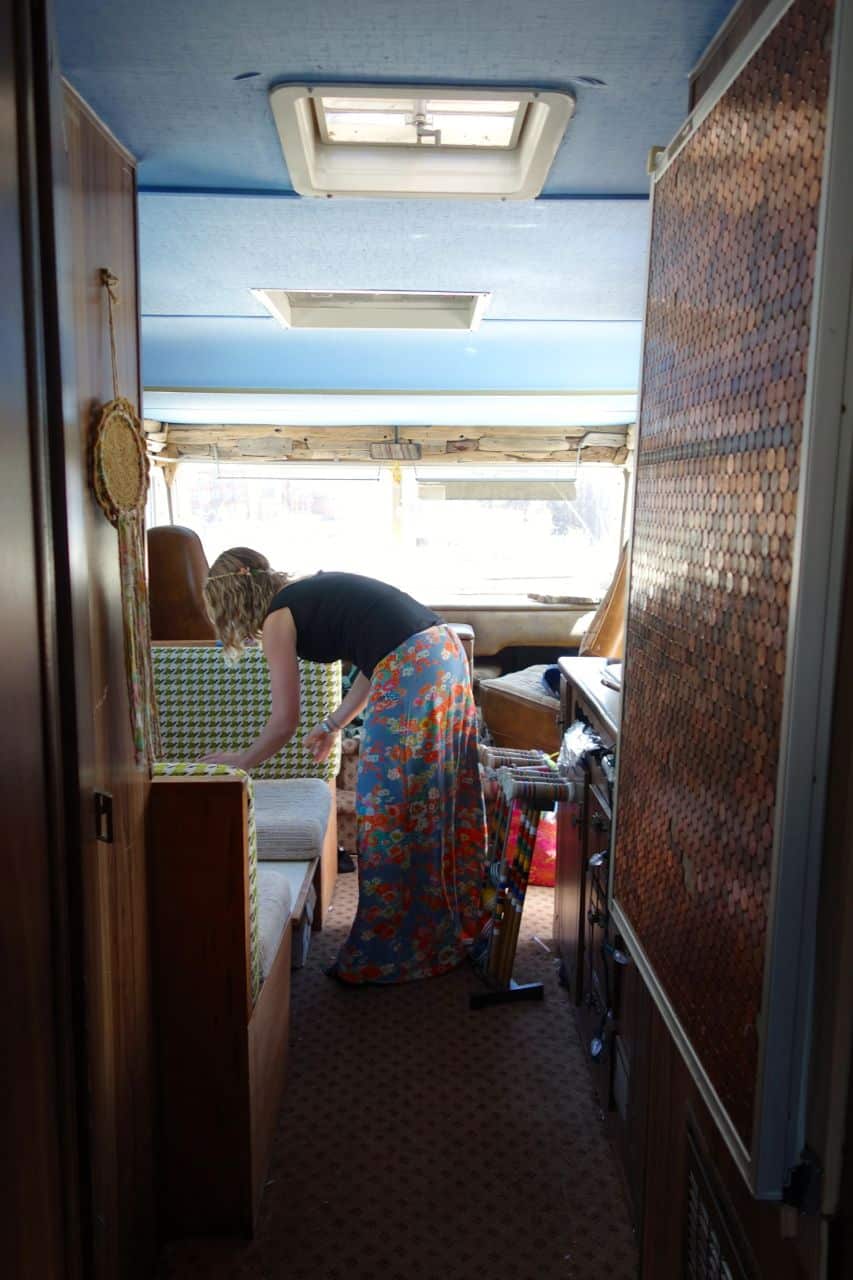
Plenty of space in this old girl. The penny covered fridge, right, is one of the many creative features in Dean’s RV sanctuary. Photo: Emily Kemp/Revelstoke Mountaineer.
Although the concept of living in an RV appealed to her, Dean didn’t seek out this lifestyle. Rather, it found her.
“My family were coming from Australia to visit,” she explained. “We had planned on hiring an RV but when I looked into it, it was cheaper to buy one then to hire.”
While she successfully traveled with her family around B.C. and Alberta for two weeks, Dean will decommission her bulky companion, affectionately named Pam, for her next trip down the west coast in favour of something smaller.
“She is my storage unit when I’m not in Revelstoke and home when I am,” Dean said. “She isn’t the cheapest to run being so old so I try not to drive her around too much.”
So is it actually cheaper to live in an RV? Dean confides that she hasn’t had to spend much on rent this summer and she has certainly saved back what it cost her to buy the RV and its upkeep.
She doesn’t truly live off-the-grid though. This can be a grey area with the level of policing the city dedicates to the issue but City of Revelstoke manager of legislative services Teresa LeRose said the city’s stance, and legal bylaw, is that RV living is not allowed within city limits.
“It’s not applicable to our bylaws,” she said. “Normally if someone is having friends and family staying in an RV, we’ll allow them, maximum of a week.”
The city has a number of fines they can use to police living in RVs and residents may be likely to dob in a noisy, unwanted vehicle neighbour. Using the city’s sewer system to drain effluent also comes with a fine.
But there are some legal work-arounds such as living in an RV park.
“It can be a temporary resident, as long as they park it at a hotel or motel, as per the zone bylaw,” LeRose said.
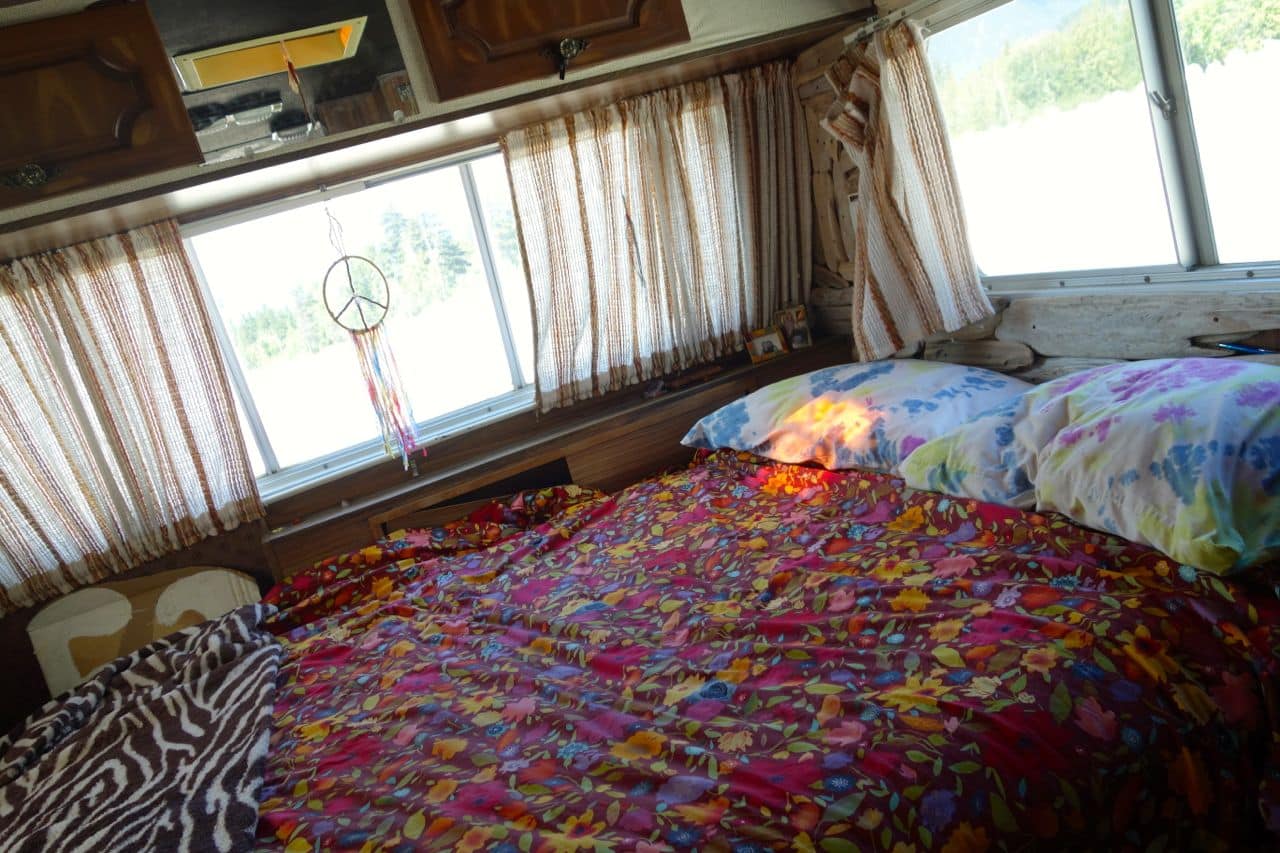
RV homes make for cosy and compact living. Photo: Emily Kemp/Revelstoke Mountaineer.
Dean moves around a bit and depends on the favour of a few good friends to allow her to stay on their property and use their facilities.
“It has saved me so much money living in her and it helps to have some of the most amazing friends in the world that offer their driveways and lawns for me to park on,” she said.
“The best part [of living in an RV] is not having to pay rent and being able to wake up in a different spot when I want. The worst part is trying to find somewhere to store it in the winter.”
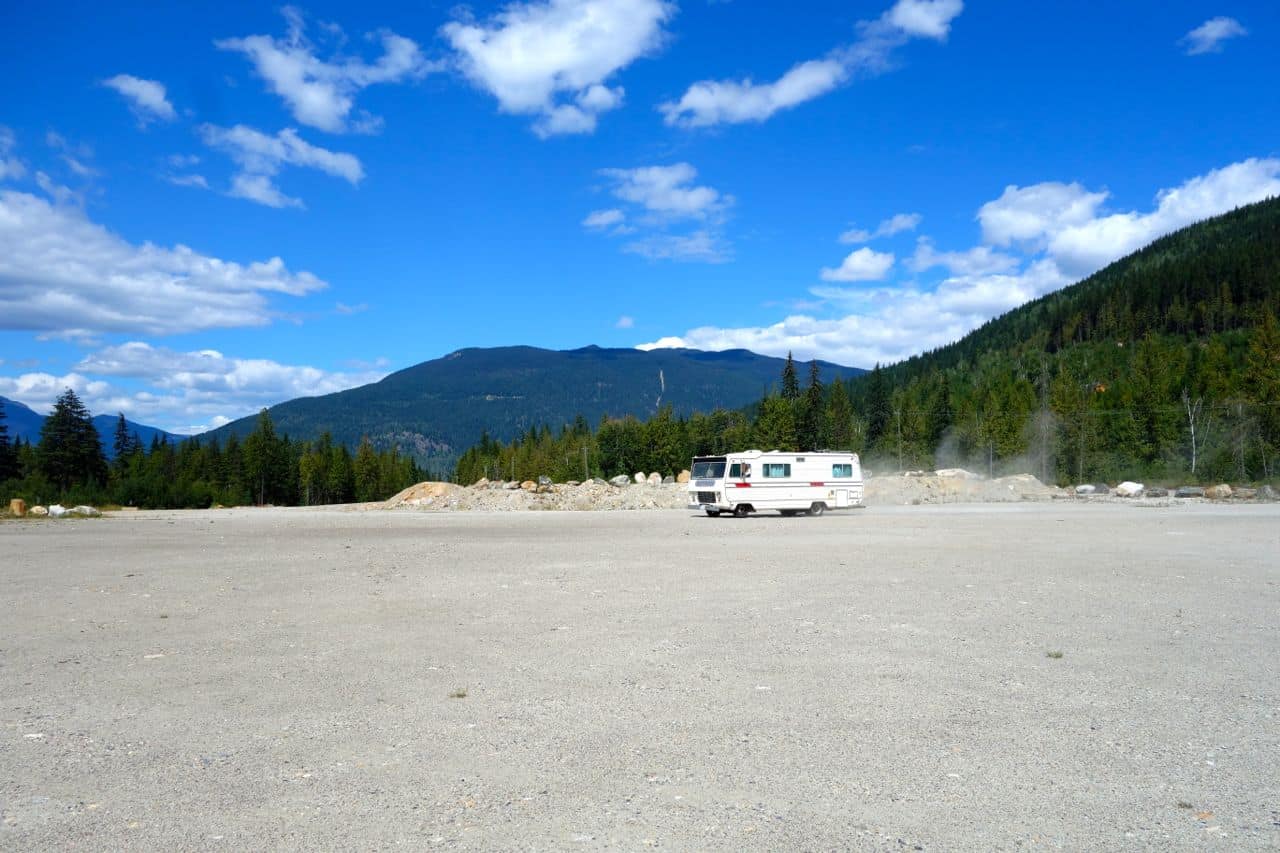
RVs provide the freedom to live where you travel. Photo: Emily Kemp/Revelstoke Mountaineer.
Meanwhile, a couple in Revelstoke have opted to live in an RV full time. They’re in love with their quiet lifestyle and don’t want too much attention brought on them personally with this article. But they did agree to give a few insights into why budget living in the form of an RV home is working for them.
“We decided we wanted to travel and we want to invest money into our own businesses,” Jason (not his real name) explained. “Instead of completely committing to higher paying jobs that are more restricting on free time, we decided a more creative way to approach this was to buy a 1989 22-foot motorhome, throw some solar panels on it and call it a home.”
Jason describes Revelstoke as a dynamic place to live, but employment and cost of living here also makes it unique and challenging.
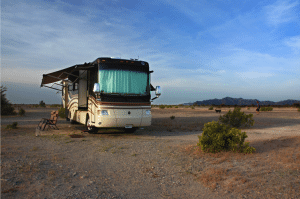
The concept of RV living has taken the blog world by storm. Photo: Nina Fussing from wheelingit.us.
The couple’s goal is to save enough money to eventually buy a house in town, and so far, they’re on track. They bought in February (winter is apparently the best time to buy) and bartered down the price substantially to $2,500. With a little TLC and some investment in eco technology and a bigger battery for improved self-sustainability, the ROI (return on investment) time on their project was about three months. They’re now happily in the black.
“It’s been great,” Jason said. “You definitely realize that you don’t need all the space that you think you do.”
The couple had the luxury of time, moving in to their new home in April, and made sure they weren’t jumping into this lifestyle change blindly. They have a wireless hotspot (through Bell, which Jason says funnily enough is quicker than their old home connection was) and they have found a legal spot to park and are able to hook up to electricity when they need.
“You don’t have to be plugged in [always],” Jason said. “Revelstoke has a lot of sun in the summer and with solar tech it’s a pretty easy and cheap investment.”
Water use has been one of the more defining challenges the couple has come across as they get used to their new way of life. They fill up every ten days or so and hope to eventually stretch that out to two weeks.
“You become very conscious of what you’re using it for,” Jason said. “Whenever you’re having a shower or you’re going to the bathroom. It’s always in the back of your head for sure.
“[Filling up] is kind of a mild inconvenience. It’s not that big of a deal, more you just have to schedule it, like a person has to clean their giant house, we have to go get water.”
Living in an RV is not unlike the Tiny House movement. It has impacted western culture and changed the perspective for many people to challenge what they consider as traditional living.
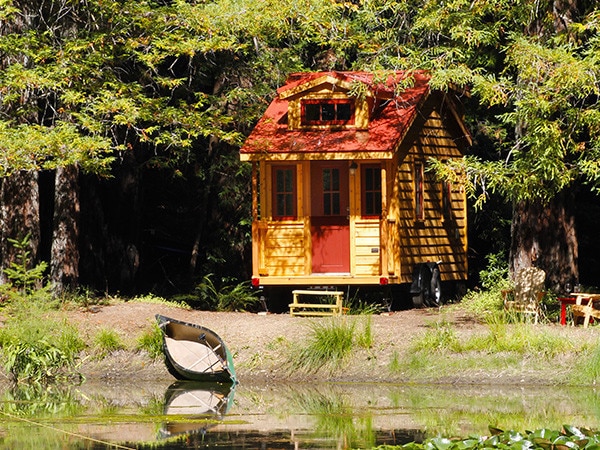
This tiny house design called the Linden inspires idyllic living daydreams. Photo: Tumbleweed Tiny House Company
But a quick internet search finds a number of articles about the downsides of this unconventional living trend and the negatives of extreme budget living. Similarly, Jason said some campers can be safety hazards — something people don’t really talk about.
“Whenever someone dives into projects like a tiny home, maybe they cut some corners because they don’t have the skill set,” he said. “Maybe the money is not there and they’re halfway through the project and they cut corners to finish it.”
“There’s the potential for electrical work to be done horribly. I just wired four deep-cell batteries together, which was a pretty nerve wracking experience with a lot of voltage. Luckily I grew up on the farm and have been around that my whole life. I have basic skills in that realm of things. I can’t wire a house up but I can run an inverter through some batteries for sure.”
With RV living, the freedom of being closer to nature and having more control over your location is no doubt attractive, as is watching the money pile up in your back account and the endless options associated with that. As both Jason and Tegan have outlined, it’s an experience like all others that has its ups and downs.
“I think our take home message after we got into it, was that we realized how little you actually really need to live,” Jason said.

What did you think of this story?
Your feedback after we publish a story helps ensure we're always improving our reporting to better serve you
Related Articles
Wastewater treatment plant upgrades set to future-proof facility for 2 decades
Plans to include Big Eddy residents and businesses into the updated facility still in the early stages, city director of engineering says.
Revelstoke granted $200,000 to rework development guidelines
Clarifying building requirements is key in speeding up development approvals, director of development services says.

More childcare spaces needed as families face estimated $35,000 income impact annually
Revelstoke Child Care Society still has over 160 families waitlisted as plans to expand into Okanagan College building take shape.