
Revelstoke celebrates 125 years
March 1, 2024 marks a century and a quarter since Revelstoke officially became a city.
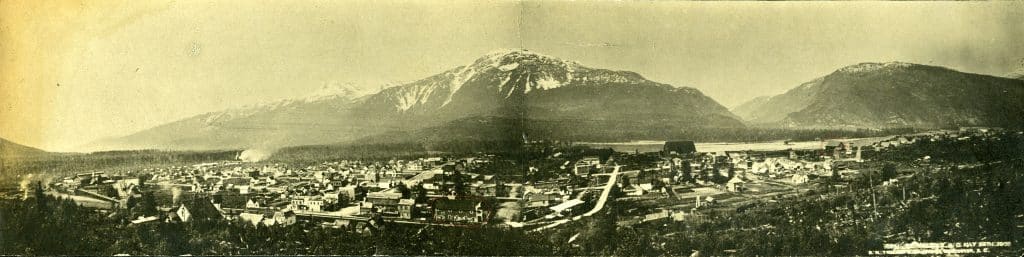
As Revelstoke approaches the 125-year anniversary of its incorporation, the Mountaineer chatted with Revelstoke Museum and Archives curator Cathy English for a peek into the local history.
And the City of Revelstoke is just the most recent chapter in a very long story, beginning with the Sinixt people who have lived on the Columbia and its tributaries since time immemorial. Revelstoke history is tied intrinsically to the disruption and displacement of the local First Nation.
“That part of the story is very complex, far too complex for a quick chat and short article,” English shared. For a deeper look, she recommended Swift River, a book on the subject by Laura Stovel.
The book shares stories of fur traders, settlers and Sinixt people, following Sinixt men and women as they fought for their recognized rights to their ancient lands. Despite a 1956 Canadian government declaration that the Sinixt were “extinct” in Canada after they were pushed south of the border, the fight for rights continued as the Sinixt pushed back.
Swift River includes contributions from Sinixt authors Shelly Boyd and Patti Bailey, who write about their nation’s diplomatic efforts and fight for justice.
The founding and incorporation of Revelstoke
In 1885, the town originally called Columbia City was dubbed Farwell, after Arthur Stanhope Farwell, a civil engineer and surveyor who held a Crown Grant of 1,175 acres and had laid out much of the townsite.
Even then, English said, Farwell believed the area would be a centre of trade with the US, a manufacturing city, the seat of administrative headquarters for surrounding districts and a hub for tourism, lumbering and mining.
That same year, construction of the Canadian Pacific Railway was complete. Not a year later, however, the name Revelstoke was bestowed upon the town on June 1, 1886 thus bringing to life the town we know and love.
So what are we celebrating? Well, the day Revelstoke was incorporated: March 1, 1899. We are 125 years to the day that the painstaking process of incorporation became complete, allowing “city” status and the plethora of benefits that come along with that, including a sewage system and road improvement.
However, not all were pleased with the idea of incorporation. In a letter to the editor, reader Sam Needham wrote, “Now Mr. Editor, I should like to hear from some party, who Mr. Haggen is, and what right allowed him to speak at a meeting of property holders of Revelstoke. Say, Mr. Editor, we need no imported spouters as we have spouters enough of our own.”
E.A. Haggen had supported the motion for immediate incorporation.
Conversely, those who wanted to wait on incorporation were dubbed “grandmothers” by the Revelstoke Herald, for falling behind the times.
Despite what some may have said at the time, the incorporation of Revelstoke is most certainly worth celebrating, but many notable things came before to help raise the town to city status.
In 1886 the first local farms were established, and in 1889 the first permanent school and sawmill opened. In 1890 came the first mention of someone skiing in Revelstoke. In 1896 telephone service became available, followed two years later by electric power, provided by a dam on the Illecillewaet River. The arts boomed In 1898 when Revelstoke Opera House opened.
All of these improvements and technological developments put Revelstoke in prime range for incorporation, which brought even more advancements, opportunities and celebrations.
Revelstoke post-incorporation
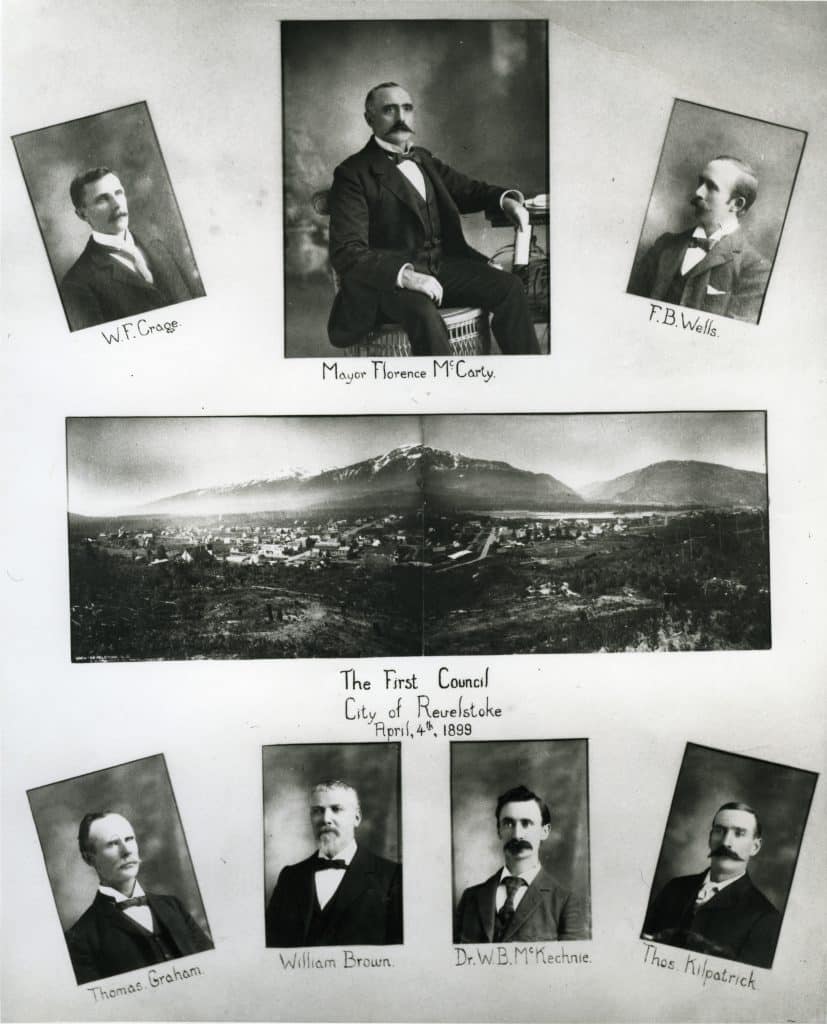
Twenty-two days after incorporation, the first municipal elections were held, offering Revelstokians a chance to put in their vote for council members. According to the Revelstoke Herald, 443 voters turned out to the polls, electing Florence (Frank) McCarty as Mayor, and T. Kilpatrick, T.J. Grahame, F.B. Wells, W.F. Crage, Dr. McKechnie and William Brown as aldermen in Revelstoke’s first city council.
The Herald dubbed those men the “lucky seven who sit at the council board for 1899 and run the town,” and listed the runner-ups as the “other seven who will sit at home and tell how much better they could have done it.”
Years later in 1915, Revelstoke’s first Winter Carnival was organized, including ski-jumping on Mount Revelstoke.
The carnival and its beloved outhouse races were revived this year as part of the anniversary celebrations, and included a rail jam competition, a youth art gallery, live music, a scavenger hunt and more.
“This is about the community,” Allie Bruni, producer of Revelstoke Winter Carnival told the Mountaineer. “Bringing everyone together for winter fun and celebrating Revelstoke.”
Bringing the community together was certainly in the spirit of incorporation, which set the stage for Revelstoke to bloom into the place we call home today.
![[1915]-[Revelstoke-Winter-Carnival]](https://revelstokemountaineer.com/wp-content/uploads/2024/02/577-Winter-Sports-Carnival-1915-1-1024x621.jpg)
What did you think of this story?
Your feedback after we publish a story helps ensure we're always improving our reporting to better serve you
Author

Related Articles
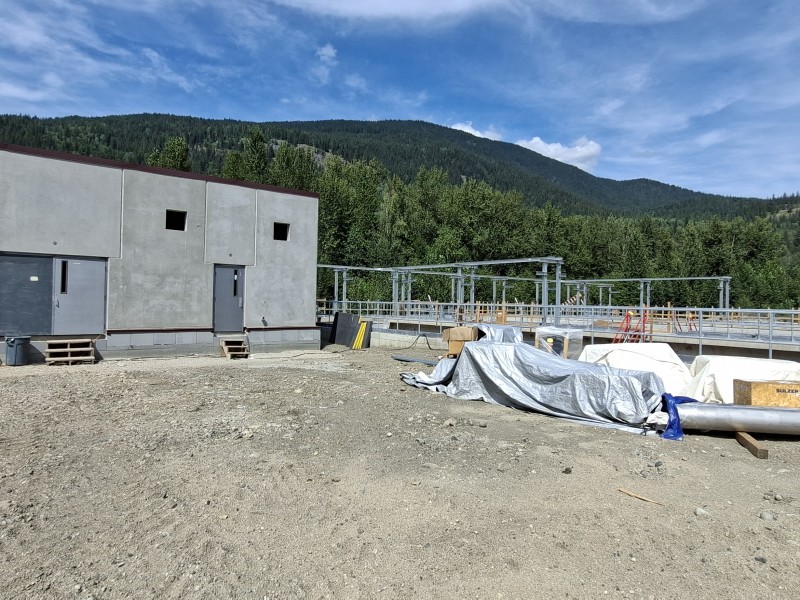
Wastewater treatment plant upgrades set to future-proof facility for 2 decades
Plans to include Big Eddy residents and businesses into the updated facility still in the early stages, city director of engineering says.
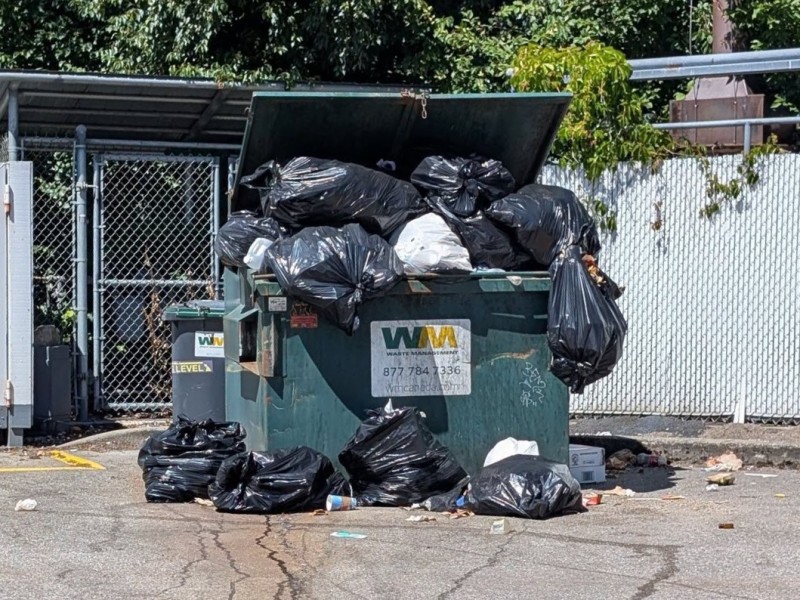
Commercial bear attractant bylaws need update, Bear Aware Society executive director says
Residents ask what the future of commercial wildlife attractant bylaws are following long weekend garbage mix up.
Birch and Lace salon offers apprenticeship-style academy for future hair stylists
The skills program aims to keep residents in town and learning in-house as salon founder focuses on accessible education opportunities.