
Reflections on pandemic experiences in our interwoven world
In the time of COVID-19, Revelstoke resident and international aid worker Trish Khan reflects on her experiences working with communities facing the most challenging humanitarian crises.

This story first appeared in print in the Summer 2020 issue of Revelstoke Mountaineer Magazine. Read the e-edition here:
Many wanderers have found a home in Revelstoke. Those with a taste for adventure who also want a sense of place grounded in community. This is what Revelstoke provides and what attracts many tourists here, the hum of a working town against a natural backdrop.
Other than Revelstoke’s economic pillars of the hydro dam, forestry, the railway, and tourism, increasingly the remote-worker is making a life here. Revelstoke isn’t the only place with great lifestyle benefits, yet when humanitarian worker Trish Khan had the choice of living anywhere in western Canada, she moved to Revelstoke in December on the recommendation of a co-worker.
“Working abroad, it’s hard to go for long periods at a time and then come back, without having somewhere to call home,” Khan says. “I felt a looseness — like I didn’t have roots anywhere. I chose Revelstoke because community is really important to me and I find it’s easier to find that in small towns.”
Growing up in Winnipeg, Khan lived in Toronto and also worked overseas for years. She works for Médecins Sans Frontières/ Doctors Without Borders (MSF), a not-for-profit organization responding to medical emergencies across the world for nearly 50 years. While working for MSF, Khan was sent to Bangladesh, which houses the world’s largest refugee camp, and to South Sudan. She now has a Canada-based job with the organization as engagement manager for western Canada.

Camp residents gather at a cholera vaccination point during an outreach campaign that saw about 70,000 children vaccinated for the disease, which still ravages many parts of the developing world. Photo: Trish Khan
But working with the world’s most vulnerable populations can’t help but affect a person. Khan tells a story from her time in South Sudan when a peace treaty was signed and as potential stability approached, there was an unsettling increase in violence in the area.
“Rape is used as a weapon of war and there is a lot of shame for survivors,” Khan explains. As women did their routine round-trip walk to food drop sites, the cases of sexual violence in the area suddenly grew rapidly, ranging from youth to elderly.
“By the end of a 10-day period, over 150 survivors came to our facility for care,” Khan says. “For the six months prior to that I think we had about eight cases. So the team was obviously overwhelmed as was the community.”
“It was really hard to see so much suffering and, as a medical organization, ensure we were providing care for such a high numbers of people without sacrificing the quality of care.”
Rape is devastating and traumatic yet often Khan finds because this happens overseas in places that seem, to the casual observer, eternally at war, the desensitization of seeing this trauma as a way of life, is hard to break through.
“We’re all people, who experience pain and suffering, and who don’t want to live in a situation where there is war,” Khan says. “It’s important to remember our shared humanity and actively work against othering that lets us separate ourselves from what happens in other parts of the world.”
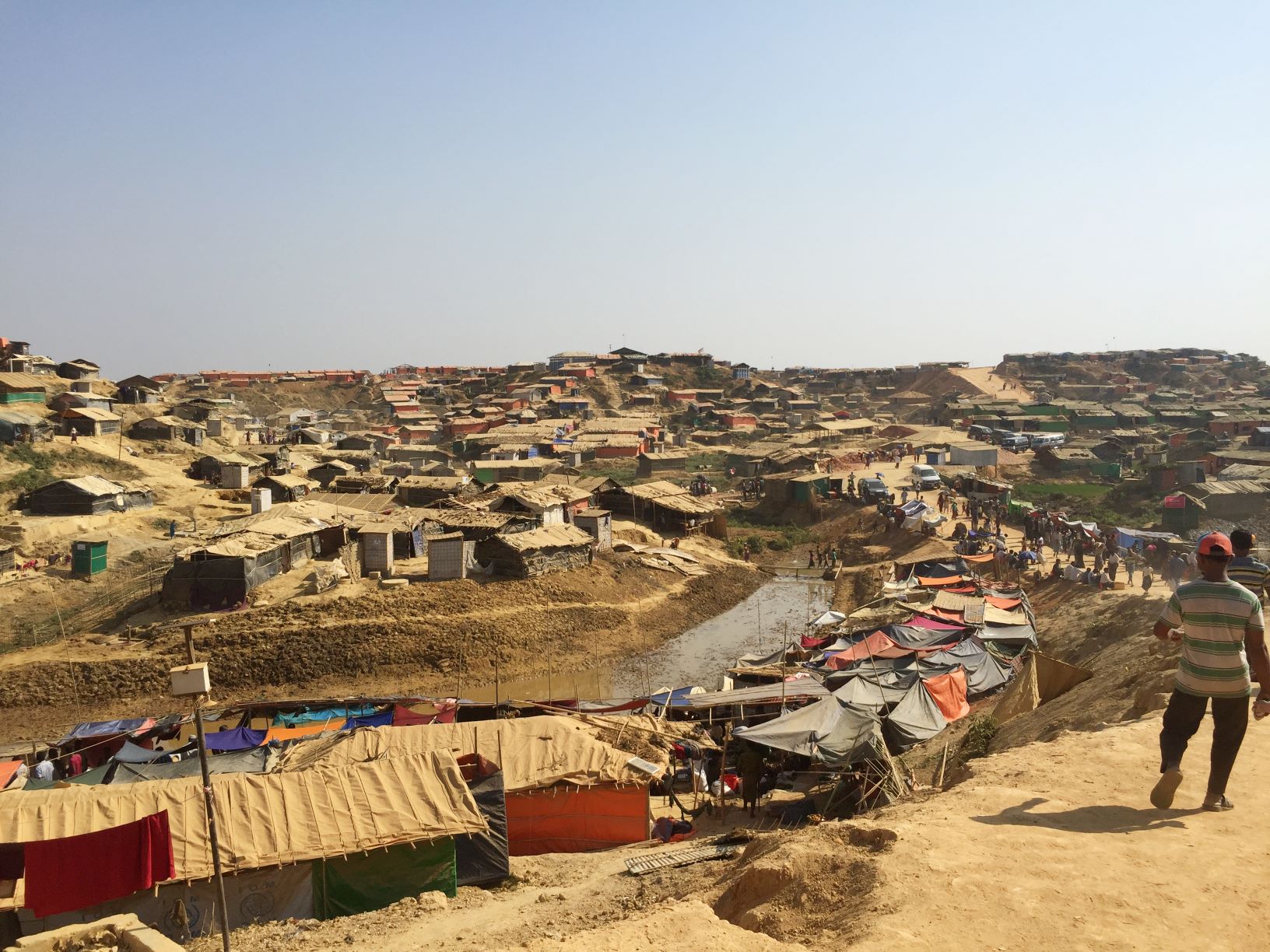
The Kutupalong Megacamp is located in the Cox’s Bazar area of Bangladesh, and is home to almost one million people in an area of just 23 square kilometres. Photo: Trish Khan
Khan chooses to do this work because it helps her find purpose in her day-to-day work, but it does impact her.
“For me, it’s tough to make the transition back to wealthy countries, more so than adjusting to the culture overseas,” she says.
In 2016, after working in Bangladesh’s Rohingya refugee camps, she travelled to Italy to vacation with her best friend. The glaring disparity of consumption and access to resources compared to where she had been living sometimes proves too much.
“It’s hard to forget how resilient the communities are, once you’ve seen it for yourself,” Khan says. “People are supporting each other in such amazing ways, community ties are so strong. When I come back to Canada, I sometimes fi nd our way of living really lonely.”
Dealing with Covid-19, Khan says MSF has learned from previous epidemics such as the Ebola outbreak in West Africa in 2016. Communities must be engaged in the response, and MSF’s goal is to reinforce existing health structures that the local community trusts and can take ownership of, rather than reinventing the wheel.

This article first appeared in print in the Summer 2020 issue of Revelstoke Mountaineer Magazine. Design: Sonia Garcia/Revelstoke Mountaineer Magazine
“If the community isn’t empowered and doesn’t have ownership over their response, we can misinterpret the perceptions and attitudes, leading to a low level of acceptance of services, ” Khan says. “A simple example is using a black body bag instead of white.
For some communities, black signifies evil spirits and so there will be resistance to using them, leading to improper burials.”
Looking at the world’s recovery from Covid-19, Khan recollects her former executive director describing it like a forest fi re.
“You start to get the big flames down, but it is not over until the embers are extinguished,” she says. “We’re a global community, you can’t just fight this at home. Unless the pandemic is under control across the world, it doesn’t end.”
“I think complacency is probably what is going to get us into hot water again. Even though there is a level of normalcy because the fear of overburdening the health system has passed, the virus is still alive and strong.”
Like everyone, the pandemic has impacted MSF economically. To help support the work of organizations like them, Khan recommends a continuous monthly donation as little as $5, as she says this gives organizations reliable support that allows them to plan.
Get more independent journalism from Revelstoke by following Revelstoke Mountaineer Magazine on Facebook or Twitter.
What did you think of this story?
Your feedback after we publish a story helps ensure we're always improving our reporting to better serve you
Related Articles

Birch and Lace salon offers apprenticeship-style academy for future hair stylists
The skills program aims to keep residents in town and learning in-house as salon founder focuses on accessible education opportunities.
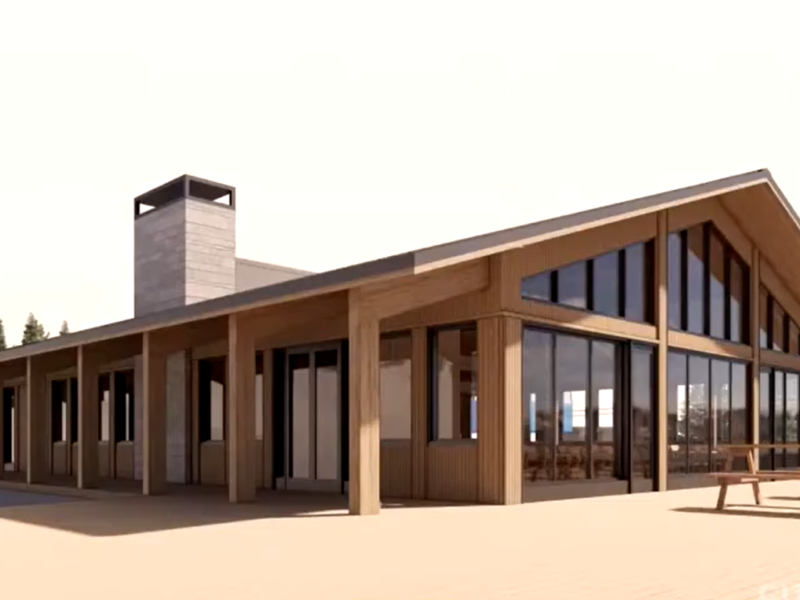
Revelstoke Mountain Resort provides updates on infrastructure upgrades and partnerships
Resort president Jason Kelder shared planned changes coming to the resort, which include a new warming hut.
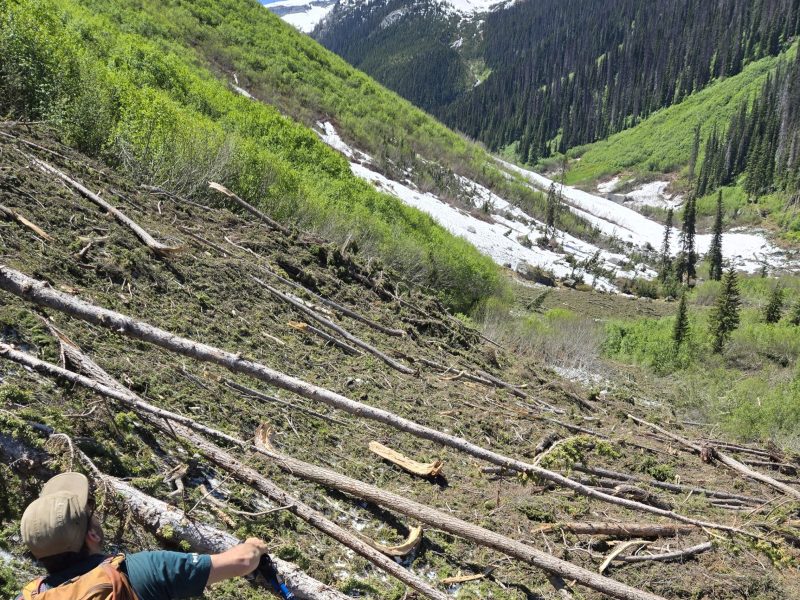
Glacier National Park trails remain closed following heavy avalanche season
Balu Pass trail, along with two others are closed indefinitely as Parks Canada staff evaluate how much of the popular trails will need to be rebuilt.