
Prep your garden for extreme weather
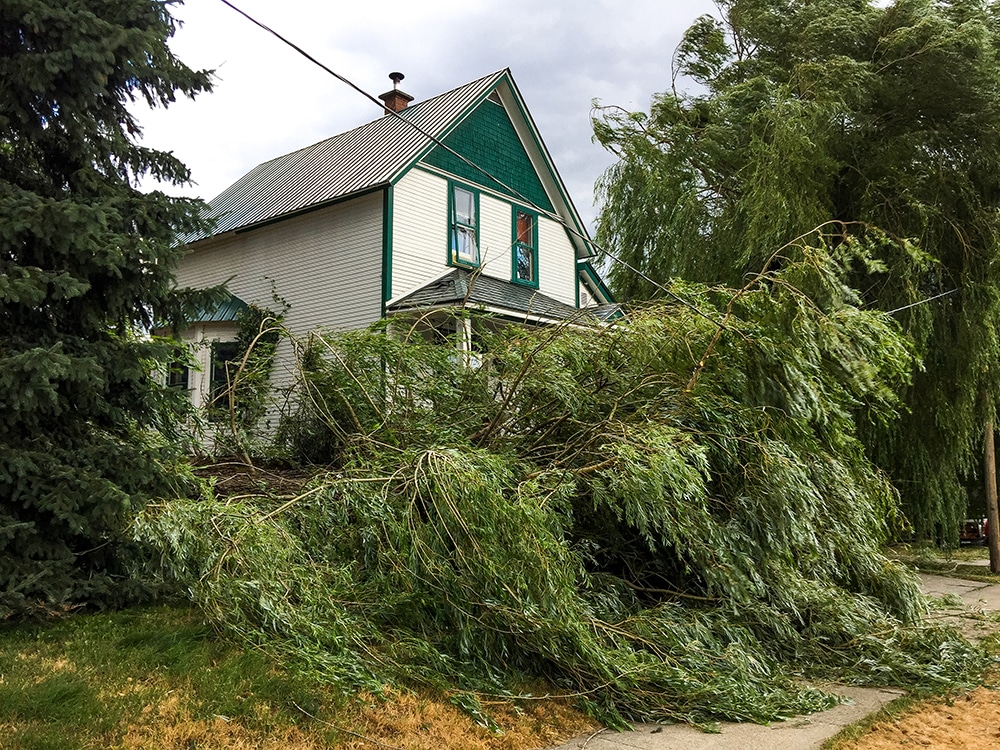
After last year’s massive windstorm blew many Revy trees down, it’s time to look at preventative strategies for your yard.
This article first appeared in print in the April/May issue of Revelstoke Mountaineer Magazine.
Summers are starting to heat up in Revelstoke. And we’re not talking about visitor numbers but the shift towards hot and more arid conditions that are changing our landscape.
According to Environment Canada, last July was the driest ever recorded in Revelstoke, with only 4.8 millimetres of rain. Possibly last year was an outlier as overall annual rainfall in the years previous hovers around normal levels. However, the social and economic costs should be considered with the frequency and intensity of our weather events. During summer months recently, we have experienced longer intervals between rain events and an increase in intensity when we do receive rain.
Consequently, the “normal” annual rainfall figure could be accounted for by a significant amount of rain that fell in just a few events. For example, while last July was the driest ever, it also received almost all of its rainfall over a few hours in one evening. This puts unprecedented stress on plants, especially in urban and semi-urban environments.
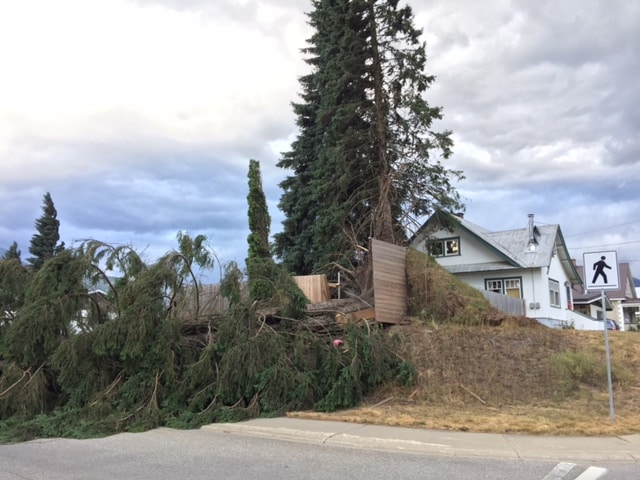
Wind damage on Fourth Street East in Southside from the July 23, 2017 windstorm. Photo: Aaron Orlando/Revelstoke Mountaineer.
To complicate the situation even more, it is not simply the pattern of drought and precipitation that is having an effect on plants; scientists are cautiously starting to draw connections between extreme weather events and are understanding their cumulative nature.
For example, as the drought pushed on last summer, we experienced what has been called the most intense windstorm in Revelstoke’s recorded history. It saw a low-pressure system move through parts of the Columbia and Kootenay regions, bringing a series of thunderstorms. But because the atmosphere was so dry, the rain evaporated before hitting the ground, increasing the momentum created by the cold front and there we saw those extreme wind gusts of up to 96 kilometres per hour.
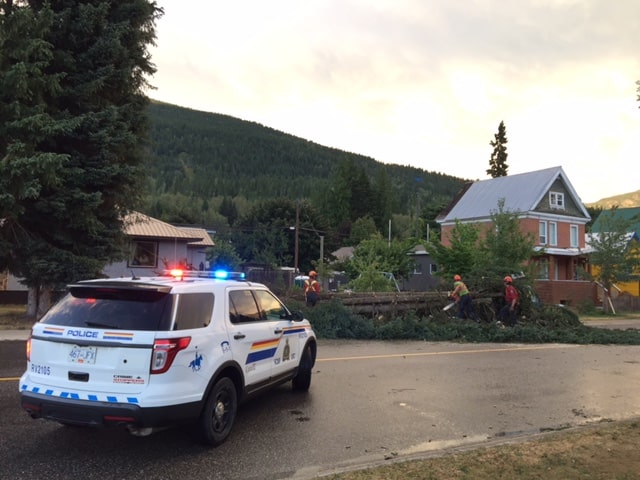
Workers buck up trees that came down on Second Street West, July 23, 2017. Photo: Aaron Orlando/Revelstoke Mountaineer file photo
Hundreds of trees came down causing extensive damage to homes and property. Many of the trees that came down were mature evergreen conifers that you typically find growing in moist environments.
During periods of drought, the small fibrous roots of woody plants will become desiccated, loosening the soil around root systems. This makes them unstable during high wind events or other stresses. While it is impossible to say whether or not any of these windfalls could have been avoided, we need to start developing strategies and practices that can help minimize the effects extreme weather events.
Here are a few fundamentals:
Prioritize water needs
While new seedlings should be kept moist all the time, established trees only need three to four good deep soaks throughout the summer. Shrubs also make an important contribution to landscapes, helping to anchor and shade the soil and provide habitat value. Water infrequently but deeply to help develop a healthy root system. Grass and annuals should be low priority.
Keep up with maintenance
This will increase the vitality of your landscape plants, making them more resistant to drought, disease, and extreme weather conditions. Avoid heavy pruning and fertilizing during the drought season.
Mulch, Mulch, Mulch!
Using organic mulches like straw, leaf, bark or wood chips around plants helps keep the soil cool and reduces evaporation.
Choose drought-tolerant plants
Water-wise plants are becoming staples in nurseries. Be careful when bringing plants from nurseries outside of Revelstoke, as plants that work in Salmon Arm won’t necessarily do well here. In general, plants such as junipers, salvias, coneflower, blue oat grass, nasturtiums, thyme, Lavender and our native spirea are excellent choices when it comes to drought-tolerant plants.
About the author:

Lindsay Bourque
Lindsay Bourque has been working in the landscape trade for over a decade, first as a gardener/landscaper then earning her master’s degree in landscape architecture at UBC. Since then, she spends more time on a computer but Revelstoke allows her to keep a foot in both design and construction – and both feet on a board as much as possible.
What did you think of this story?
Your feedback after we publish a story helps ensure we're always improving our reporting to better serve you
Related Articles
Wastewater treatment plant upgrades set to future-proof facility for 2 decades
Plans to include Big Eddy residents and businesses into the updated facility still in the early stages, city director of engineering says.
Revelstoke granted $200,000 to rework development guidelines
Clarifying building requirements is key in speeding up development approvals, director of development services says.

More childcare spaces needed as families face estimated $35,000 income impact annually
Revelstoke Child Care Society still has over 160 families waitlisted as plans to expand into Okanagan College building take shape.