
Op-ed: Revelstoke has ski town problems
When it comes to navigating the journey to becoming a resort community it turns out we’re not that special
This article first appeared in the October/November issue of Revelstoke Mountaineer Magazine.
Pick a ski town, any ski town, and chances are you’ll find a community facing a myriad of problems. From a lack of affordable housing to difficulty attracting workers for seasonal and low-paying jobs, all the way down to concerns about how ski resort development impacts a community’s culture. These are issues that impact every ski resort community — not only in North America, but around the world.
Revelstoke’s decision to turn Mount Mackenzie into a world-destination ski resort didn’t come lightly. It was only after years of negotiating and decision-making that the community decided that yes, a ski resort was the best option for Revelstoke’s economic vitality. And let’s be honest, pre-ski resort Revelstoke’s economic health wasn’t the best. Traditionally supported by a more industrial-based economy, Revelstoke had a history as a boom-and-bust community. As the years passed, it was becoming more and more clear that something needed to be done to help support Revelstoke’s economic health during the downturns the industrial sector is wont to experience.
The thing is, despite the fact that the decision to become a world-class ski resort has helped Revelstoke’s economy in many ways over the past decade and a bit, we are still struggling to come to terms with the issues that have come along with it.
Finding solutions to Revelstoke’s housing problems needs to remain a top priority
Revelstoke’s lack of housing, and especially affordable housing, arguably remains the number one issue the community needs to solve. Despite more than a decade of discussion, Revelstoke has made little movement when it comes to actually providing tangible solutions to address not only the overall lack of housing, but specifically the lack of affordable rentals. While there are developments underway that are intended to be rented out at a lower cost to tenants, the Revelstoke Community Housing Society’s Oscar Street development remains the only current affordable solution, although in many ways I struggle with its notion of affordability since its rental rates are still relatively high.
Many have argued that Revelstoke’s housing problems have been made worse by the fact that RMR has yet to build staff housing. While this may be true, when it comes to solving the housing crisis, we need to do more to meet the demand head-on, rather than relying on yet-to-be-seen promises. The 2008 downturn in the economy no doubt played a factor in RMR’s decision to forgo its initial promise of employee housing. To put it bluntly, we need to stop wasting time laying blame and spending more time working together to find solutions.
As a community, Revelstoke has been clear in its desire to avoid becoming another Whistler. That being said, it’s sometimes good to look at not only the problems, but the solutions, of a community you want to avoid becoming. There is no doubt Whistler has had, and continues to have, its share of issues. We would be remiss as a community to not look at the creation of the Whistler Housing Authority, an independent municipally-owned corporation that focuses on the goal of housing 75 per cent of employees locally. It has an inventory of resident-restricted housing, which providing affordable rental and ownership accommodations for locals.
Collaborative solutions needed to combat seasonal worker shortage
Here’s the thing when it comes to ski resort towns: someone has to clean the hotel rooms, someone has to man the ski lifts, and someone has to work tirelessly to provide much needed ski patrol. Someone has to pour jugs of beer to throngs of people who are either sharing their excitement over the day’s powder, or complaining relentlessly over the fact one member of their party slept late, making them miss the best pow runs of the day.
Like other ski resort towns, Revelstoke relies heavily on international workers keen on spending a season or two in our beautiful town. They help fill up the mainly minimum wage service jobs that help keep our tourism economy alive. It’s not an easy problem to tackle. Service industry jobs have long remained viewed as being acceptable for people with little or no education, and are seen by many in North America as being less than acceptable jobs. While focusing on international workers willing to work for lower wages in exchange for a season in our powder town is a great idea, I think the real solution lies in finding ways to support local businesses to be able to pay staff a year-round living wage, even if it means that staff person doesn’t stay in the community all year.
In the August, 2018 edition of the Revelstoke Mountaineer Magazine, I wrote a story on the worker shortage. In that article I spoke about a possible solution to the worker shortage through creating a regional employee pool. At that time the Kootenay Workforce Development Team, which includes Revelstoke, was exploring the possibility of a project that would see the creation of an employee task force in the region. While the project was focused on creating opportunities for foreign workers to experience multiple communities during different seasons, I cannot help but wonder if something similar could be applied within our community long-term residents who struggle with keeping employment due to a decision to work within the service industry.
In addition, there is a strong need to find ways to support local businesses so that they can stay open through our shoulder seasons, and pay staff a living wage. Many Revelstoke businesses are locally owned, independent and want to be able to support those in our community as longer-term staff. It’s not an easy feat for local business owners who are also impeded by our seasonal economy.
As a community I think we could be doing more for local business owners willing to go the extra mile. Helping business owners access available provincial and federal employment funding to help offset wages is a great start. In addition, I see a need to create a pool of “staff sharing” where employers can create a database of employees with multiple skills. For example, perhaps someone could be employed as a liftie at RMR during the winter, and then as a server at a local restaurant during the summer. I know many workers already do this, but the idea would be for the employee to have year-round employment without the need to seek out work between one season and the next. It would already be done.
Navigating the path of development while keeping Revelstoke’s community culture
I will never forget my first months moving to Revelstoke. I have strong family ties here. My grandparents (Earl Fey and Edith Fey [Rix]) grew up here during the 1930s. My mom was born in the Save-On-Foods parking lot (the location of the Queen Victoria Hospital prior to its relocation to Arrow Heights), and if I watch closely while at the Revelstoke Dam Visitor Centre, I can find my dad among the men videotaped during the building of the Revelstoke dam in the early 1980s.
I didn’t grow up in Revelstoke, and neither did my parents, but the community’s culture of “family first” has long been instilled in me and my younger brother. I recall both my grandparents and parents refusing an invite because no kids were allowed. For my grandpa especially, an invite without allowing children was an invite you simply did not accept. No kids allowed? No thanks, we won’t be attending.
I believe it is this strong community culture of family connection that has seen so many wanting to move here over the past decade, in addition to those individuals coming here for a season of epic powder adventures.
As we move forward as a community we are seeing the need for increased development and infrastructure upgrades. How this will be navigated and paid for remains to be seen, but the truth is we are growing as a community and as a result our sewer, water and roads do need to be upgraded. It’s a complex issue and one that has yet to meet a middle ground within the community. My fear is that this will be the breaking point in Revelstoke, used to create a community culture of “us and them” rather than focusing on bringing newcomers into the cultural family fold.
After all, what would our Revelstoke ancestors have said to a newcomer showing up on the farm? I’ve no doubt that if they showed up at my family’s farmstead they may have been met with a fair amount of skepticism, but been given a hot meal and a chance to share their story all the same.
Maybe it’s that healthy farmer skepticism and railway worker view of family and community events we really need to get back to when it comes to navigating our way through ski town problems. No farmer or railway worker ever thought they were special. They just did what they needed to do. I think we need to be doing the same.
The bottom line when it comes to navigating our path to becoming yet another ski-town is this: We need to stop sticking our heads in the sand when it comes to solutions to our problems. Revelstoke has a history of being insular. As a community, we come by it a bit honestly. Our past history has been based on our isolation as a community. And while the occasional avalanche may still cut us off from the rest of the world on occasion, the fact is we do have connections to solutions to our ski town problems. Let’s stop pretending no one else has ideas and instead start looking at what other communities in our exact same situation have done to mitigate ski town problems.
What did you think of this story?
Your feedback after we publish a story helps ensure we're always improving our reporting to better serve you
Related Articles
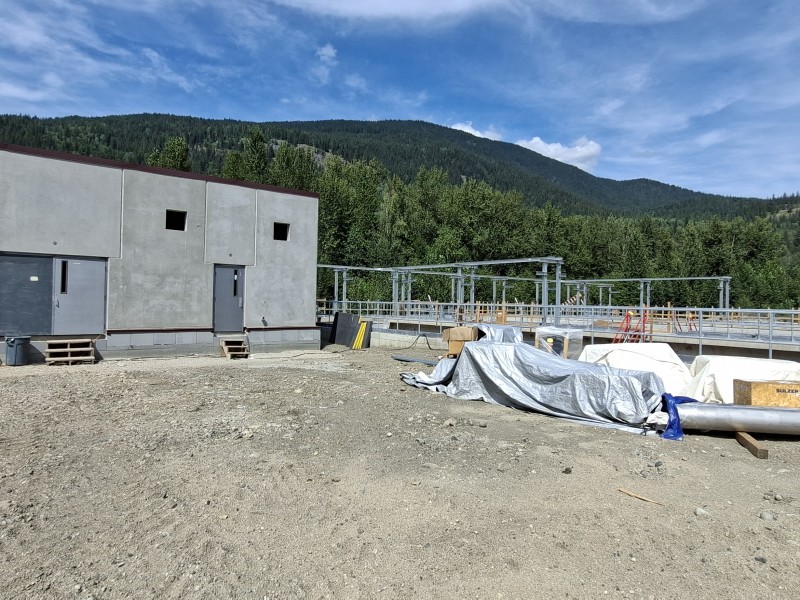
Wastewater treatment plant upgrades set to future-proof facility for 2 decades
Plans to include Big Eddy residents and businesses into the updated facility still in the early stages, city director of engineering says.

Revelstoke granted $200,000 to rework development guidelines
Clarifying building requirements is key in speeding up development approvals, director of development services says.

More childcare spaces needed as families face estimated $35,000 income impact annually
Revelstoke Child Care Society still has over 160 families waitlisted as plans to expand into Okanagan College building take shape.