
New Revelstoke museum display explores Sinixt history
A new Revelstoke Museum & Archives exhibit explores Sinixt history, and seeks to set the historical record straight on aboriginal history in the region.
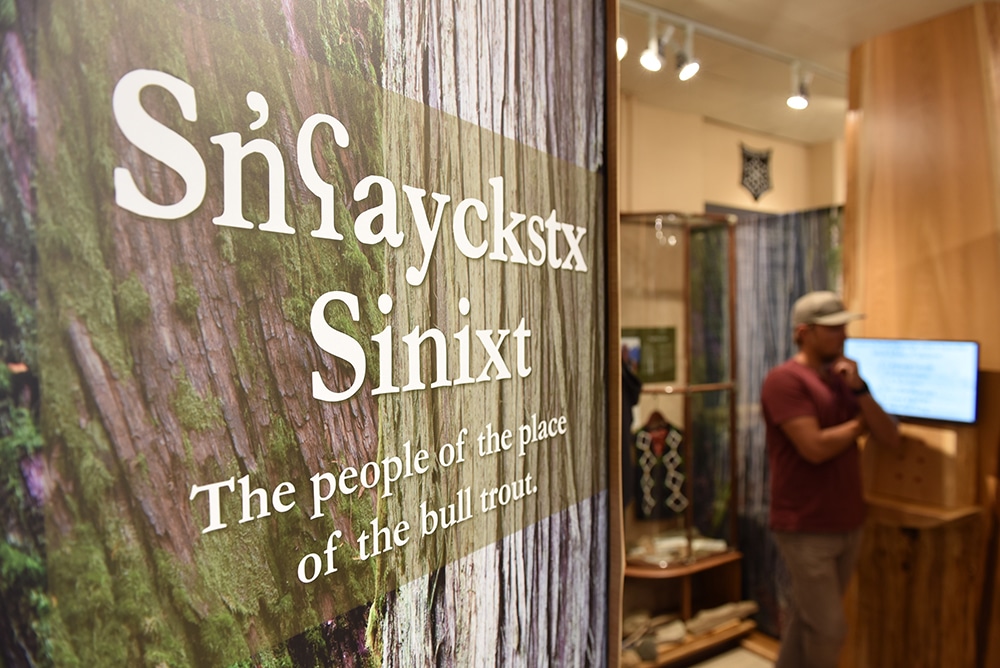
A new display in the main hall of the Revelstoke Museum & Archives explores Sinixt history, and is part of an initiative to start righting historical wrongs.
The Sinixt are an Interior Salish people who lived in the Arrow Lakes area for centuries, and were often referred to as the Lakes people by early explorers.

A new Sinixt display at the Revelstoke Museum & Archives was opened on June 21. Photo: Aaron Orlando/Revelstoke Mountaineer
Their territory included the Columbia River and Kootenay Lake area, and many rivers in between. Their territory stretched south of the border, and many modern day Sinixt live in the Colville area.
In a presentation at the exhibit opening held on National Aboriginal Day on June 21, Revelstoke Museum & Archives Curator Cathy English said the exhibit is part of efforts in the past 25 years to recognize and honour the role Sinixt in the region.
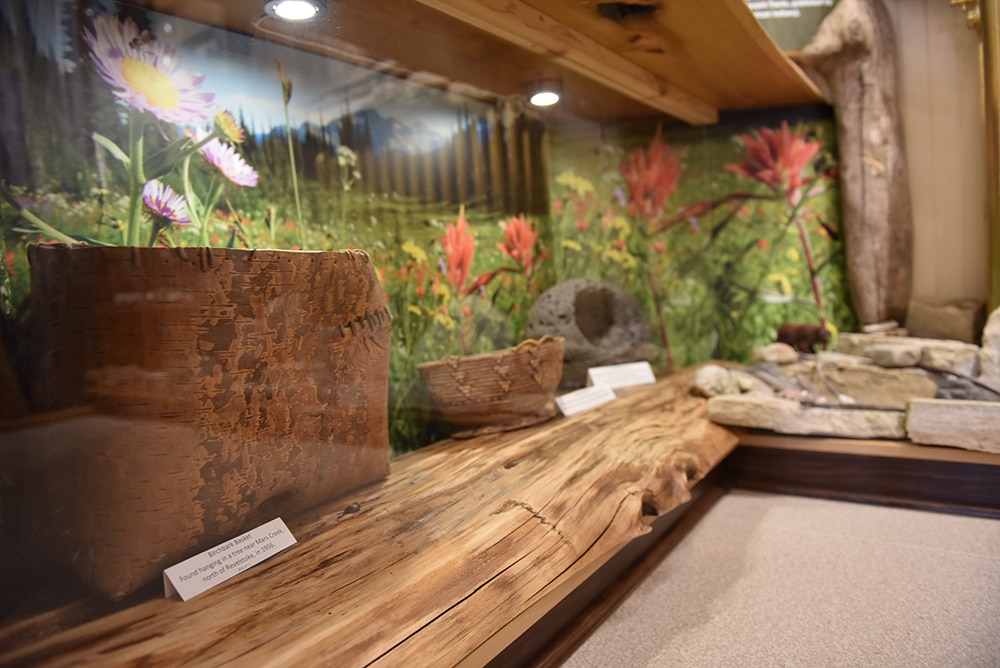
Baskets, a rock bowl, and other artifacts at the ne Revelstoke Museum & Archives Sinixt display. Photo: Aaron Orlando/Revelstoke Mountaineer
She noted ongoing archaeological digs in the Lemon Creek area in the Slocan Valley that were turning up more detailed information on Sinixt history in the region.
English said that when she first arrived in Revelstoke to work as a historian, she was told that no First Nations peoples lived in the area, or perhaps they were seasonal residents here to hunt and forage.
“[They said] they were never really here,” English said. This notion, based on prevailing attitudes rather than fact.
“That was a narrative that was told for many years,” English said. “We are really trying to right that wrong and tell the story as it should be told.”
English also touched on the dark side of local history, sharing newspaper accounts. They included excerpts from newspapers in 1894 that told of the killing of a Sinixt man named Cultus Jim, who was shot near Galena Bay by settler Sam Hill. The incident arose over conflicting views of ownership of the land. Sam Hill was found not guilty of the crime. The harshly racist overtone of the reporting on the incident — which English described as “chilling” — demonstrated how unlikely a just outcome would be given the prevailing attitudes of the time.
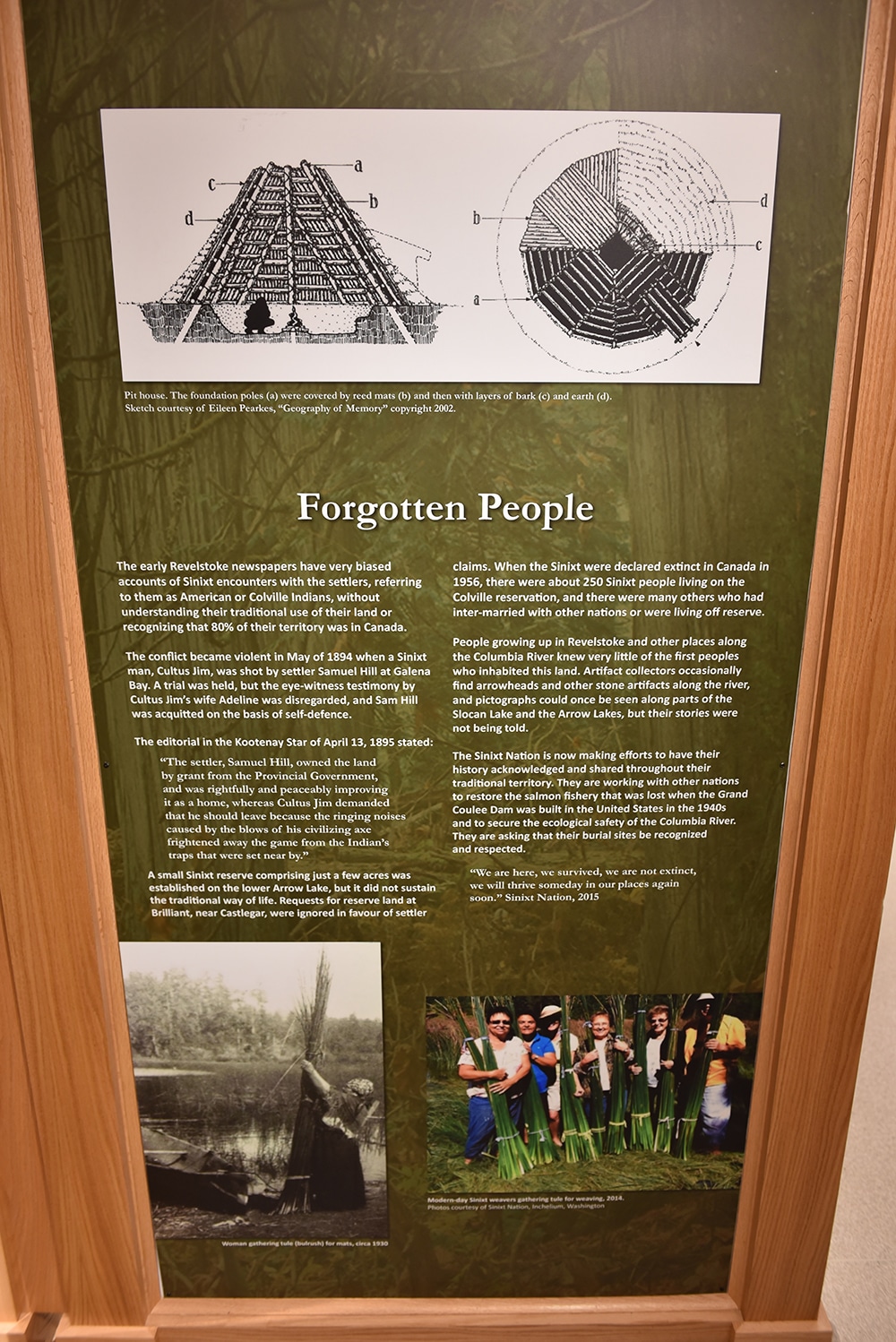
A new Sinixt display at the Revelstoke Museum & Archives was opened on June 21. Photo: Aaron Orlando/Revelstoke Mountaineer
The exhibit features historical artefacts such as a pestle, a lava rock bowl, an obsidian arrowhead, and stone fishing weights. There are audio displays of the Sinixt language, historical explanations of Sinixt pithouses, and biographies of notable figures from history.
On a sad note, a key participant in the creation of the exhibit passed away on June 13, just a week before the exhibit opened. Virgil Seymour was a Sinixt member of the Confederated Tribes of Colville Indian Reservation. He was a tribal councilman who was long involved in Columbia River issues, fighting for the cleanup of legacy pollution from mining giant Teck Cominco.
Since 2014, Seymour worked for the tribe as a facilitator in the Arrow Lakes region, seeking to create a presence and awareness of the Sinixt in Canada.
For more, visit the Revelstoke Museum & Archives, or get in touch with the relatively new Aboriginal Friendship Society of Revelstoke.
What did you think of this story?
Your feedback after we publish a story helps ensure we're always improving our reporting to better serve you
Related Articles
Wastewater treatment plant upgrades set to future-proof facility for 2 decades
Plans to include Big Eddy residents and businesses into the updated facility still in the early stages, city director of engineering says.
Revelstoke granted $200,000 to rework development guidelines
Clarifying building requirements is key in speeding up development approvals, director of development services says.
More childcare spaces needed as families face estimated $35,000 income impact annually
Revelstoke Child Care Society still has over 160 families waitlisted as plans to expand into Okanagan College building take shape.