
Meet the team preparing Revelstoke Mountain Resort’s trails
‘We’re grooming every moment that the hill is closed’ slopes manager says.
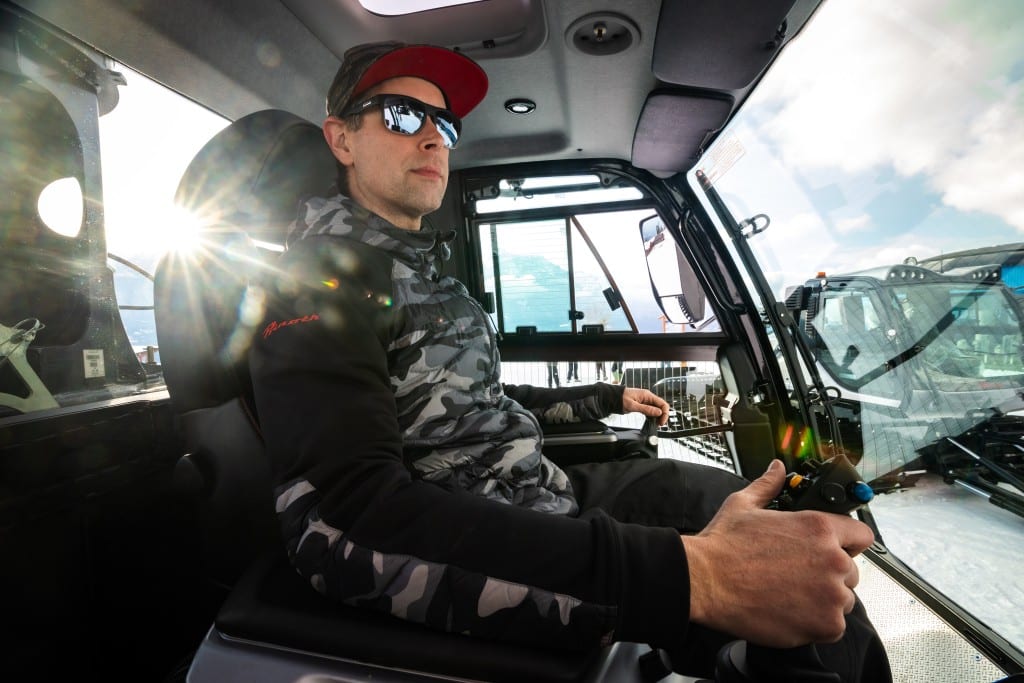
Glance at Revelstoke Mountain Resort any night during the winter season and you’ll probably catch sight of lights scattered across Mount MacKenzie, crawling up and down the mountain the moment the upper gondola spins its last circuit for the day, right until riders head out for some morning runs.
Attached to each light is one of the resort’s nine machines that groom the snow to make ideal riding conditions for skiers and snowboarders of all skill levels.
“The goal is to always be putting as much flat, mint run out as you can possibly accomplish,” Aaron Clarke, Revelstoke Mountain Resort slopes manager said.
The groom team consists of 24 full-time operators and three part-time operators. Teams of seven operators head out for each shift, one running 4 p.m. to 12 a.m. and another 12 a.m. to 10 a.m., which often start and end earlier to ensure trails are clear of equipment for the main morning crowds.
With trails all over RMR’s 3,121 acres of terrain to groom, Clarke said it’s impossible to hit every one each night. Instead, the team works through a priority list and then a rotational list based on current snow conditions, upcoming forecasts and what areas seem to be favourites at the moment.
“We’re grooming every moment that the hill is closed,” he said.
The resort’s famed 1,710 metres of vertical descent means up to four operators can be working the night on one of the three priority runs that trace from the top of Stoke chair down to the resort village.
Sometimes conditions and crews line up and two priority runs can be cleaned up in one night.
And if the stars align just right, Clarke and his team can find a unicorn out in the snow and get all three main runs groomed before the first rider takes off for the day.
“We call them trifecta nights,” he said. “It’s a goliath task, and they’re always a reason to celebrate for the crew.”
The building of a groom team
Trail grooming can seem like a solitary job with each operator spending the majority of a shift alone, but Clarke stressed the entire operation is anchored in teamwork. Teams radio to each other throughout the night about conditions and pivot plans in the moment based on changing scenarios and often senior operators jump into free-grooming cats to carve out particularly irksome sections.
“You have to trust your team, the people on your shift and the team that was either before you or is after you,” Clarke said.
That trust starts before operators are even brought onto the team, with new hires oftentimes sought out from other areas of the resort.
It’s not just a familiarity working with heavy machinery Clarke and his senior team are looking for, it’s an attention to detail and a drive to collectively deliver perfection. From construction workers and trail builders to even those with farming experience, he’s found some of his best operators in nearly every corner of the resort.
“Fine detail is such a huge aspect of grooming, and you kind of see that work all over the place,” Clark said.
A groomer for over 20 years, Clarke explained the profession often grabs folks for the long haul. The thrill of creating perfect terrain for crowds the next day is something that keeps people in the industry for well over a decade.
“I get texts after a trifecta day, when we’ve really laid out a solid product. Friends in town text me to share how good of a day they’ve had. That’s incredibly rewarding,” he said.
Still, there are challenges to working the graveyard shifts, and Clarke is frequently checking in with all operators and keeping an eye out for clues that sleep and nutrition are starting to fall by the wayside. It’s a practice that’s grown over the last ten years, and one Clarke actively strategizes for.
“We’re asking them, ‘do you need to be moved to a different shift? Do you need a break?’ And we’ll work it out.”
A testy terrain
You can find signs of the team’s work on nearly every run throughout the year, whether it’s a pocket filled up with blowing snow throughout the day that gets carved out and cleaned up at night, excess snow pushed into worn-down parts of the trail or trees rubbed raw of bark on one side.
The snow grooming fleet consists largely of winch cats, machinery that anchors a cable line into the mountain before heading down roughly 1,200 metres and creeping back up the run.
While the total acreage of ground covered is a feat itself, navigating trails that offer few straight lines up and down the mountain is the real testament to their collective skill.
The cable lines frequently cross back and forth over the trail as the cat crawls up and down, rubbing up against trees that line the sides, and operators frequently assess the main buffer trees, making sure each one can still stand up against the weight of the cat and the cutting of the wire.
“They’ll give us an average of 10 to 15 years acting as a buffer tree before we have to cut them back and pinpoint what the next buffer tree is,” Clarke said.
Revelstoke’s interior rainforest climate is a key reason the resort relies so heavily on winch cats as opposed to free-grooming cats. While resorts with longer stretches of colder temperature can count on cold, densely packed snow to provide traction for free-grooming cats, Revelstoke’s powdery conditions and mild weather means the machines could slide through the deep powder, unable to grip on steeper trails.
“Everything we do is really very weather-based and forecast-based. How we go about a week of work is solely planned around these weather systems,” Clarke explained.
It’s all the factors that make Revelstoke Mountain Resort the resort it is that also has Clarke urging caution to riders entering runs after a day out in the resort’s backcountry. It’s those moments, when stragglers have missed the last chair and are making the long trek down the mountain, that oftentimes cat groomers and riders can mix.
The team sets out signage and flashing lights on each trail that’s being groomed and signs throughout the resort warn riders to keep away from groomers when operating. But with the rising popularity of backcountry riding, Clarke and his team are seeing a rise of unsuspecting riders finding themselves in scary situations.
“An 11-millimeter diameter cable in the pitch black, you can’t see it. I know where they’re operating, where to look and I can barely ever see it. We’re doing this job to put smiles on folks’ faces, not to cause what can be very severe accidents.”
At the end of the day, Clarke’s team is focused on the same thing: The excitement of a good trail and a perfect run.
“I ride with my two daughters all the time, and seeing the joy something you created brings them, that’s everything.”
What did you think of this story?
Your feedback after we publish a story helps ensure we're always improving our reporting to better serve you
Author
Related Articles
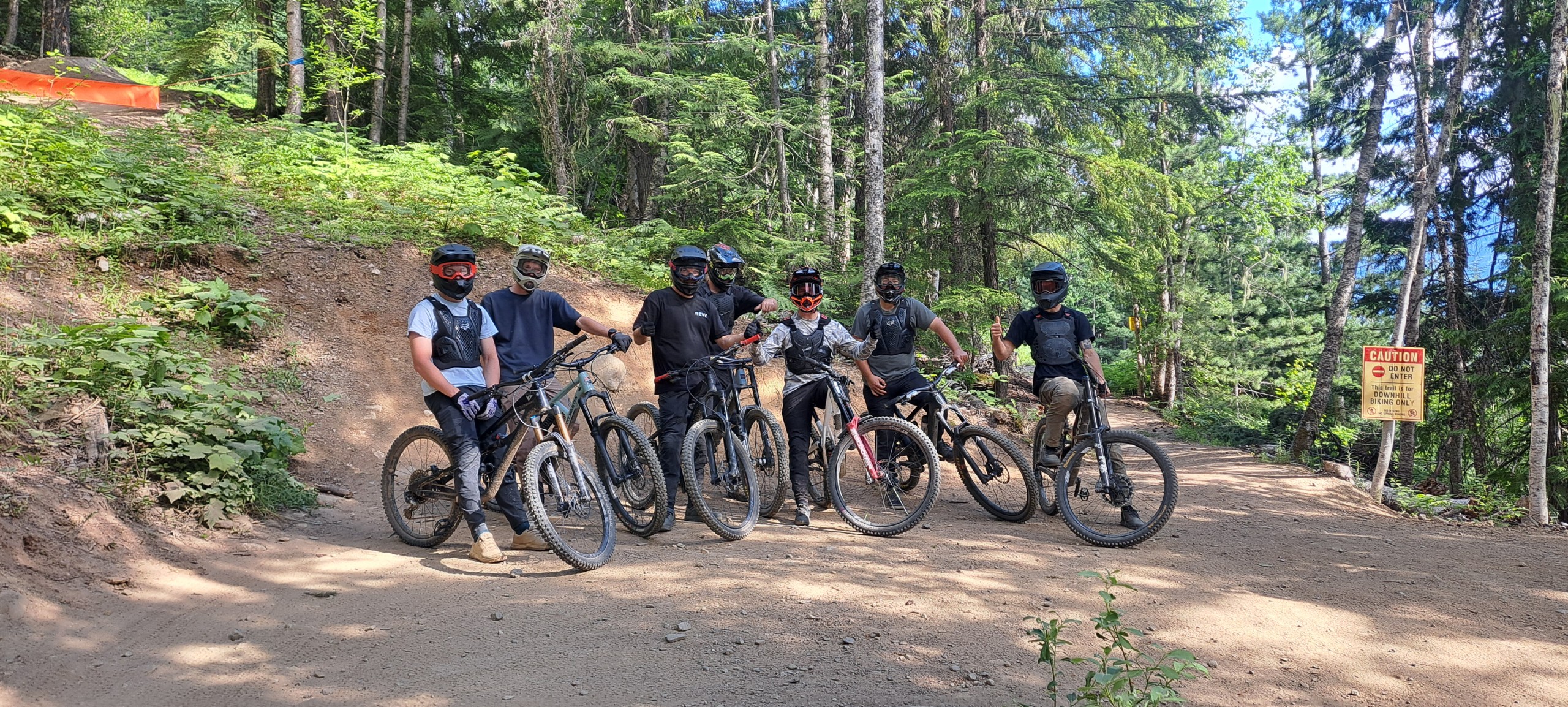
The upper mountain at Revelstoke Mountain Resort is now open to mountain biking and hiking
Stoke Climb, Mackenzie Ridge and the upper part of the Fifty Six Twenty remain closed due to snow.
Returning Canada Strong Pass means free access to Mount Revelstoke National Park all summer
From mountain biking trails to Meadows in the Sky hikes, Mount Revelstoke National Park is a source for various free outdoor activities this summer with Canada Strong Pass.
Meghan Tabor brings Revelstoke experience to BC’s mountain biking tourism industry
The new Mountain Bike BC executive director says Revelstoke’s partnership between local biking club and tourism management organization is an example for the whole province.