
Martin DeHoog created an agricultural micro-business from scratch
He shares his real-world tips for turning your side-hustle into a career too
By Elouise Paabo
This story first appeared in print in the March 2021 issue of Revelstoke Mountaineer Magazine. Read the e-edition here:
Unlike most young entrepreneurs, you won’t be able to find Martin DeHoog online. He calls himself a beekeeper, not a computer guy. So next time you want to buy some local honey from someone who taught themselves everything from the ground up, go to the Revelstoke Farmers Market and have a chat with Martin about his years of experience as a beekeeper and maybe he’ll share some more secrets for success offline, in the real world.
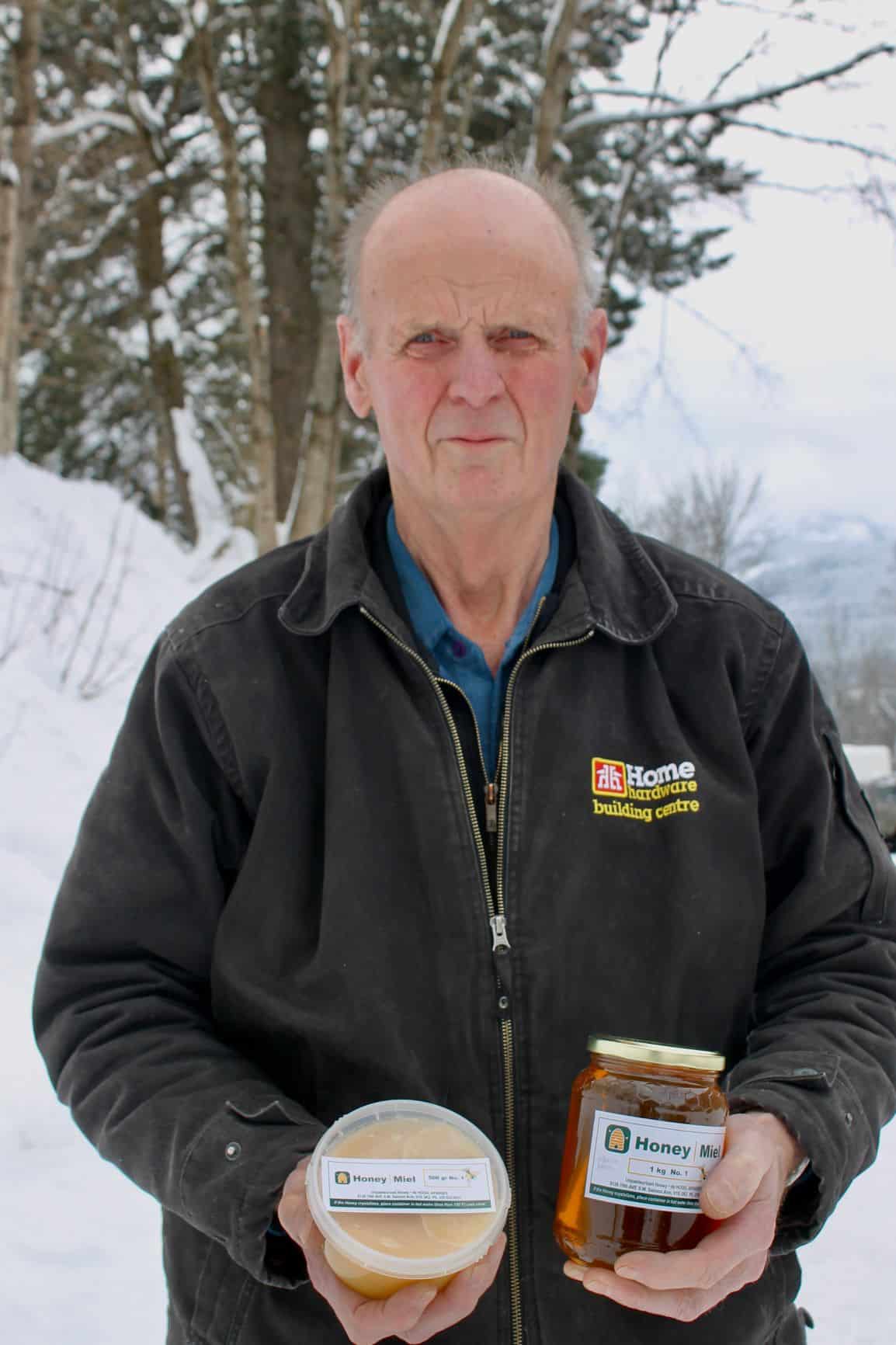
Martin DeHoog became one of the most successful beekeepers in the region through determination, hard work, and by teaching himself everything there is to know. DeHoog, a regular vendor at Revelstoke farmers markets, has been in the beekeeping industry since 1979 and at 81 years of age, with no email address or online presence, he has some real-world tips for young people who are trying to turn their passion project into a successful business.
1. Start with a hobby
When Martin began beekeeping in 1979, it was just a hobby. “I started with only two hives. It was a hobby that went out of control and I ended up with 300 hives.” DeHoog believes the age-old principle that being passionate about what you do is a fundamental key to success. He says that when you’re passionate about something, it won’t feel like work and you’ll soon find your hobby accelerating into a career.
2. Find a mentor
Martin says the best way to start is to find someone willing to take you out and show you the ropes, “that’s the best way to learn.” As with learning any new skill, putting knowledge into practice is the best way to improve. If you know someone successful in the field you’re interested in or has a skill you’d like to learn, show self-confidence and reach out to them. They’ll likely be flattered you asked for their help and will be willing to show you a few things.
3. Read books about it
DeHoog says there’s a lot of books out there on beekeeping and it’s a great way to learn. Similar to being careful of what you read online, DeHoog says to be mindful of where the book was written as every area is different. For example, beekeeping in Salmon Arm is different from beekeeping in Prince George because it takes more honey to keep the bees alive during their long winters. It’s best to find books about your location to get the most effective guidance. The library is a great place to start, such as the Okanagan Regional Library here in Revelstoke which has a whole section dedicated to the Okanagan Valley.
4. Do it yourself to save money
Martin is a self-taught beekeeper. “I just went ahead and did it!” he exclaims. He started with two colonies, and after eight years of dedication, he had over 100 colonies. He raised all of his bees and even made his own equipment and suggests anyone wanting to get into beekeeping to do the same, “Otherwise, it can become very costly.” As with any industry, the more you can do yourself, the cheaper it will be.DeHoog says that having personal initiative and doing what needs to be done yourself will save you both time and money.
5. Be willing to put in the hard work
After 42 years in the beekeeping industry, teaching himself everything from the ground up, Martin says there are no shortcuts for hard work, “no matter how you look at it, it’s all work.” He says there’s not a great amount of money in the industry, and it’s tough for a young person to start out, but once you learn and put it in the hard work, it will all be paid off.
6.Go to local markets
Martin has been selling his honey at the Revelstoke Farmers Market for nine years now and believes the importance of a good market is simple: “It’s a good market and people know me there. I sell honey and people like it.” He says it’s a great way to build connections. The market is his way of building a following for himself and making a presence within the community.
What did you think of this story?
Your feedback after we publish a story helps ensure we're always improving our reporting to better serve you
Related Articles

Wastewater treatment plant upgrades set to future-proof facility for 2 decades
Plans to include Big Eddy residents and businesses into the updated facility still in the early stages, city director of engineering says.

Revelstoke granted $200,000 to rework development guidelines
Clarifying building requirements is key in speeding up development approvals, director of development services says.
More childcare spaces needed as families face estimated $35,000 income impact annually
Revelstoke Child Care Society still has over 160 families waitlisted as plans to expand into Okanagan College building take shape.