
‘Jurabbit Park’ spreads awareness for the Recycled Bunny Project this Halloween
Bunnies transformed into dinosaurs for Revelstoke Halloween’s Jurabbit Park display.
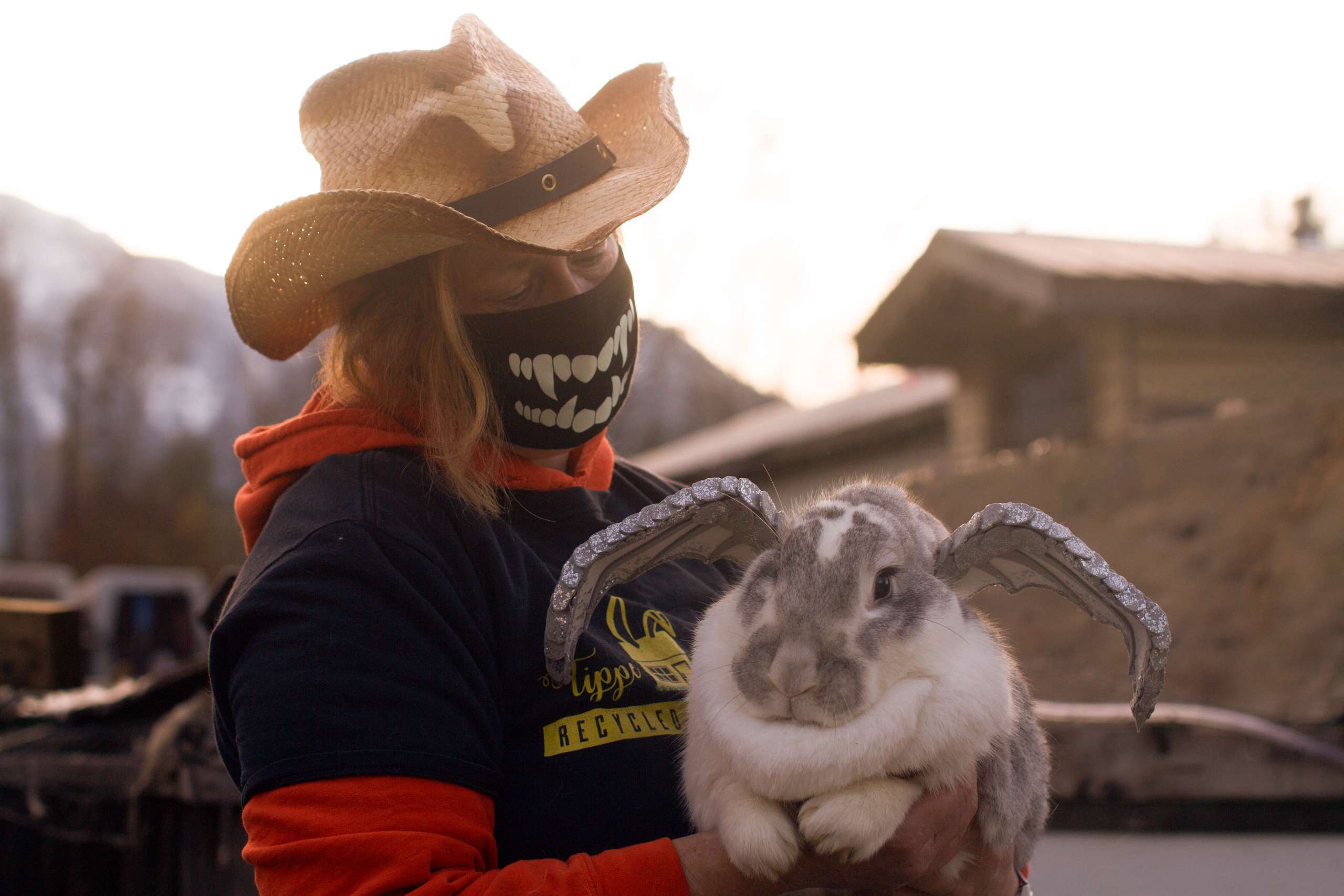
For Halloween this year, it wasn’t only eager children that dressed up for Halloween festivities in Revelstoke. At the Recycled Bunny Project, bunnies were transformed into dinosaurs for their new tradition ‘Jurrabit Park- A Bun-dino exhibit.’
The founder behind the only rabbit rescue in Revelstoke, Susanne Tippe, talks about how the lack of education and resources has led to a bunny overflow problem across the province.
Tippe explains how rabbits can give birth as frequently as once a month, and that meat-breed varieties are genetically bred to have up to 12 kits per litter. “[Rabbits] can hold a pregnancy in waiting, and as soon as the first ones have cleared the nest, boom all of a sudden there can be another litter, it’s crazy,” Susan says.
“If you add that up, if they are allowed free range, it’s a disaster.” Susan mentions places like Canmore, Victoria, and Richmond, where the situation has spun out of control. “I get calls quite often and people don’t know what to do.” Tippe says it’s hard “to keep the problem at bay,” as people cannot get any funding to get the rabbits spayed and neutered, because they are still considered farm animals and ”not mainstream pets.”

The Halloween event ‘Jurabbit Park’ showcased the Recycled bunny project’s rabbits in a funny way to entertain the kids and spread awareness. Photo: Revelstoke Mountaineer/Sofie Hagland
Just before Christmas, over ten years ago, Susan received a phone call about a couple of bunnies needing a new home. Tippe comes from a German hunting family, but she had no previous experience with rabbits as pets. “I am guilty of having had rabbit stew as any good German should.” Now Susan has seen the other side and how “misunderstood rabbits are. I have learnt a lot, thank God for Google,” Tippe laughs.
The shelter that started off with only three rabbits, today houses over 29. Over time, people started looking to Tippe for help and advice, “it all kind of snowballed slowly from there.”

Susan’s daughter Xena, or ‘Dr. Hobson.’ and the bunny named Jaxon from having a white ‘glove’ (paw). Photo: Sofie Hagland/Revelstoke Mountaineer Magazine
Bunnies are “genetically not like the wild rabbits, they don’t have the same inborn awareness. … They will live with dogs nicely in a home, but you put them out in the wild and they will think that a coyote or a wolf is their friend, and they might not run which will be their demise.”
Susan works with the bunnies’ personalities to make them ready for adoption. However, some bunnies have after too much uncertainty in their lives decided that Susan’s home will be their last. The “quiet fellah” Pap, for example, had a severe neck injury after fighting with another bunny. “Rabbits deal with infections very difficultly, and after being back and forth at the vet for three months, he decided that nobody was going to be handling him anymore.”
The recycled bunny project runs solely on the donation of recycled bottles and food donations. At the Big Eddy gas station, they have big bags of dry food you can buy to donate, and Susan ensures the Revelstoke Mountaineer that even though they might look small “they eat a lot of food.”
“We are always looking for volunteers, wintertime is especially tough with a lot of snow shovelling,” Susan says.
If you are interested in adopting, donating, or helping out as a volunteer email [email protected] or message https://www.facebook.com/lovelylagomorphs on Facebook.
What did you think of this story?
Your feedback after we publish a story helps ensure we're always improving our reporting to better serve you
Related Articles
Wastewater treatment plant upgrades set to future-proof facility for 2 decades
Plans to include Big Eddy residents and businesses into the updated facility still in the early stages, city director of engineering says.
Revelstoke granted $200,000 to rework development guidelines
Clarifying building requirements is key in speeding up development approvals, director of development services says.
More childcare spaces needed as families face estimated $35,000 income impact annually
Revelstoke Child Care Society still has over 160 families waitlisted as plans to expand into Okanagan College building take shape.