
How osteopaths treat mountain sports athletes
Not feeling 100% since you big skiing or MTB wipe out? Osteopathy helps athletes, including mountain athletes, recover from serious issues caused in traumatic falls. It’s just one way the practice helps you recover earlier and prevent further injures created by imbalance.
This article is presented by William Jarrige and Anouk Sanchez, manual practitioners, and thesis candidates for the osteopathy practitioner program at the Canadian School of Osteopathy–Manual Practice–Vancouver. We are the owners of Revelstoke Osteopathy, the new clinic located at 111 Second Street East in Revelstoke. This is the fifth installment in a 10-part series exploring osteopathy.
In recent articles, we explained how the osteopathic practitioner accompanies the human being from conception, birth to adulthood. So here we are in full bloom of youth, and our little being became an accomplished athlete. Today, let’s explore the role of osteopathy in athletic performance.
The role of osteopaths in sport is increasingly important. Indeed our unique approach allows us to take our place on the team of therapists in professional sports. Did you know for example that every French national team has an osteopathic practitioner?

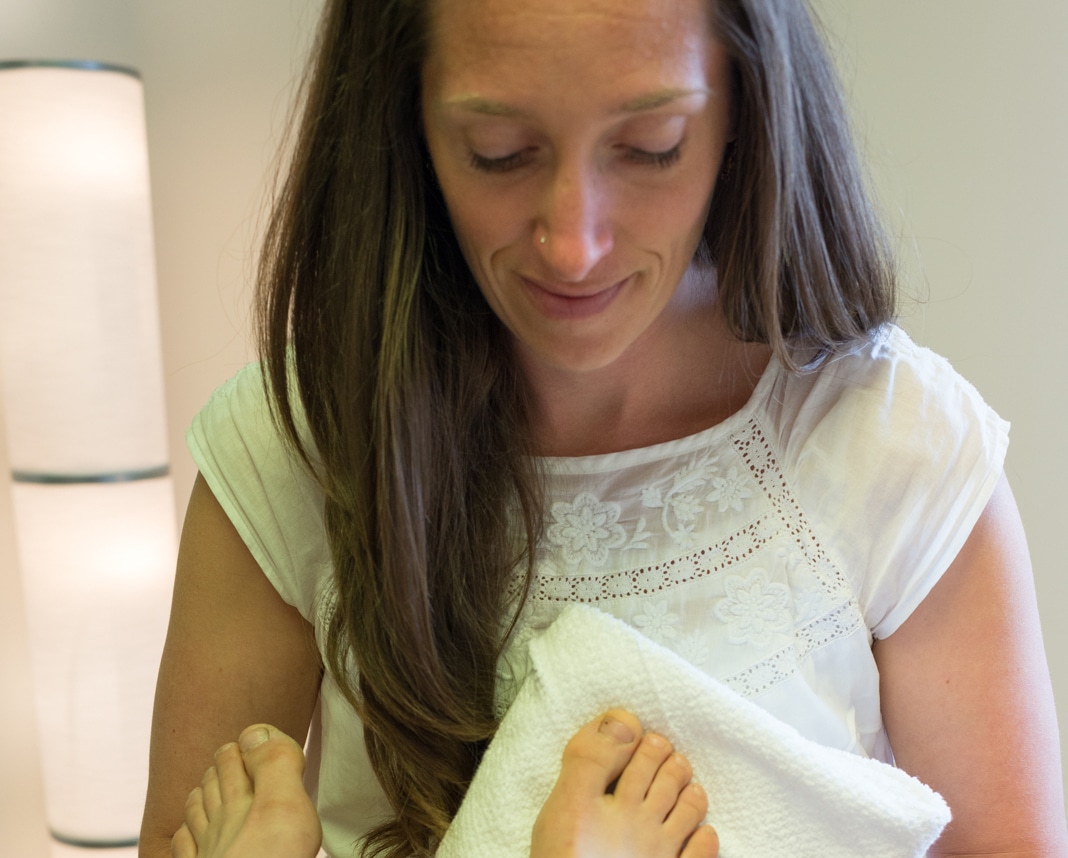
Anouk Sanchez of the Revelstoke Osteopathy Clinic treats a patient. Photo: Agathe Bernard
Of course, osteopathy had to prove itself to make the team. Studies have shown that athletes treated by osteopaths are injured less and recover more quickly. In the French equestrian circles, osteopaths have been treating jockeys as well as horses since the ’90s.
How does the osteopathic practitioner can help athletes? To answer this question, let’s review our anatomy by talking about an often-neglected structure: the fascia.
The fascia is a thin sheet that is continuous throughout the body that wraps around every structure: muscles, bones, internal organs and even blood vessels and nerves.
[quote_box_right]I know of no part of the body that equals the fascia as a hunting-ground. I believe that more rich golden thoughts will appear to the mind’s eye as the study of the fascia is pursued than of any other division of the body.” —Philosophy and Mechanical Principles of Osteopathy[/quote_box_right]
Even though their name are specific to their location, there is really only one fascia in the body. We remind you that the body is composed of 65% water. Now imagine that this body of water is projected at high speed against a tree, like in a skiing accident.
Fortunately, the musculoskeletal system, the fascias, the cerebrospinal fluid, the brain and internal organs all worked together to absorb the impact and prevent the skier.
Unfortunately, this high velocity impact leaves residual vectors in the body. At the fascial and fluid levels, it’s like a water balloon with all of the water staying on one side stretching the walls of the balloon on that side. The osteopathic practitioner uses myofascial techniques to remove the imprint of the impact that will continue to create underlying pulls and postural instabilities that can lead to further injuries if not treated.
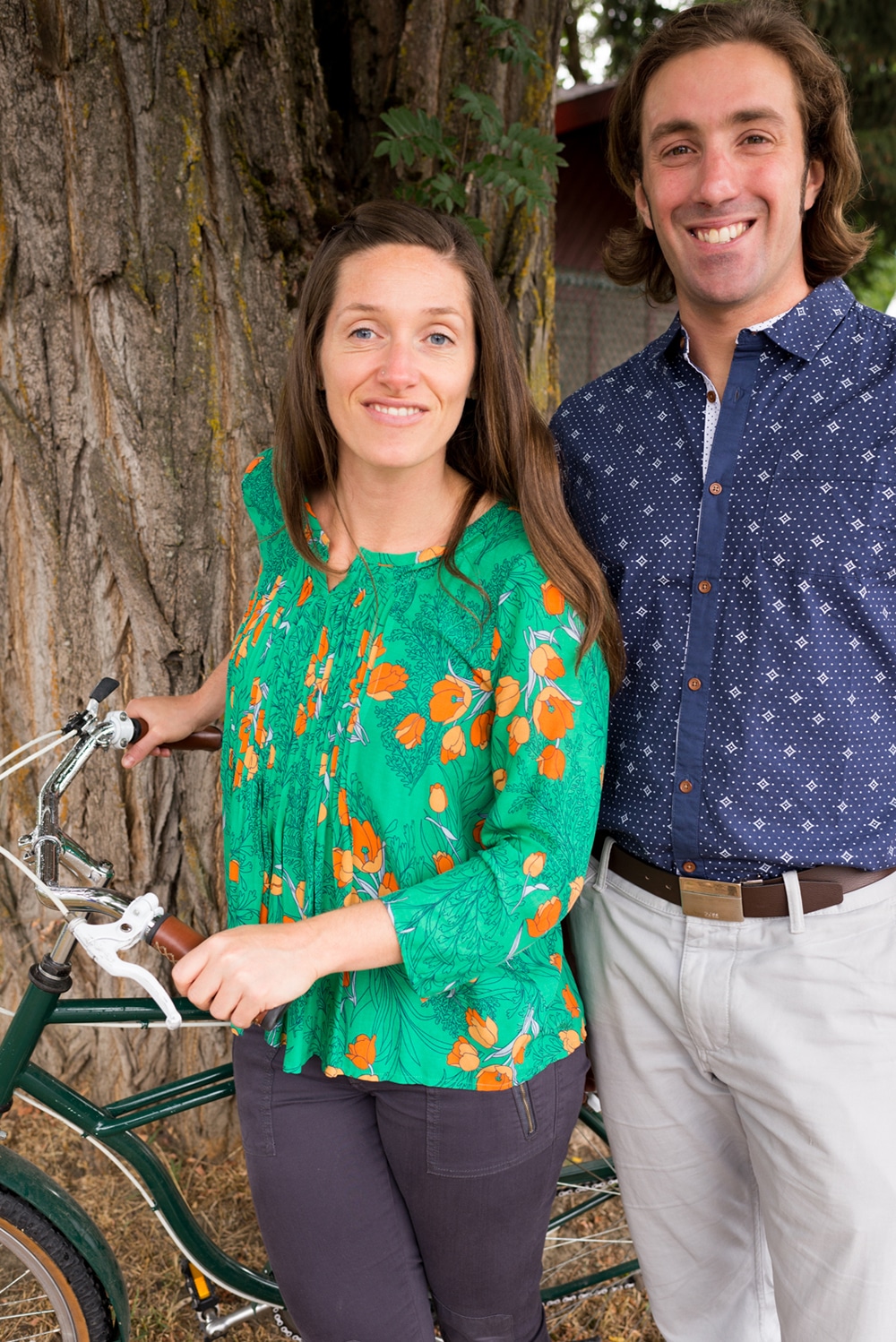
Anouk Sanchez and William Jarrige of the Revelstoke Osteopathy Clinic. Photo: Agathe Bernard
Over time, the osteopathic practitioner allows the athlete to absorb and dissipate shocks and to recover faster because the underlying structures are not already compromised by previous injuries. Take the example of glasses you have at home. They receive with each washing small strokes, which weaken the glass without you seeing it, and one day, you just knock the glass and it breaks. Well osteopathy fixes the glass of its layers of shocks so that it will not break as easily.
We understand that all the structures of the body can be affected through their fascial attachments and connections. The thoracic and abdominal organs are particularly vulnerable during impact because of their soft walls and fluidic contents, especially if they are engorged with blood and therefore heavier — such as the liver, spleen, small intestines or the kidneys. The latter are often problematic in their positions with athletes and active people.
In fact, the kidneys are located just in front of the psoas, which is responsible for the flexion of the hip involved in all the fun sports such as skiing, snowboarding, backcountry touring, biking, running and more. The kidneys use the psoas as rails in order the glide up and down during thoracic breathing and during flexion of the hips. With impacts and falls, the kidneys can get stuck ‘up’ or ‘down’ or get ‘derailed’ medially or laterally. The sciatic nerve, femoral nerve, the genito-femoral nerve, the lateral cutaneous nerve, ilioinguinal nerve (to name a few), travel near this muscle. The sigmoid colon on the left and the ceacum of on the right are also susceptible to be affected by a displaced kidney. We save you the blood vessels and other pelvic organs but keep in mind that the psoas and the kidneys are the keys to many problems such as pain in the groin, constipation, mimic appendicitis, lower back pain, sudden food intolerances, chronic tight hip flexors.
For the athlete, after multiple falls while mountain biking, our sportsman complains of low back pain in and hypoesthesia (lacking sense of touch) inside of the thigh. The receptions are not very traumatic in term of leading to serious injuries, but with every impact on the ground, if the abdominal pressure is too low due to poor engagement or coordination of abdominal muscles, the kidneys can eventually slide down the psoas and off to one side of the muscle.
The fascial envelope that contains the kidneys pulls on its attachments, the diaphragm and the lumbar vertebrae, hence the pain in the lower back. The kidney can compress the femoral cutaneous nerve, which affects the sensations on the thigh. The osteopathic practitioner will directly manipulate the kidney, making sure that its position and function with the psoas are restored thus releasing the patient’s symptoms. He will also recommend some diaphragmatic breathing exercises to help keeping the kidney up and high impact activities might be restricted for up to a week.
Not everyone is a professional sportsman and we will learn in the next article that people suffering from chronic pain and people doing repetitive movement at work can also benefit from osteopathic treatments.
What did you think of this story?
Your feedback after we publish a story helps ensure we're always improving our reporting to better serve you
Related Articles

Birch and Lace salon offers apprenticeship-style academy for future hair stylists
The skills program aims to keep residents in town and learning in-house as salon founder focuses on accessible education opportunities.
Revelstoke Mountain Resort provides updates on infrastructure upgrades and partnerships
Resort president Jason Kelder shared planned changes coming to the resort, which include a new warming hut.
Glacier National Park trails remain closed following heavy avalanche season
Balu Pass trail, along with two others are closed indefinitely as Parks Canada staff evaluate how much of the popular trails will need to be rebuilt.