
History and culture of the Secwépemc people explored in new work
New historical scholarship explores the language, laws, and society of Secwépemc people, whose lands extend to the Revelstoke area

By Jim Cooperman
Secwépemc People, Land and Laws
Marianne Ignace and Ronald E. Ignace
McGill-Queen’s University Press (2017)
A better understanding of Indigenous peoples is now possible, thanks to the recent publication of Secwepemc People, Land and Laws by Marianne Ignace and Chief Ron Ignace, with contributions from archeologist Mike Rousseau, ethnobotanist Nancy Turner and geographer Ken Favrholdt. Ancient stories, archeological evidence, archival records, ethnographic studies, linguistic research and first-hand knowledge have been masterfully woven together to create this comprehensive examination of the Secwepemc peoples’ ancient connection to the land and the injustices they have endured for over 200 years.
Marianne Ignace is a professor of linguistics and First Nation Studies at Simon Fraser University and has authored and co-authored papers in various journals and books on the Secwepemc (Shuswap) people of the Plateau. Her interests are aboriginal land use and occupancy, ethnobotany, traditional ecological knowledge, ethnohistory, and the linguistic and anthropological analysis of Aboriginal language discourse.
 In addition to being the Chief of the Skeetchestn at Deadman’s Creek, Ron Ignace is an adjunct professor at Simon Fraser University and he was fortunate to have been raised by his great-grandparents, whose parents in turn were born in underground homes and were adults before the settlers arrived. Consequently, Ron became fluent in Secwepemctsin at an early age and grew up with a deep respect for his heritage.
The book begins with a look at the geological history as framed by the ancient stories of the transformers, who “tamed the land and made it inhabitable for future generations.” In doing so, the Ignaces have connected the emergence of their nation to the environmental history of the region.
In the chapter on archeology, we learn about the evidence from excavations that indicates human occupation in the Interior Plateau region began over 10,000 years ago. From the earliest days, when there was likely a low population density of small family groups until the Europeans arrived, the history is divided into horizons and phases as determined by the type of stone bifaces (spear points and knives) found.
Key eras include the Lehman Phase, when Coast Salish moved up to the interior about 4,700 years ago; the Shuswap Horizon about 3,000 years ago, when salmon became an important part of the diet; and the Plateau Horizon about 1,600 years ago, when bow and arrow technology was introduced from the Northern Plains.
 Certainly, one of the most fascinating aspects of Indigenous culture is that there are so many distinct languages that help to define the numerous, diverse First Nations in the province. The Ignaces estimate that the roots of the Secwepemc language, Secwepemctsin, began some 4,500 years ago and eventually, two dialects emerged, Eastern and Western. There is an intricate structure to the language that connects it to the land and ancient experiences.
Unlike the unsustainable misuse of resources that is so common today, the Secwepemc people were true stewards of the land, the plants and the animals. Careful and respectful management of resources was both part of their spiritual beliefs and their culture. Far more than simple hunter-gatherers, the Secwepemc utilized horticultural methods and habitat management practices that were an early form of agriculture. In addition, their egalitarian lifestyle meant that harvests and hunts were always shared and no one went hungry.
The Secwepemc sense of place that evolved over the millennia is intense and can be best understood by how their place names are an integral part of their stories. At one time, there were place names for every location in their territory and these names were derived from the experiences of past generations. Those names that have survived provide reference points to their history and help confirm the Secwepemc ownership of the land that was stolen from them.
While for the most part, the Secwepemc were historically a peaceful nation, there were border disputes that resulted in occasional warfare. Disputes were often settled with peace treaties including the famous Fish Lake Accord, which included marrying into the opposing Nation so to consolidate a kinship alliance between the two groups.
The core productive unit of Secwepemc society was the extended family, which functioned as a flexible, inclusive group. The key aspect of family life was sharing and helping one another, as this was necessary given the need for self-sufficiency to survive. The section on genealogy includes lineage charts that trace ancestors back to the late 1600s that were prepared using baptismal records.
While the missionaries may have thought they were converting pagans to Christians, in fact, due to the language barrier the Secwepemc people were interpreting the prayers and practices in terms of their own ancient spiritual beliefs. However, the strict religious instruction in the residential schools did result in the loss of Secwepemc identity and spiritual knowledge.
The dispossession of Secwepemc traditional lands that began when Europeans arrived and their resistance to the European occupation is well chronicled. Of great significance is the Memorial presented to Prime Minister Wilfrid Laurier in 1910, which describes their history since first contact and describes what should be a respectful relationship between the two nations according to their ancient laws. Described by the Ignaces as the Secwepemc “Magna Carta, the Memorial continues to serve a purpose today as it provides the “underpinnings of Indigenous nationhood.”
Adding insult to injury, after they were taught to farm the land and became very successful growing crops, settlers complained about the competition and so the government made it difficult for them to sell their harvest and allowed their water rights to be taken away.
The book chronicles their long history of fighting for their rights that involved a number of trips to Ottawa and England, where they had one audience with the king that was fruitless. Yet, despite over 150 years of fighting for justice, full and just recognition of Secwepemc title and rights remains unresolved.
One overriding theme throughout the book, is that despite the theft of their land and the attempts to eliminate their language and way of life, the Secwepemc people have managed to maintain and advance their culture thanks in part to their laws and traditions that have passed down from generation to generation. Above all else, the Ignaces have put to rest the misconception that Ingenious Nations were primitive people that were inferior to Europeans, as they clearly show how the Secwepemc indeed had a sophisticated culture and treated each other, their neighbours and the environment with more respect than we see today in our supposedly advanced societies.
There are many insights that can be gained from reading this excellent, comprehensive book, all of which lead to a better understanding and more appreciation of the Secwepemc worldview, which was closely connected to their home place. Learning more about First Nation history is also a key step towards reconciliation.
This article appeared in print in the April/May issue of Revelstoke Mountaineer Magazine.

Jim Cooperman
Author, environmentalist and back-to-the-lander Jim Cooperman has lived on a rural property above Shuswap Lake since 1969. His geographic handbook, Everything Shuswap, is in its second printing and his bi-monthly newspaper columns also appear in his blog site, shuswappassion.ca.
What did you think of this story?
Your feedback after we publish a story helps ensure we're always improving our reporting to better serve you
Related Articles

Birch and Lace salon offers apprenticeship-style academy for future hair stylists
The skills program aims to keep residents in town and learning in-house as salon founder focuses on accessible education opportunities.

Revelstoke Mountain Resort provides updates on infrastructure upgrades and partnerships
Resort president Jason Kelder shared planned changes coming to the resort, which include a new warming hut.
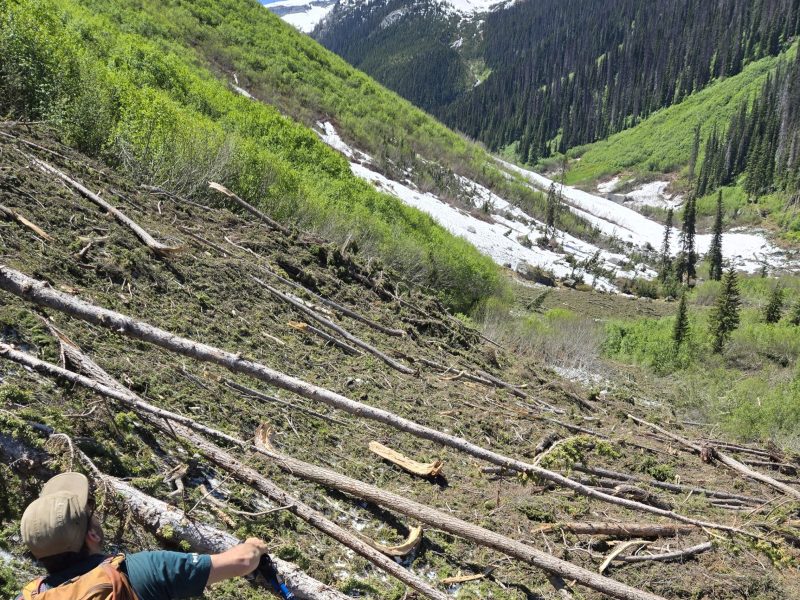
Glacier National Park trails remain closed following heavy avalanche season
Balu Pass trail, along with two others are closed indefinitely as Parks Canada staff evaluate how much of the popular trails will need to be rebuilt.