
From snowshoes to world class skiing – over a century of snow sports in Revelstoke
‘There were really no roads in those days anyways, just trails’: A look back at the colourful history of the snow sports we hold dear.
Revelstoke hasn’t been around for quite so long as some other towns, especially when you look towards Eastern Canada, but we take the lead when it comes to all the creative ways we make the most of the snow that descends on these mountains year after year.
Snow sports here in Revelstoke owe their beginnings to the humble snowshoe. According to the Ontario Heritage Trust, Indigenous peoples throughout North America have been using snowshoes to travel across snowy landscapes for at least 10,000 years. Originally modeled after the large feet of the animals that make snowy winters their home such as snowshoe hares, lynx and bears, snowshoes have been helping people stay afloat in snow since time immemorial.
When Europeans first came to the region around the turn of the 19th Century, they recognized the value of snowshoes and quickly adopted this technology. According to the Canadian Encyclopedia, snowshoes in Western Canada were originally made from pliable birch wood and deer, caribou or moose hide.
Snowshoes were the preferred method of winter locomotion in this valley until one miner from Norway called Ole Sandberg used homemade wooden skis to descend from his mining claim in Albert Canyon. According to The Revelstoke Museum and Archives, these “Norwegian snowshoes” were up to 10 feet long and mostly used for transportation, but it didn’t take long for them to gain momentum with the sportier crowd in town.
From snowshoes to the Big Hill
One of the many Scandinavian immigrants to arrive in Revelstoke in the early 1900s, Nels Nelsen contributed to popularizing the sport of skiing, which has its roots in Scandinavia. After arriving from Norway at the age of 18, he quickly went on to become one of the leaders of his cohort in ski-jumping, and he was one of the main proponents of the creation of the “Big Hill” on Mount Revelstoke. This was the biggest-ever natural contour ski-jump in Canada, according to Parks Canada, and the site of many new ski-jumping world records by Nelson and his contemporaries. It can still be seen to this day from downtown Revelstoke.
The Big Hill played host to many snow sport competitions over nearly six decades, and served as the proving ground for so many young Revelstokians in the early 20th century. Not the least of these fearless athletes was Isabel Coursier, whose statue stands in front of City Hall. Coursier was the first woman to set world records in ski-jumping here in Revelstoke and served as a champion of the sport for women of her generation.
A fact that still proves true today, Revelstokians have always been at the forefront of athletic pursuits. According to Parks Canada, the Big Hill was such a steep and committing jump that in a competition in 1931, visiting jumpers and judges from Eastern Canada deemed it too extreme and refused to have their competition there. That same day, Bob Lymbourne of Revelstoke still sent it on the Big Hill with four spectacular jumps to great local acclaim.
Longtime local Dave Threatful, born in Revelstoke in 1945, reminisced while speaking with the Mountaineer about ski jumping and the Tournament of Champions that was held yearly in the 1950s and 1960s.
“I remember the ski jump, I remember 1958, ’56, ’57 in Mount Revelstoke National Park. People gather up there and watch the skiers. They had to pack the hill before the skiing started. The guys would be up there, getting the snow just right before the big tournament.”
Threatful also recalled his family using skis as a means of transportation.
“My father and my uncles, they were born on skis. They’d ski to town from my grandfather, [William Threatful’s] farm at Mount Macpherson and ski back. That was in the 1920s. Roads weren’t plowed. There were really no roads in those days anyways, just trails… Highway 23 didn’t exist at the time.”
Vera Threatful, one of William’s daughters describes in Pioneers of Revelstoke how her brothers and the boys at that time would make their own skis out of birchwood and build their own ski hills in the neighbourhood.
The shift to machine-powered mountain movement
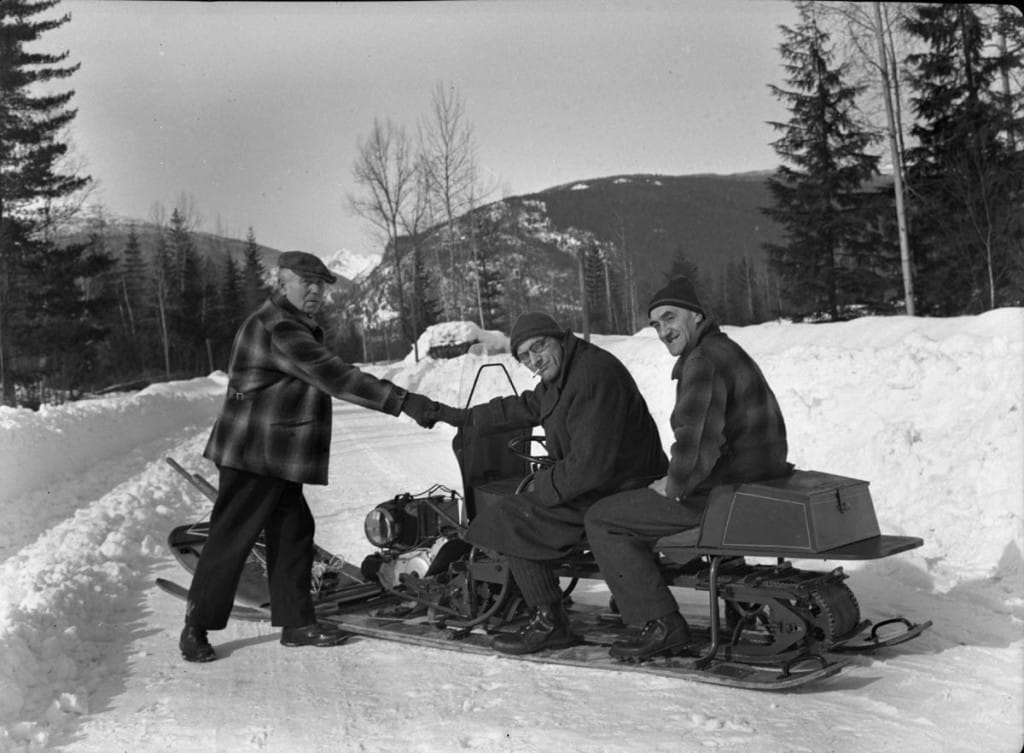
Over time, engines began to replace the need for all that human power to get around, and the snowmobile was born.
Snowmobiling, or sledding, that popular sport which some people use to access powder deeper and deeper in the backcountry and some enjoy for its own sake came to Revelstoke in the late 1940s. As reported by Revelstoke local Earle Dickey in the Vancouver Sun in 1948, the first snowmobile in Revelstoke was called a motor toboggan with a 25 horsepower engine. It was owned by Louie Berger, who used it to get to and from Boat Encampment, 160 kilometres north of Revelstoke.
In his article, Dickey referred to this first snowmobile as “mechanized dogs,” as it served to replace dog-sled teams for frontiersmen travelling along snowed-in routes.
One look at Revelstoke these days and it isn’t hard to tell that there’s one other type of machine that has taken the ski world by storm.
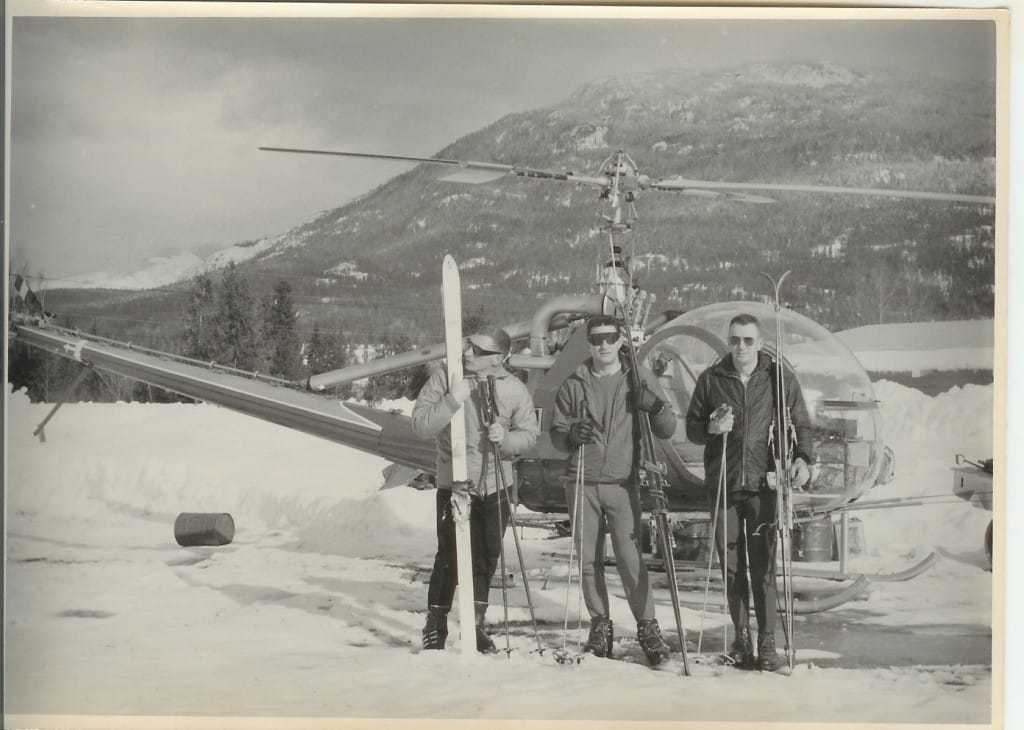
Used for the first time to transport skiers to the top of a mountain over 50 years ago, helicopters have since soared in popularity for transporting people to the deepest and most incredible powder these mountains have to offer.
According to Tourism Revelstoke, the first heli-ski trip in Revelstoke was to the summit of Mount Macpherson in 1964, when three local men were flown to the summit and took four hours to make their way back down to the base of the mountain.
Now, heli-skiing as an industry is flourishing here in Revelstoke, with countless companies holding tenure in the mountains around town.
Since the opening of Revelstoke Mountain Resort in 2007, and the myriad technological innovations of ski-touring gear, practically everyone is now able to access legendary terrain and snow.
The history of winter sports here in Revelstoke has taken many twists and turns, and the limits continue to be surpassed and horizons broadened by Revelstokians. Snow sports are evolving and local shredders are taking these sports to new heights. Who knows what developments we’ll see in the years to come? The only thing for certain is that Revelstokians are sure to keep leading the way in pioneering new ways to get out and enjoy this winter wonderland.
What did you think of this story?
Your feedback after we publish a story helps ensure we're always improving our reporting to better serve you
Author

Related Articles
Birch and Lace salon offers apprenticeship-style academy for future hair stylists
The skills program aims to keep residents in town and learning in-house as salon founder focuses on accessible education opportunities.
Revelstoke Mountain Resort provides updates on infrastructure upgrades and partnerships
Resort president Jason Kelder shared planned changes coming to the resort, which include a new warming hut.
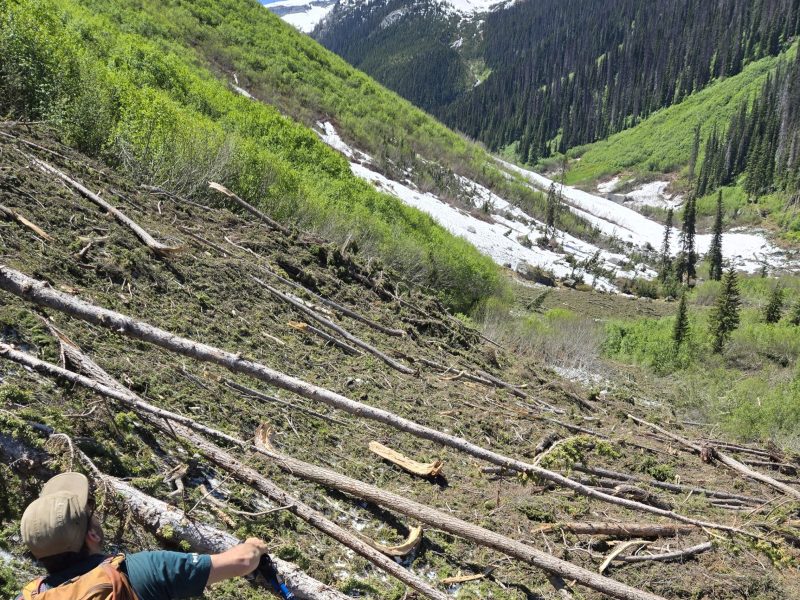
Glacier National Park trails remain closed following heavy avalanche season
Balu Pass trail, along with two others are closed indefinitely as Parks Canada staff evaluate how much of the popular trails will need to be rebuilt.