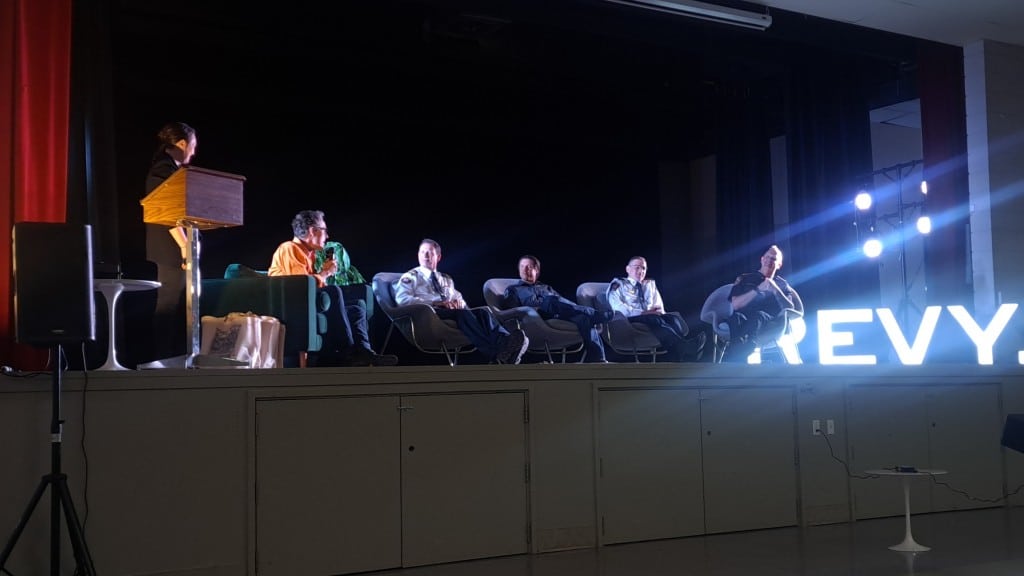
FireSmart preparations could be the main thing that protects Revelstoke in the event of a wildfire, a panel of fire chiefs and personnel told audiences at Revelstoke Wildfire Week’s Facing the Flames discussion.
Revelstoke’s current preparedness for a wildfire threat leaves much to be desired, according to fire chief Steven DeRousie.
“I’m not going to tell you it’s all going to be okay, but I’m here to encourage you to act,” he said. “My goal is to provide you with knowledge that you need to help protect your home.”
His personal audits of Revelstoke’s wildfire risk, limited resources and isolated location painted a grim picture. But conversations with other firefighters across the province and in Alberta have given DeRousie strategies and goals to help residents prepare.
“The reality is that not everything will survive a wildfire event,” he said. “When dealing with rapidly escalating wildland urban interface, fire firefighters might have to triage houses.”
In triage, crews assess threatened structures based on proximity of vegetation, flammability of housing materials such as roof shingles, level of preparation done by occupants and neighbours and the safety of personnel.
“Firefighters will do what they can, but if there’s too much to do in the few minutes before the fire arrives, they won’t be able to safely defend it,” he added. “They’ll be forced to move on.”
Because of limited firefighting resources, DeRousie urged residents to start working on FireSmart strategies now, instead of when the threat is approaching.
Lessons from neighbours
For the last 20 years Jasper has been working to FireSmart the entire town, bit-by-bit working through the list of recommendations. Reducing fire fuel around properties, watering and maintaining plants and lawns were only some of the strategies Jasper residents used for decades to keep properties safe.
Even after losing 358 structures during the 2023 wildfire, Jasper’s fire chief Mathew Conte highlighted how much worse the loss could have been without that preemptive work.
“FireSmart is huge, I highly recommend it,” he said. “It does work if everyone cleans up their properties.”
The town of Jasper has even worked with Parks Canada to reduce potential fuel surrounding the town over the years.
Audience members asked various questions about potential firebreak lines around Revelstoke as a protection against future wildfires, but many panelists countered that threats of ember showers, large batches of sparks that get blown past wildfire lines and ignite fuel two kilometres away, makes firebreak lines nearly useless.
“When a wildland urban interface fire threatens a community, it’s usually not the direct flames that ignite the homes. It’s the embers carried ahead of the main fire,” DeRousie said.
Instead residents can focus on keeping gutters clean, planting fire resistant plants, aiding neighbours on community clean-ups and other residential FireSmart strategies. Residents can also book an assessment of their property to learn what work needs to be done to best protect their homes.
“This is what we’re dealing with now,” Sean Coubrough, Columbia–Shuswap Regional District fire chief said.“This is the reality, climate change is real, the fires are different. We need to start thinking differently. We need to start thinking about fuel thinning, fuel remediation and fire smarting. Everybody has a role to play in what we’re doing here.”
What did you think of this story?
Your feedback after we publish a story helps ensure we're always improving our reporting to better serve you