
Exploring the history of historic regional gardens
In his latest column, regional historian Greg Nesteroff explores historic regional gardens.
By Greg Nesteroff
This story first appeared in the March 2021 issue of the Revelstoke Mountaineer magazine. Read the e-edition here:
Here’s an historical and horticultural oddity: two noteworthy gardens exist because of the Trail smelter.
In 1927, the Consolidated Mining and Smelting Co. (later known as Cominco) was ordered to pay $350,000 for sulphur dioxide emissions that contaminated land in Washington state downstream of the smelter.
In an effort to curb its pollution, the company realized it could convert SO2 emissions into sulphuric acid that could inturn be used to make fertilizer. Win-win: it meant cleaner skies and a diversified business.
Production was soon underway on what became known as Elephant brand fertilizer, whose praises were sung by a cartoon elephant named Earnie. In addition to acting as the company’s spokes-pachyderm, Earnie was reproduced in miniature. Cominco employees received a statuette of his likeness upon completing 15 years of service with the company.
To showcase their fertilizer, the company also established Cominco Gardens in Kimberley, home to the Sullivan mine. The garden was donated to the community in 1987 and it’s now maintained by the Kimberley Community Development Society. It remains an impressive sight, with more than 45,000 flowers blooming on its five hectares, including a variety of annuals and perennials, as well as mature trees, and a memorial rose garden. Elephant brand fertilizer was doubtless also used at the Kootenay Lake summer home of longtime Cominco general manager Selwyn Blaylock. Lakewood, as the mansion was originally known, was built in 1935 four miles north of Nelson. A full-time gardener lived on site to tend to the extensive tiered gardens.
The mansion is now a bed-and-breakfast and its 1.2-hectare grounds are a highlight of any visit, featuring waterfalls, ponds, and one of the largest arboretums in the Kootenays. (If the mansion isn’t your style, you can stay in the charming gardener’s cottage instead.)
But the quirkiest feature is a bronze casting of Earnie the elephant that sits in a pond shooting water over its head. Legend has it that Blaylock decided on the Elephant brand name after a trip to India to drum up customers for Cominco’s fertilizer. Elephants are a cultural symbol in India, emblematic of royalty, divinity, and good fortune. Blaylock predicted it would prove providential for his product as well.
-
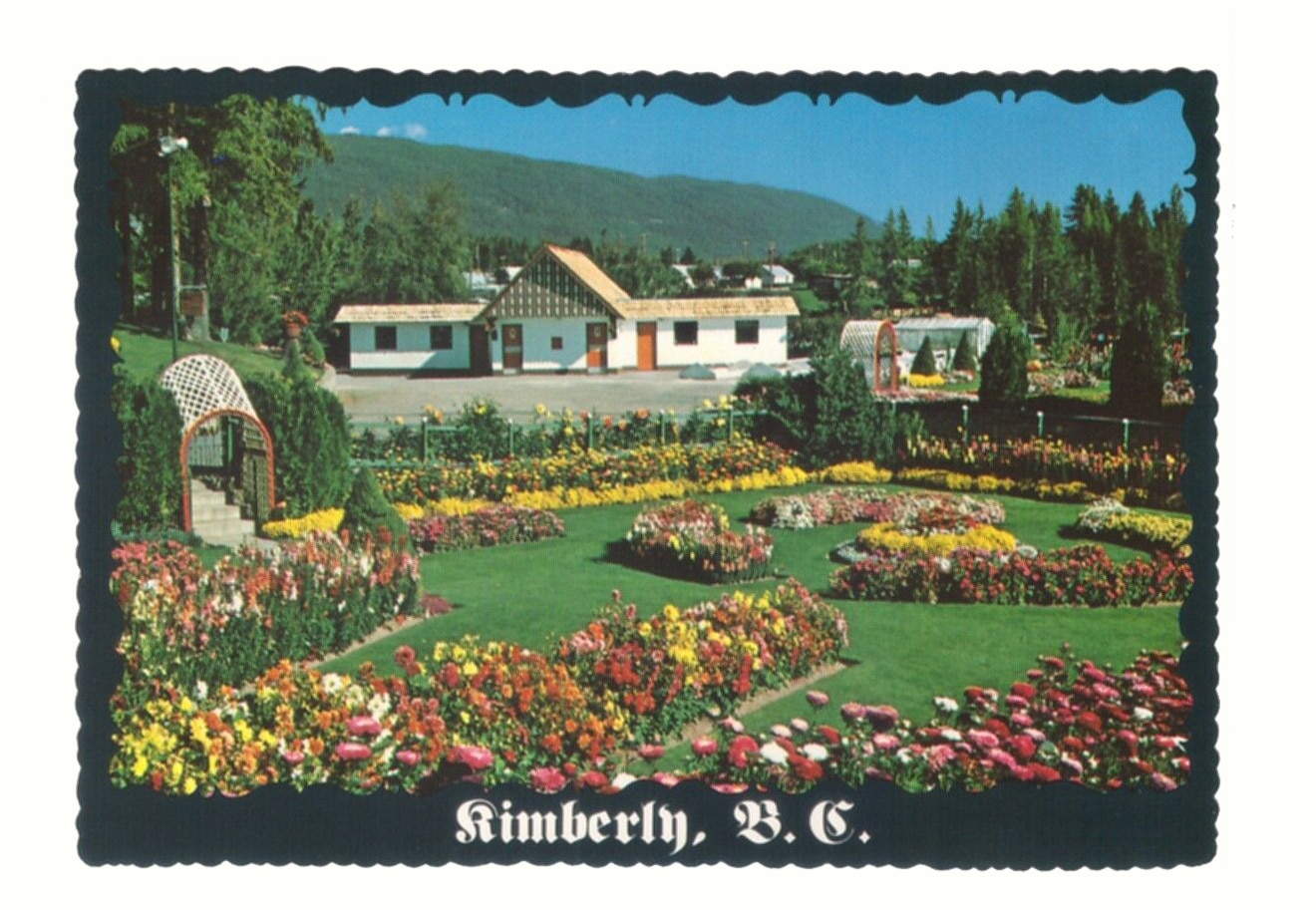
Cominco Gardens in Kimberley, seen here on a ca. 1970s postcard,
was a showcase for Cominco’s Elephant brand fertilizer. It’s still a lovely spot to visit
While Cominco Gardens and Blaylock’s garden keep growing, other historic plots have disappeared. Chinese market gardens used to be found in many communities including Revelstoke, Nakusp, Nelson, and Rossland.
Charlie Sing had one such garden at Three Valley Lake, but after the sawmill there burned in 1913, he moved to Revelstokeand began farming on Powerhouse Road. He was a familiar figure around town, selling fresh produce from a horse-drawn wagon. The Revelstoke Museum has a terrific photo of him giving a couple of kids a ride, something he did often. In another image he’s smiling broadly while holding up a gigantic head of cabbage.
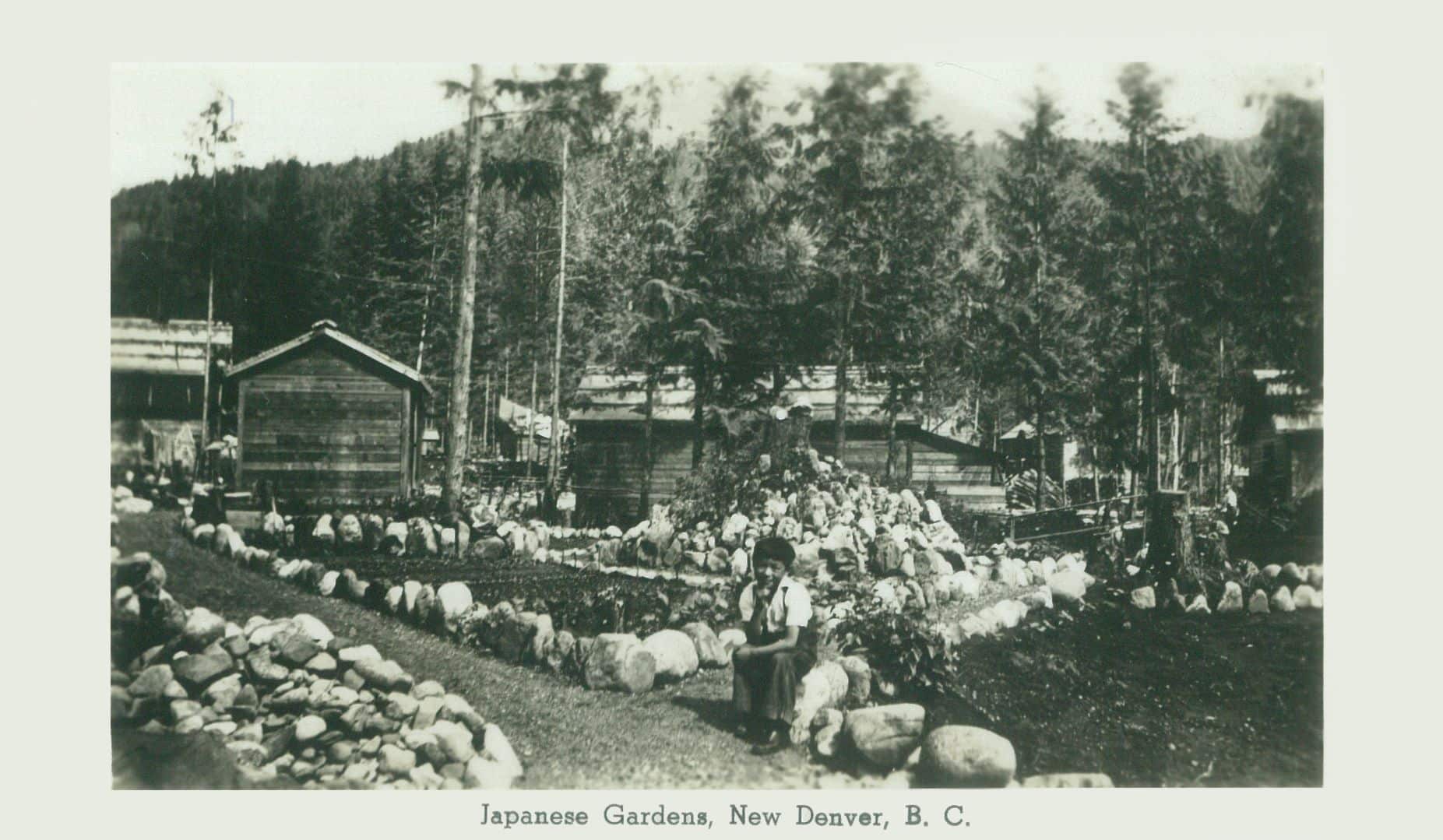
During the Japanese-Canadian internment years in New Denver, one of the most striking sights was an elaborate rock garden created by Yasaburo (George) Nishikaze.
“He was not a gardener, nor was he particularly knowledgeable in this area,” recalls Dr. Henry Shimizu, whose family shared a three-room shiplap house with the Nishikazes. “He began by collecting rocks of all sizes and shapes. He scoured the shoreline of Slocan Lake and the rocky banks of the creeks. He particularly liked those with odd shapes or colours.”
Nishikaze worked the early shift in the kitchen at the local tuberculosis sanatorium. He’d be home by noon each day and off in search of rocks. But as they piled up, some people shook their heads. They thought he was crazy to be amassing them when he could be tending to a vegetable garden instead. He ignored the naysayers. He brought in soil and plants, and with help from some knowledgeable assistants, began to create his garden. “He built the garden without any preconceptions,” Shimizu says. “The garden grew, spreading out until it reached an old abandoned barn, then he began to build it higher and higher as he added more rocks, plants, and bushes.”
The garden became a popular attraction and Nishikaze continued to work on it almost every day for five years, until the internment ended and the family moved to Montreal in 1947. Others cared for the garden for a while. But by the 1950s, it was neglected and finally bulldozed to make way for new homes and roads. There is no sign of it today. The world of stone that George Nishikaze created survives only in photographs.
What did you think of this story?
Your feedback after we publish a story helps ensure we're always improving our reporting to better serve you
Related Articles
Wastewater treatment plant upgrades set to future-proof facility for 2 decades
Plans to include Big Eddy residents and businesses into the updated facility still in the early stages, city director of engineering says.
Revelstoke granted $200,000 to rework development guidelines
Clarifying building requirements is key in speeding up development approvals, director of development services says.
More childcare spaces needed as families face estimated $35,000 income impact annually
Revelstoke Child Care Society still has over 160 families waitlisted as plans to expand into Okanagan College building take shape.