
Examining the Revelstoke childcare shortage
This story also appears in print in our upcoming August 2021 edition of Revelstoke Mountaineer Magazine.
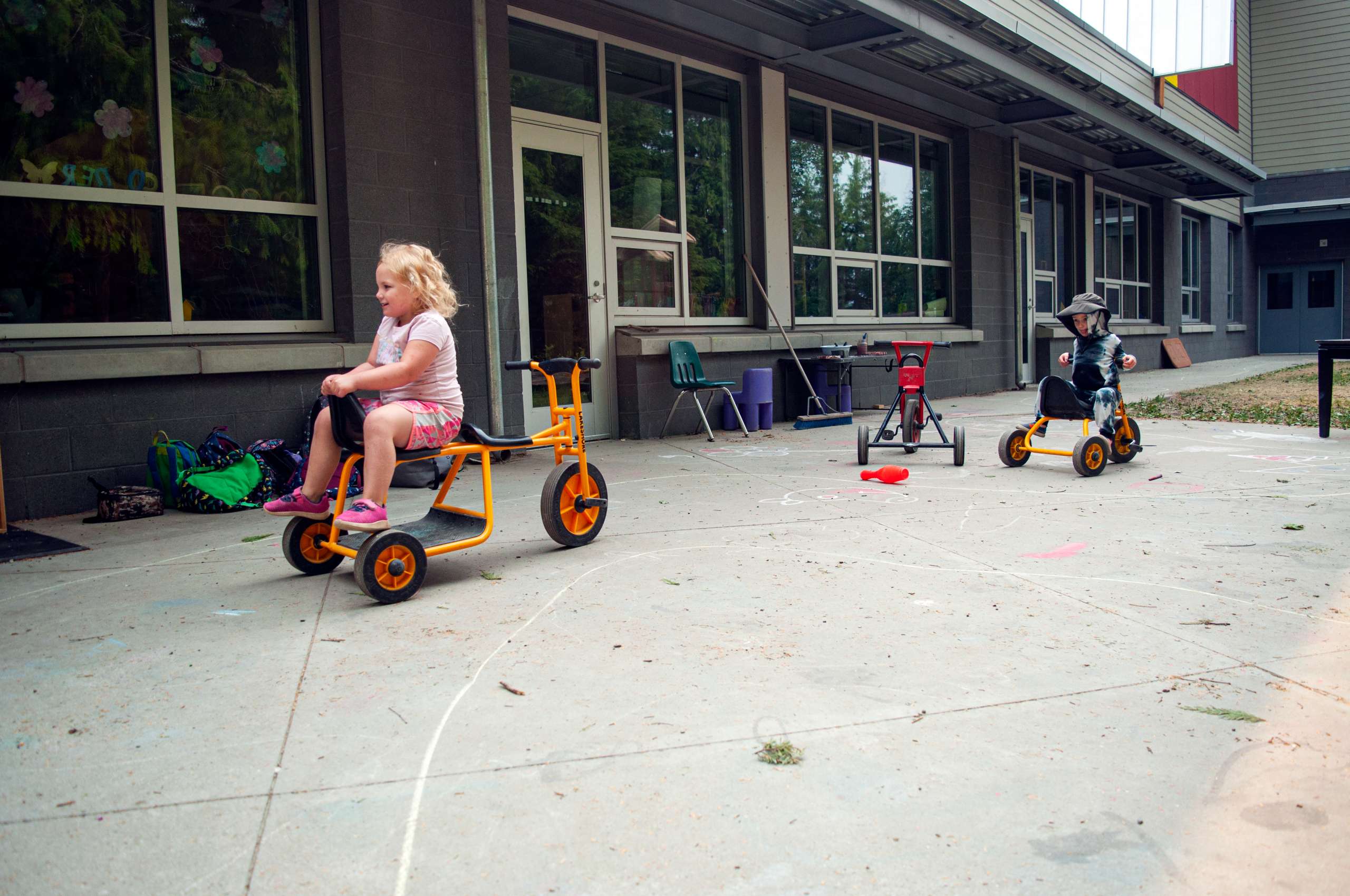
The hallways of the Revelstoke Child Care Society (RCCS) come alive with children’s artwork and colourful murals. Muted laughter filters in from outside as kids take advantage of the clearer skies.
Behind the desks in the office, things are not so peaceful. The RCCS operates the Child Care Resource and Referral program, and demand has skyrocketed since re-openings prompted the return to work. However, a critical shortage of childcare has created a difficult situation for Revelstoke parents. Without daycare, many cannot return to work, further exasperating an already struggling labour market.
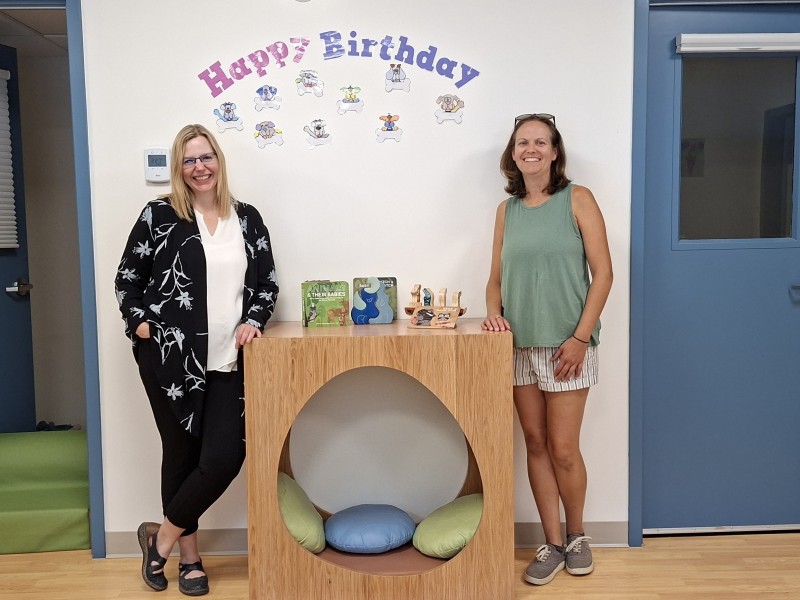
On a calm Friday morning, I sat down with Linda Chell, RCCS executive director and Child Care Resource and Referral coordinator, and Tracy Spannier, RCCS associate executive director and consultant for the Child Care Resource and Referral program. We discussed the childcare crisis and explored both short and long-term solutions.

Revelstoke Child Care Society staff pose in their packed lending library. From left to right: Linda Chell, Tracy Spannier and Aly Shillington. Photo: Bailey Gingras-Hamilton
Examining the causes and effects of the childcare crisis
The RCCS operates two childcare centres. When the waitlist for the two daycares hit 70 families, they were forced to close applications.
“It gives them that false hope that they’re going to find a space. We had to close the list because it was just unattainable,” says Chell. Each spot in early childhood care is typically occupied for three to four years, until the child heads off to preschool.
“The spaces don’t turn over as often as one might think when they get onto a waitlist,” elaborates Spannier.
This problem is not unique to Revelstoke. Before the pandemic, childcare shortages stretched across Canada. Now, the situation is becoming increasingly worse, even as government incentives target the issue. Although programs like the Affordable Child Care Benefit have cut costs for families, accessibility remains an issue.
This accessibility plays into the ongoing labour crisis in Revelstoke. If parents cannot find childcare, they simply cannot return to work. This issue stretches across industries, stunting reopening plans for many businesses. According to Chell, the Child Care Resource and Referral program has received calls almost daily from parents seeking childcare.
“We’ve got many families that are expecting to go back to their job in September, but they are not able to find care for their infant, and so they’re on hold. It’s affecting every sector,” says Chell.

A colourful mosaic of tiny handprints decorates a hallway in one of the Revelstoke Child Care Society daycares. Photo: Bailey Gingras-Hamilton
Overcoming barriers to create more childcare spaces
In addition to providing daycare, the RCCS offers resources for opening in-home licensed childcare centres. In-home childcare creates 106 daycare spaces in Revelstoke, making up approximately 32 per cent of the childcare industry in town.
Creating more in-home childcare spaces is a solution that Chell and Spannier highlight. Spannier has seen lots of interest in opening these centers, but issues arise when dealing with rentals and landlord permissions.
“Basically, what is happening is only people who already own their own home can consider operating a family childcare business. That’s pretty daunting when we look at prices,” Spannier explains. “It’s pretty overwhelming for people who are willing to work in the sector, who have the desire to work in the sector, and then there are barriers because they don’t own a home.”
Overcoming the housing barrier is the biggest challenge when opening in-home childcare centres. However, there are ways the community can make this process easier.
“From a community perspective, if somebody has a suite or a house for rent, and they want to contribute to creating childcare in the community, advertise that you’ll rent it at a reasonable cost to somebody who wants to open up family childcare. We have a few people waiting to find something,” says Chell. The RCCS offers resources for landlords to better understand the insurance and licensing requirements of in-home childcare.

The early learning lending library provided by the Revelstoke Child Care Society is packed with toys, games and books. These items are available for any local childcare providers to borrow. Photo: Bailey Gingras-Hamilton
Advocating for long-term solutions, and advice for struggling families
Although in-home childcare centres can provide immediate relief for the strained industry, a long-term strategy is becoming increasingly necessary. Spannier stresses the importance of attracting people to the field with government grants and better pay. Currently, many industries in Revelstoke pay better than early childhood education.
“Anything we can do to help support people to become early childhood educators, that’s going to be absolutely key going forward,” Spanner explains. “We see some movement happening with support in the province, and that’s great. But it needs to be a long-term plan.”
When asked if they have any advice for struggling parents, Chell and Spannier took a pause to gather their thoughts. They feel a strong sense of empathy for these families and understand that the situation seems bleak. However, the industry changes constantly. September typically sees more turnaround, and Chell advises parents to consider a one-year window when looking for childcare. Additionally, daycares are still operating under reduced capacity. Once restrictions ease for the sector, there will be more openings.
“There’s a lot going on. Childcare is much more complex than we all think,” Spannier says. “Certainly, for a family that is struggling to find a space, it feels very hard. But there’s lots of reasons why there’s limitations.”
Resources for people entering the childcare sector
Creating more daycare spaces is the only way out of this crisis. Across Canada, provincial and federal programs are targeting the sector to promote growth. Here are a few resources available for those interested in entering the childcare sector:
- Early Childhood Educator Wage Enhancement
- Start-up grants for licensed childcare facilities
- B.C. childcare licensing regulations
- Child Care Fee Reduction Initiative
What did you think of this story?
Your feedback after we publish a story helps ensure we're always improving our reporting to better serve you
Related Articles

Wastewater treatment plant upgrades set to future-proof facility for 2 decades
Plans to include Big Eddy residents and businesses into the updated facility still in the early stages, city director of engineering says.

Revelstoke granted $200,000 to rework development guidelines
Clarifying building requirements is key in speeding up development approvals, director of development services says.
More childcare spaces needed as families face estimated $35,000 income impact annually
Revelstoke Child Care Society still has over 160 families waitlisted as plans to expand into Okanagan College building take shape.