In my last post I blathered on a bit about the wonders of spring, but I forgot to mention the one aroma that, to me, truly embodies the essence of the season: compost. It’s the final link in an organic food cycle, where the waste from the food that we eat is returned to the earth to provide nutrients for the food we’re going to grow.
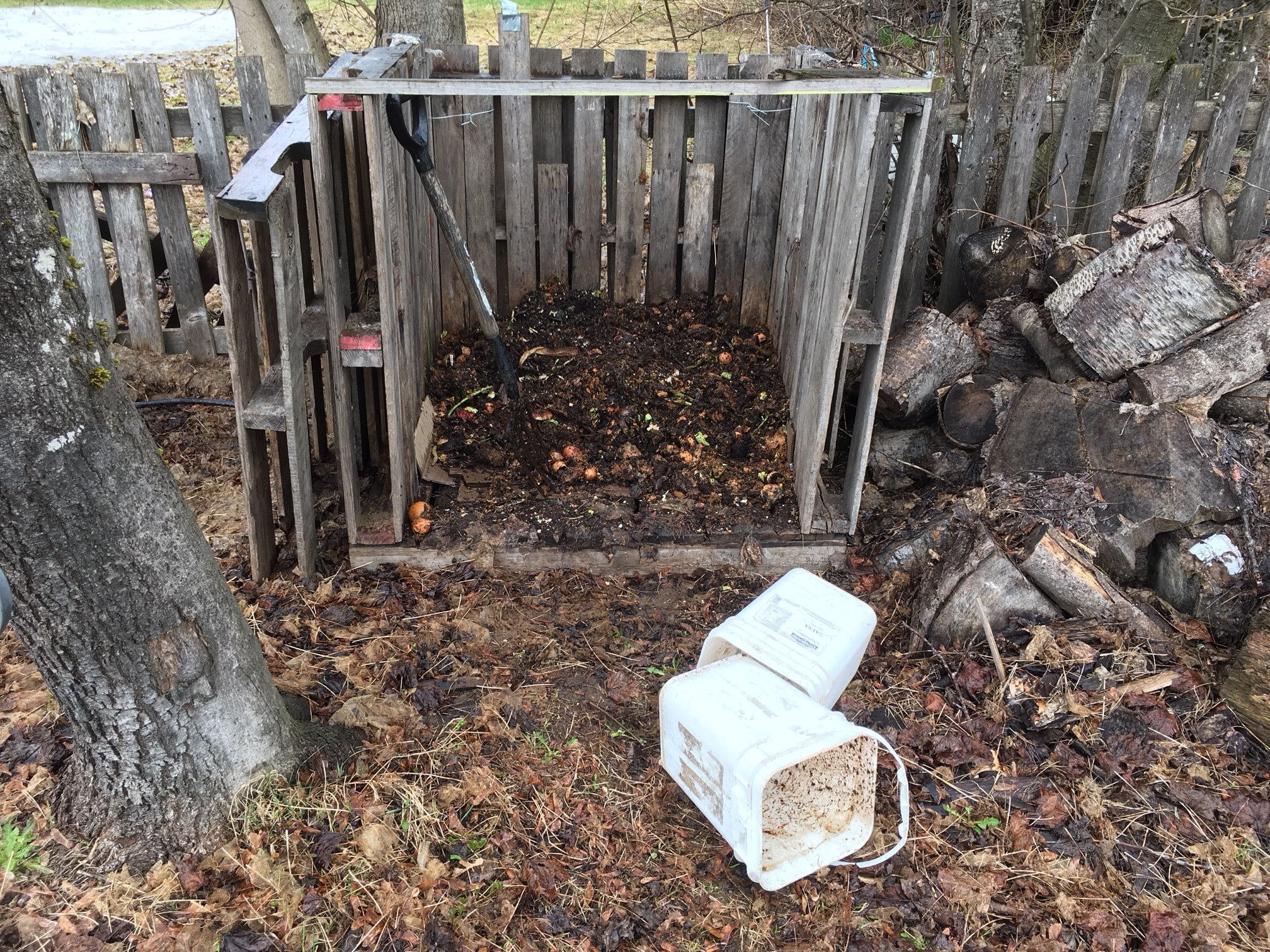
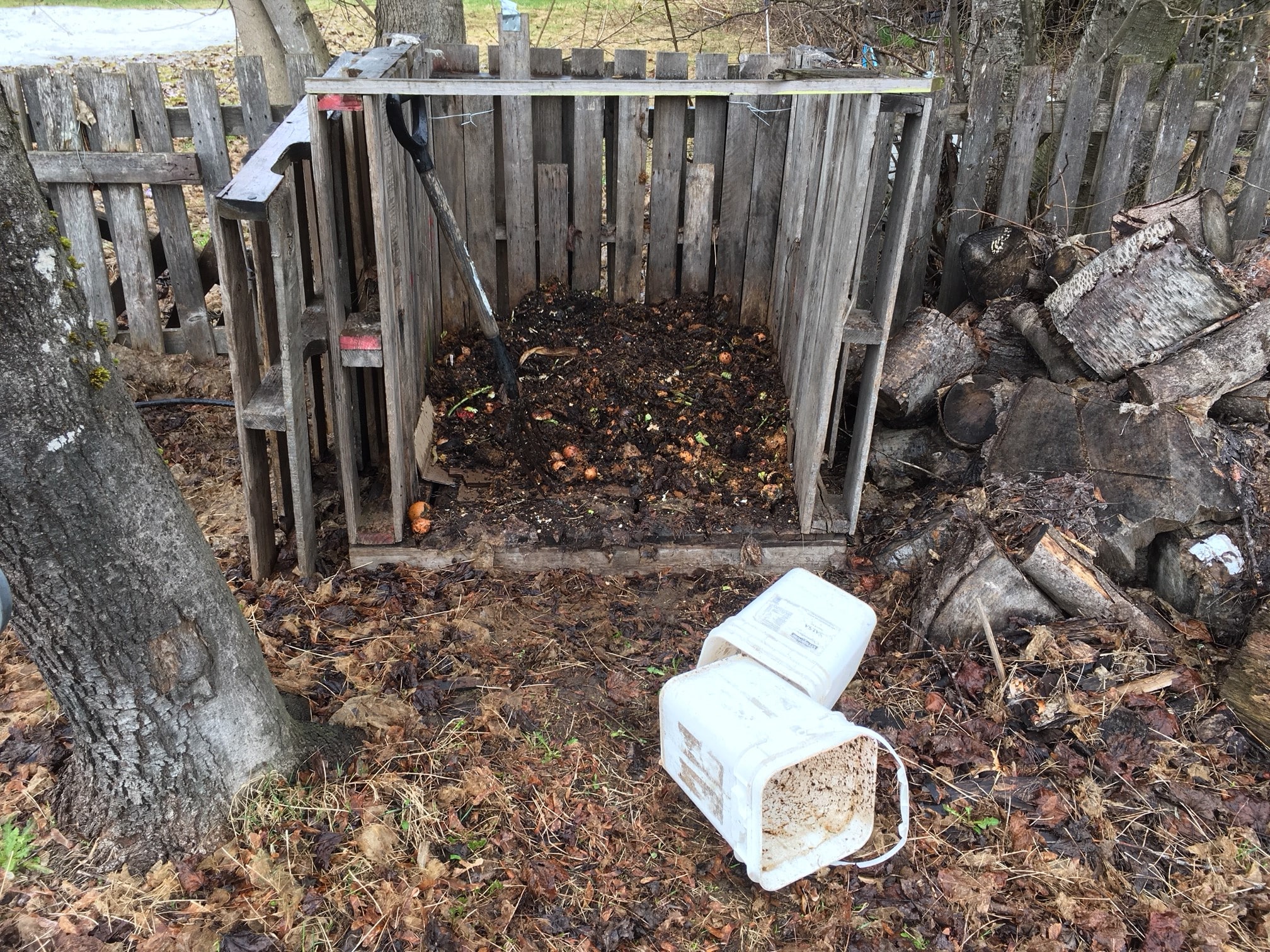
A pallet compost bin – simple, effective, free. By the time my compost winds up here, it’s broken down enough that wildlife no longer finds it… pallet-able.
A surprising number of people ask me about composting. What kind of container is best? What foods can you compost? How long does it take to be ready for the garden? Do you need worms? And my surprise stems from the fact that there are many many gardeners out there who have much much greater expertise than I do with this complex metamorphosis. They can turn food scraps into rich airy compost in just a matter of weeks by taking a meted approach, carefully balancing browns and greens, managing temperature and moisture, and dutifully turning the perfectly-proportioned piles. You might even say they’re masters of this natural miracle.
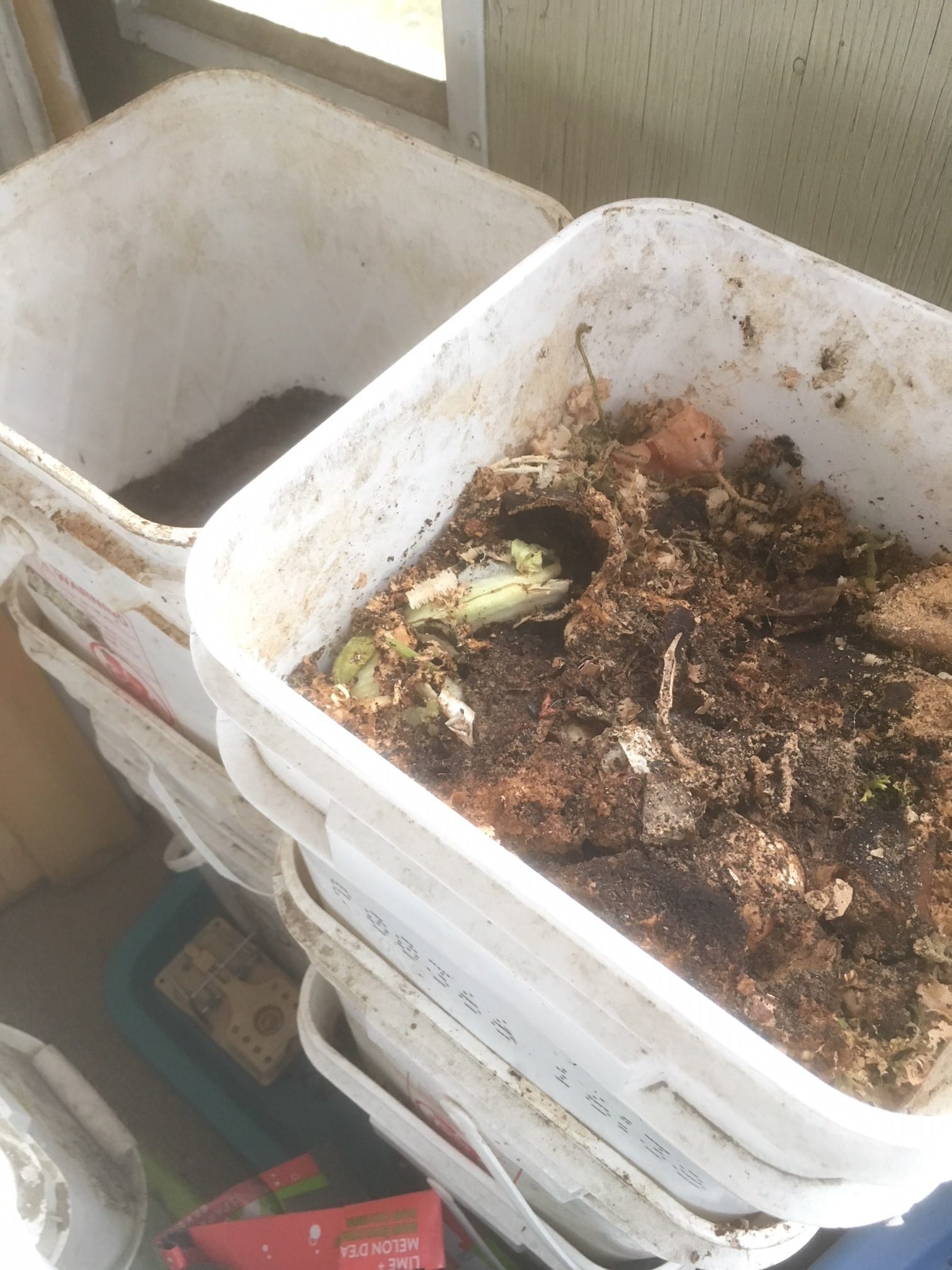
Stacked buckets of compost.
But in my yard, the real miracle is that the compost process works at all. I tend to play thing a bit looser, with my compost bins usually falling somewhere between a disgusting mess and a gut-wrenching abomination of gardening. My scraps get tossed into buckets with some sawdust and there they sit, inundated with rainwater in the fall and frozen solid through the Winter, until they can cook in a big stinky pile out back through heat of Spring and Summer. Do I get a 90-day turnaround? Not a chance. What I do get are rodents cleaning out the last bits of avocado from the peel or, my personal favorite, a temporary invasion of maggots. Thankfully, bears, raccoons, deer, and coyotes are all smart enough to steer clear of this culinary wretch no matter how scarce their food sources become.

A chicken bone, eggshells, and some packing tape. You never know what wonders may still lurk in your finished compost.
By fall, when the pile has been turned a few times, the compost looks and smells distinctly different. Gone are the recognizable bits of vegetables and the funky smells, leaving just rich dark brown fertilizer for the garden. Sure, there are still bits of eggshell, orange peel, and peach pits but those just serve as a reminder that delicious food from the past is once again serving as food for the soil. Into the raised beds it goes, mixed with a bit of ash from the fire pit. Although I haven’t tested the soil for a few years, the results speak for themselves: healthy and robust vegetables. And therein lies the miracle; that even when dealt a poor hand and neglected, mother nature always finds a way to pull everything back into harmony and produce some stellar results.
Now if only cooking were this easy.