
Governments gear up to modernize Columbia River Treaty
An update to the 1964 Columbia River treaty could open the doors for voices ignored during initial negotiations.
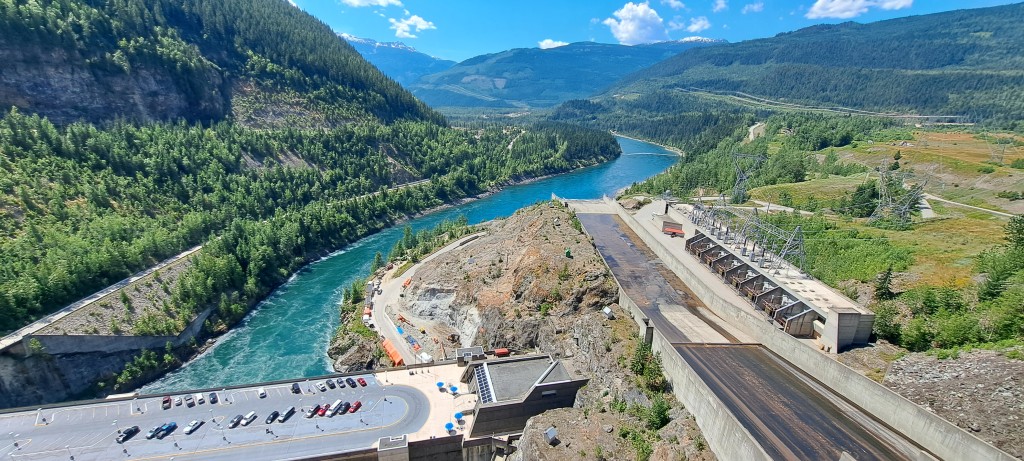
Plans for a Columbia River Treaty (CRT) modernization is in the works after Canada and the United States reached an agreement-in-principle. On July 11 the B.C. government announced the renegotiations, seeking input from residents, organizations and stakeholders impacted by the CRT and the management of the Columbia River.
“Thanks to the strong bilateral relationship between Canada and the U.S., work with the Province of B.C., and the valuable contributions from the Ktunaxa, Secwépemc and Syilx Okanagan Nations over the past six years, today’s agreement-in-principle brings us closer to a modernized treaty that will continue to provide benefits for generations to come,” Mélanie Joly, minister of Foreign Affairs of Canada announced in a press release.
The Columbia River Treaty
Created partially in response to the 1948 Columbia River flood that destroyed the city of Vanport, Ore., the CRT provided a measure of flood mitigation and power creation for both sides of the border.
Signed in 1961 and ratified in 1964, it initiated the building of four major dams along the Columbia River; Canada’s Duncan, Hugh L. Keenleyside and Mica dams and the United States’ Libby Dam. Since then more dams have been built to harness the hydroelectric capabilities of the Columbia River.
Over 110,000 hectares of Canadian ecosystems, communities, burial sites and cultural spots along the Columbia River have been flooded by the reservoirs formed by the CRT. Continued mitigation of that loss to make up for initial efforts has been a focus for various interim agreements since the treaty was signed.
The CRT and Sinixt Confederacy
In the creation and renegotiation of the CRT, Indigenous voices from the Sinixt Confederacy have been lost.
“Sinixt Confederacy and Sinixt in the Canadian portion were excluded from the Columbia River Treaty,” Herb Alex, senior policy analyst with Sinixt Confederacy told Revelstoke Mountaineer. The confederacy, which operates as part of the Confederated Tribes of the Colville Reservation in Washington and out of Nelson, B.C., has frequently found themselves cut out of decisions and agreements made about their homelands.
Sinixt peoples were declared extinct in Canada in 1956 after many Sinixt members were forced to the Washington State Colville reservation. A 2021 Supreme Court of Canada ruling finally admitted to Canada’s wrong-doing and acknowledged Sinixt people’s continued existence and connection to lands throughout B.C. and along the Columbia River. Efforts to reestablish community in Canada has been a bureaucratic challenge even though there has been a continued Sinixt presence in the region.
Alex is unsure if the Sinixt Confederacy will be brought to the table for the renegotiation of the CRT, which impacts large sections of Sinixt homelands and cultural practices. One in particular, the annual Sx̌ʷnítkʷ Canoe Journey, which sees Sinixt members and allies traveling from north of Revelstoke down to Kettle Falls for a Salmon ceremony that goes back generations.
“I hope that the three nations that were involved [in previous negotiations] stuck to their values,” Alex said when asked what impacts Sinixt Confederacy’s omission from the CRT has had. “All I can do is pray that they got it right, because we were excluded.”
Wildlife protections under the CRT
Three 2023 interim agreements between the Ktunaxa, Secwépemc and Syilx Okanagan nations secured five per cent of the revenue from sales of Canada’s share of downstream power generation. News of future renegotiations of the CRT has representatives of those nations eager to strengthen protections for the waterways and wildlife affected by the flooding management of the Columbia River.
“We still have lots of work to do with Canada and B.C. to start addressing the past and ongoing impacts to our lands, waters and people,” Chief Keith Crow, CRT lead for the Syilx Okanagan Nation Chiefs Executive Council said in a press release. “But I now have real hope that one day, as a result of our efforts, I will see my grandchildren and other future generations exercising their rights harvesting n̓ty̓tyix (salmon) in the nxw̌ ntkwitkw (Upper Columbia region).”
Conservation organizations are also calling for stronger ecological protections along the Columbia River, saying treaty renegotiations are the time to acknowledge how previous treaty measures have impacted ecosystems along the Columbia River.
“The negotiated AIP provides a solid opportunity for improving ecosystem function within the Upper Columbia Basin,” Greg Utzig, technical advisor to the Upper Columbia Basin Environmental Collaborative said in a press release issued by Wildsight. “We still need to see Columbia Basin ecosystems placed on an equal footing with power production and flood control.”
The B.C. Government will host a virtual information session in September to provide more information about potential changes to the CRT. Following that, the government will host in-person meetings throughout communities in the Columbia River basin. Dates for these sessions will be announced at a later date, and those interested can follow updates on Facebook, X/Twitter and subscribe to the B.C. Columbia River Treaty newsletter. Public can also share feedback via email to [email protected].

What did you think of this story?
Your feedback after we publish a story helps ensure we're always improving our reporting to better serve you
Author

Related Articles

Birch and Lace salon offers apprenticeship-style academy for future hair stylists
The skills program aims to keep residents in town and learning in-house as salon founder focuses on accessible education opportunities.

Revelstoke Mountain Resort provides updates on infrastructure upgrades and partnerships
Resort president Jason Kelder shared planned changes coming to the resort, which include a new warming hut.
Glacier National Park trails remain closed following heavy avalanche season
Balu Pass trail, along with two others are closed indefinitely as Parks Canada staff evaluate how much of the popular trails will need to be rebuilt.