
Changed provincial electoral riding boundaries one possible outcome of B.C. review
The British Columbia Electoral Boundaries Commission had their first in-person meeting in Revelstoke in early April, beginning the outreach stage of drawing new provincial electoral boundaries.

Following the 2021 passing of Bill 7, the Electoral Boundaries Commission Amendment Act, public outreach has begun in Revelstoke to inform new provincial electoral boundaries.
The latest amendment eliminated references to the Columbia-Kootenay region, raising questions about the future of Revelstoke’s provincial electoral district.
The BC Electoral Boundaries Commission (BCEBC) is currently in the first public outreach stage of their preliminary report, which will provide recommendations for new provincial electoral zones. For this round of recommendations, the commission can suggest six new provincial electoral districts.
These electoral zones will be in place for the 2024 and 2028 provincial elections. After two provincial elections, a new commission must be appointed to make new electoral boundary recommendations.
“The fact is, in British Columbia we have great diversity in population concentration. Some areas are really dense, some areas are really sparse, and they’re not getting closer together. So that’s a fact that we have to deal with,” said BCEBC Chair Justice Nithya Iyer.
However, the amendment act has raised concerns among rural voters, with some worried that rural electoral districts may lose representation. While populations may have grown in some areas of the region, like Revelstoke, urban areas like Metro Vancouver are growing at an even faster pace.
Fighting for representation in a growing province
In early April, the (BCEBC) had its first in-person public meeting at the Revelstoke Community and Aquatic Centre. The event was sparsely attended.
The latest amendment to Bill 7 eliminated protections for the Kootenay-Columbia’s four provincial electoral districts. These boundaries may be redrawn using BCEBC recommendations.
With larger areas for MLAs to represent, there is risk to efficiency and representation, as two presenters highlighted during the April meeting.
“Right off, my inclination is to ask that you not decrease the number of seats here in Columbia-Kootenay region because of the impact on a MLA to provide effective representation,” said Bill MacFarlane, chair of the Revelstoke Board of Education and former head of the Columbia River-Revelstoke NDP Constituency Association.
However, three out of five of B.C.’s fastest growing communities are located near the province’s populated Southern coast; posing the question of what will happen to provincial electoral boundaries within B.C.’s Interior and Northern regions.

Mark McKee speaks to the BCEBC at the Revelstoke Community and Aquatic Centre on April 7. Photo: Wesley MacInnis
“I think that by population [has] historically been a good way to do it [draw electoral boundaries]. But the way that the province is changing, I think that we have to take into consideration the landmass and the population,” said Mark McKee, former mayor of Revelstoke and a former BC Liberal MLA candidate for Columbia River–Revelstoke.
Two themes dominate the factors that influence how electoral districts are drawn: demographics and geography.
Demographic and geographic factors influencing BCEBC recommendations
In a province with wide geographic features; including desert, rainforest, subarctic and alpine climates, geography vastly influences voter issues like resource management and transportation.
However, land does not vote; people do.
“We have to look at what the situation is now but with an eye to the future,” explains Iyer, adding that these recommendations are set for the next two elections; therefore, they must take into account aging populations and new voters.
This is where demographic factors come into play, alongside communities of interest highlighted by the BCEBC’s recommendations.
According to Iyer, “communities of interest” refers to the “cultural, social and economic ties that different communities have with each other.”
For smaller communities, the commission looks at which larger centers residents visit for medical appointments, shopping, and more.
During MacFarlane’s presentation, he highlighted Revelstoke’s ties to the West Kootenay provincial electoral district; giving an example of a “community of interest.”
MacFarlane noted similar tourism economies and a particularly close relationship with Salmon Arm. He also mentioned highway closures and timezones that divide Revelstoke from some Columbia River communities.
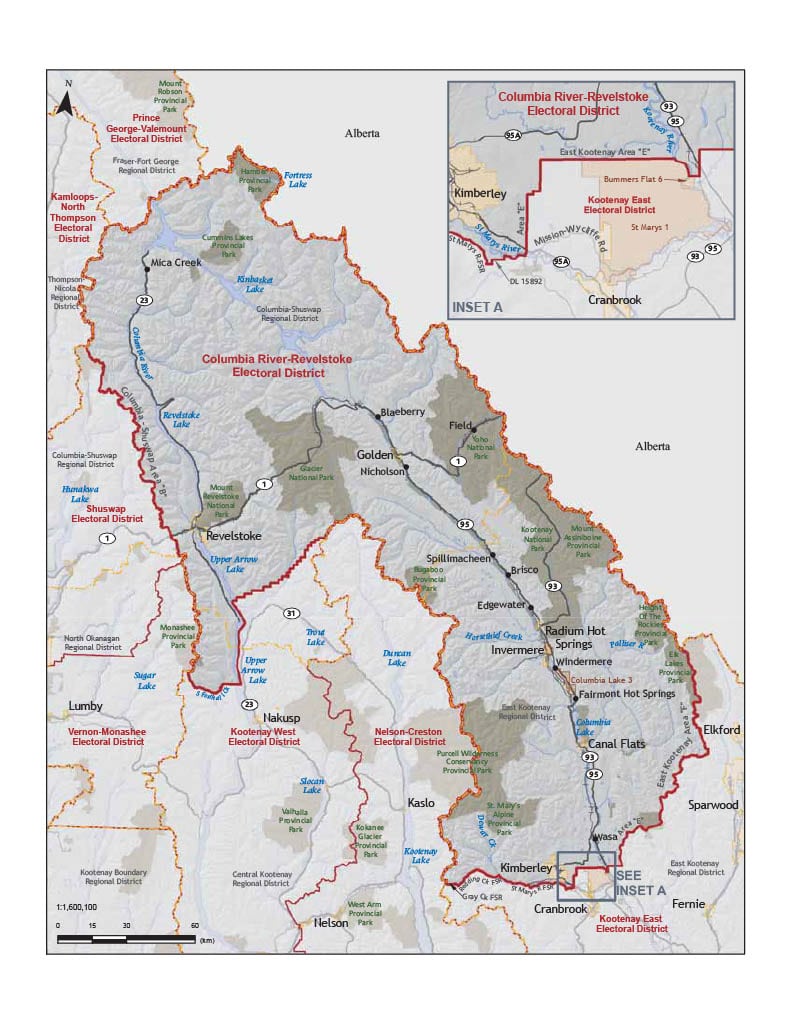
A map of the current Columbia River-Revelstoke Electoral District. Photo: BCEBC
Public input vital for determining “communities of interest”
Beyond statistical factors and geographic features, communities of interest are a key part of the BCEDC’s recommendations.
However, since communities of interest largely rely on personal ties between communities, public input is vital for identifying these links.
“We will do our very best to take everything that we know into account. But if we don’t hear from rural, or urban, or any British Columbian[s] about their perspective, it’s very hard for us to feel confident that we’re representing or taking into account all of the perspectives,” Iyer said.
The deadline for online submissions through the BCEBC website for their preliminary report is May 31, 2022. Interactive mapping tools are also available online.
In addition to online submissions, the BCEBC will be hosting a virtual public meeting for the Northern and Interior regions on May 3, 2022.
According to Iyer, the BCEBC will do another round of public meetings after the preliminary report is published.
What did you think of this story?
Your feedback after we publish a story helps ensure we're always improving our reporting to better serve you
Related Articles

Birch and Lace salon offers apprenticeship-style academy for future hair stylists
The skills program aims to keep residents in town and learning in-house as salon founder focuses on accessible education opportunities.
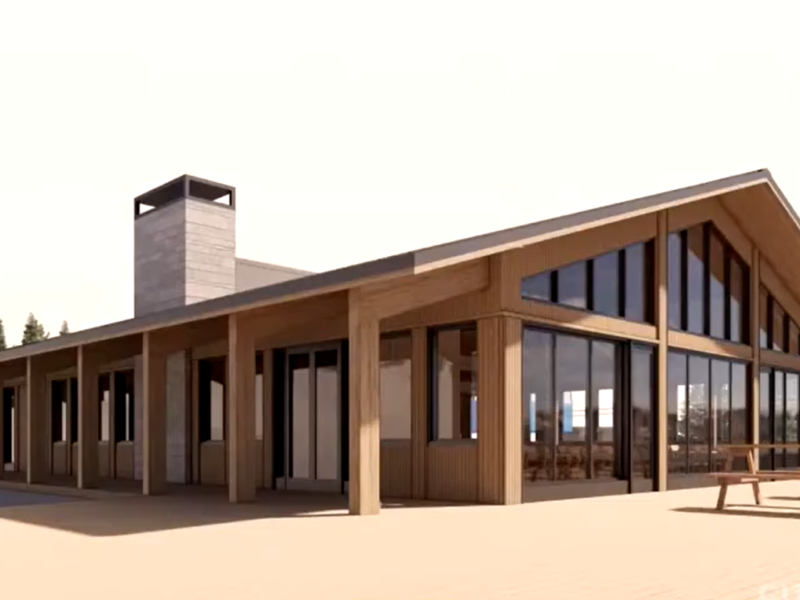
Revelstoke Mountain Resort provides updates on infrastructure upgrades and partnerships
Resort president Jason Kelder shared planned changes coming to the resort, which include a new warming hut.
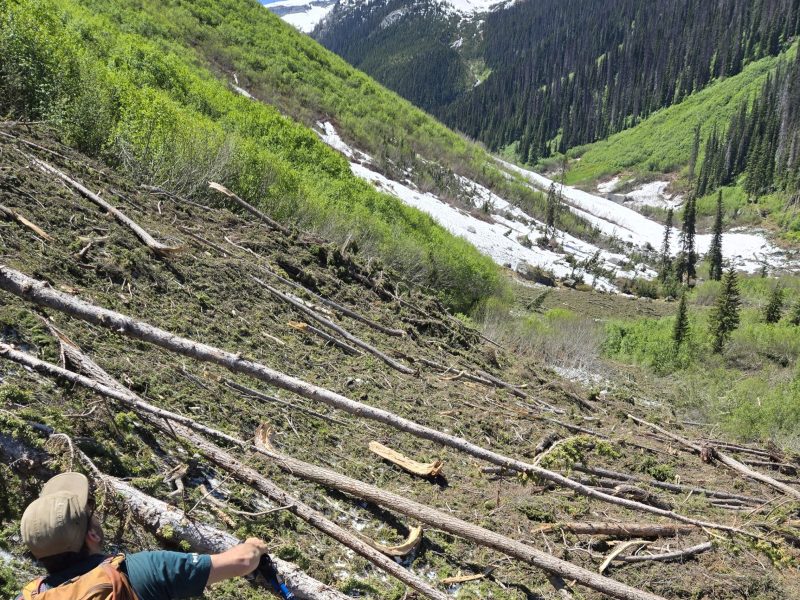
Glacier National Park trails remain closed following heavy avalanche season
Balu Pass trail, along with two others are closed indefinitely as Parks Canada staff evaluate how much of the popular trails will need to be rebuilt.