
Can alternative living help solve Revelstoke’s housing crunch?
Revelstoke’s alternate living movement pushes for innovative, healthy, sustainable, and alternative new housing options.
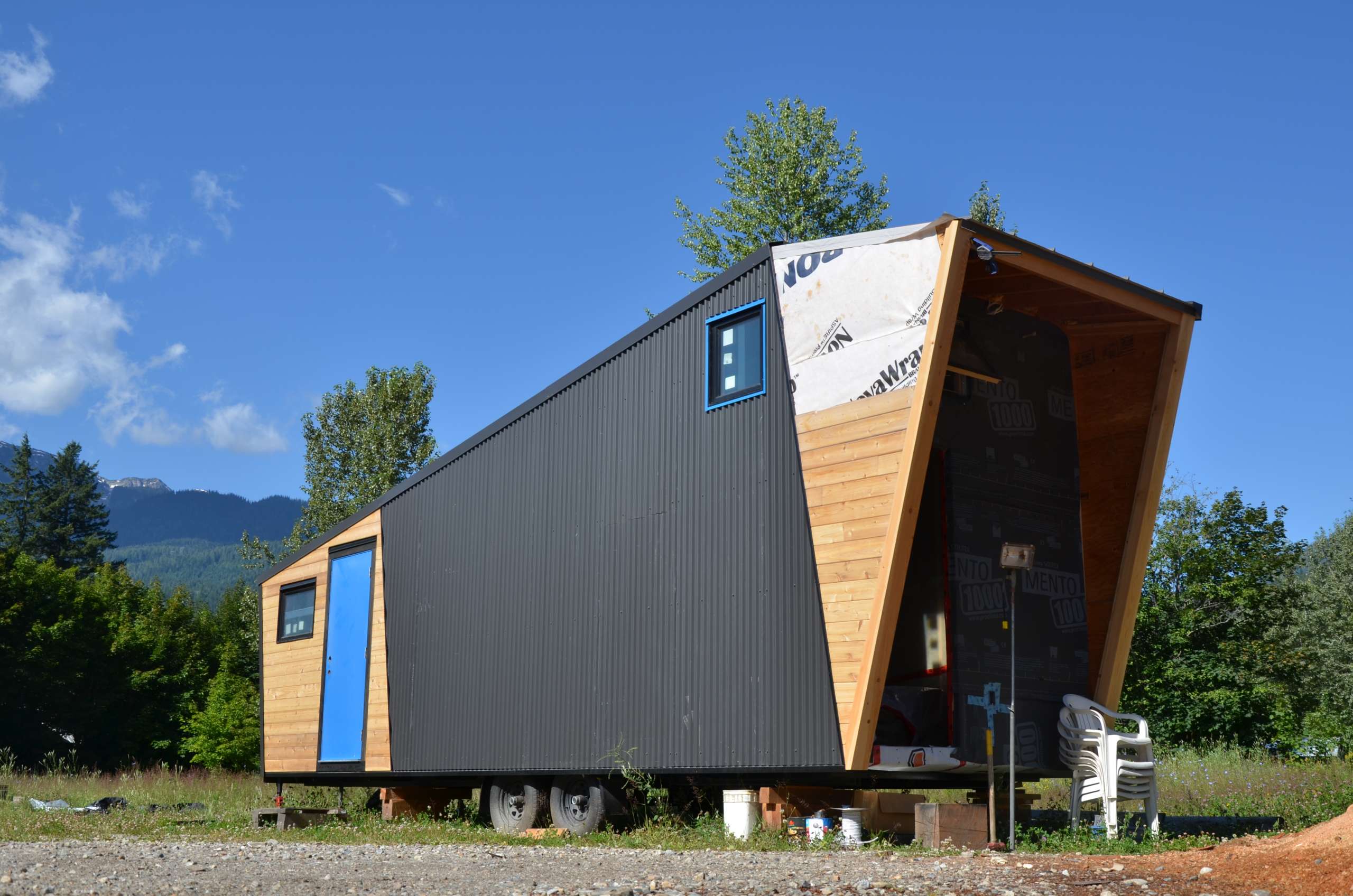
Alternate living in Revelstoke, and through interior B.C. isn’t new, but as housing becomes sparse and expensive, its way of life becomes more attractive.
Choosing to live in smaller housing fits in with lifestyle goals to live simple, save money and maximize outdoor adventures and mindfulness.
This movement is developing gradually in Revelstoke, particularly as the city deals with the ongoing issue of housing and the tightening of our local market.
The City of Revelstoke’s manager of development services Dean Strachan has noticed a shift in Revelstoke’s housing stock since he moved here in November 2013. Back then, there were a significant number of single-family lots available but those have since been purchased and built upon. And as more people scoop up what is left, there is less to choose from, and less variety.
“We don’t have the diversity of housing type at the moment,” Strachan says.

Living with less and being closer to nature is an attractive quality for many who want more alternate living options. Photo: Emily Kemp/Revelstoke Mountaineer
Revelstoke currently has limited stock in multi-family housing (apartments, townhouses, duplexes). This may change when the Nichol Road housing project Mackenzie Village gets going, where the type of housing built there will be driven by market demand.
But meanwhile, Revelstoke is coming into a rental-housing crunch. Strachan explains that we’re at a unique pressure point where it is becoming cheaper to pay a mortgage for a single-family home than it is to pay rent, but finding a home to buy is a problem.
“The reason we see that as a critical road block, is that it has a domino effect in the rental market,” Strachan explained.
“People aren’t moving out of higher end rentals [and buying] so the issue works its way to the middle and further down.”
This is where the growing number of vacation rentals around town (those that utilize online services like Airbnb) becomes a problem, taking crucial housing stock off the market in favour of getting higher returns from short-term vacationers.
“It’s supply pressure from almost a lateral point,” Strachan says. “These vacation rentals can make as much revenue in a few weeks than they would in a few months.”
Currently the City of Revelstoke is working on a fix — potentially implementing a cap on the number of vacation rentals allowed to operate in town. The idea is if five per cent of tourists want vacation rental style accommodation, the city will allow for five per cent of these businesses to operate.
Anything beyond that will be illegal and will hopefully push people to add their accommodations to the rental market — crucial for keeping employees in Revelstoke — to get their secondary income.
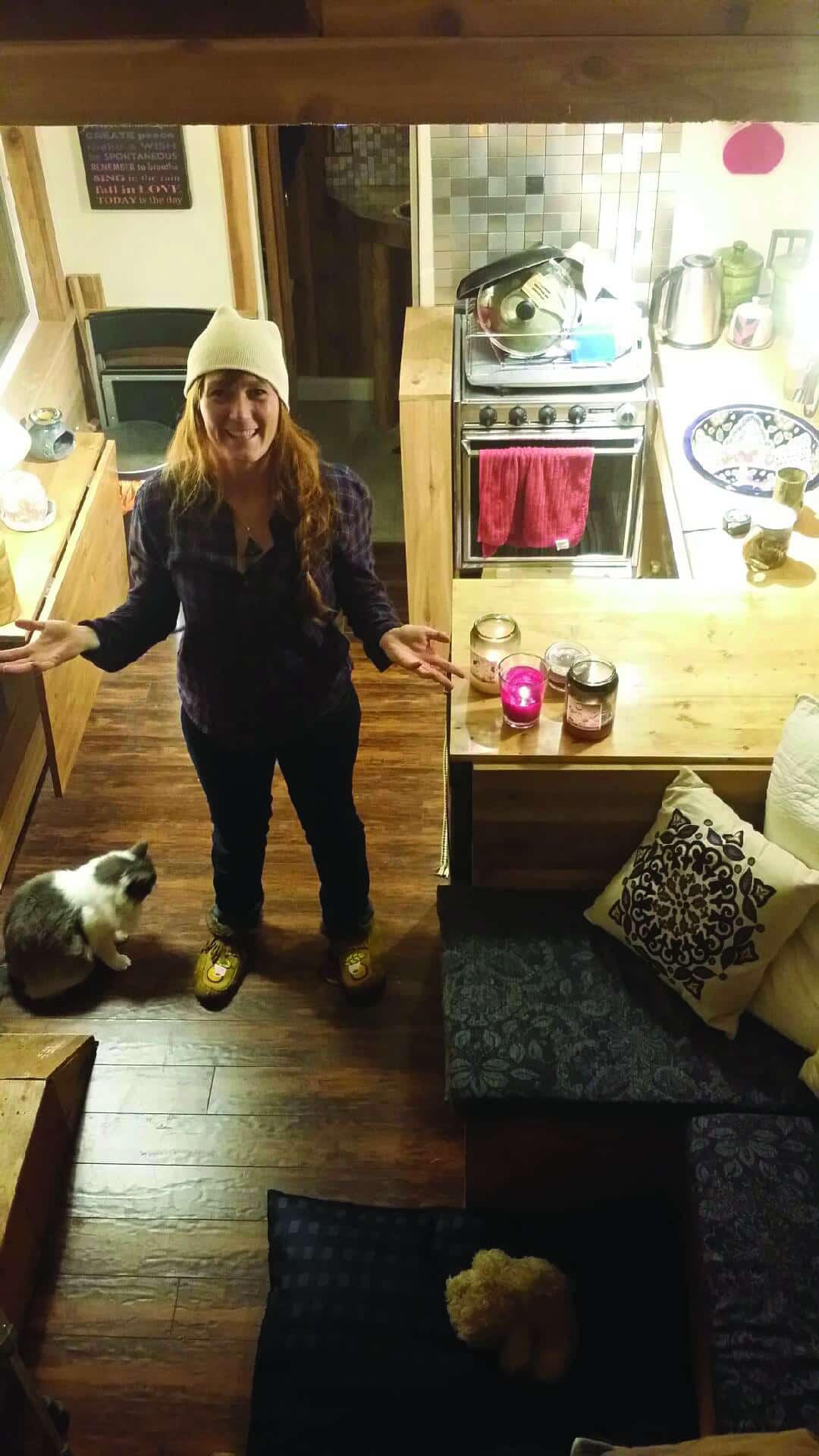
Resident Krista Patterson in her tiny home. Photo: contributed
Embracing tiny homes in Revelstoke
Dealing with Revelstoke’s housing issue from a wider scope has people looking for workarounds of soft densification — adding more living space to current neighbourhoods.
Revelstoke’s single-family residential zoning currently does not allow a backyard apartment (defined as a freestanding secondary suite) or a nanny flat on top of the garage (defined as a carriage home), although property owners can try their luck and apply to the city for a bylaw variance that will allow them.
Another option is a tiny home — the housing trend that isn’t going away.
With the way the B.C. regulation and construction code is, Strachan says a way to make a house more affordable is by making it smaller.
“The lowest point in the market isn’t low enough for everyone,” he says.
He explains that tiny homes are still built to housing standards, with quality, safety and functionality, but on a smaller scale.
But tiny homes are not exactly legal in Revelstoke. If the home is on wheels it’s considered camping — not allowed in the city’s residential bylaw. If they’re a permanent structure, such as placed on a slab, then they’re considered a secondary suite.
Unattached secondary suites are not allowed, but the city has approved some anyway, with a bylaw variance that they are a freestanding suite, as long as they suit the character of the area and it doesn’t impact on neighbours.
“We do it in a case by case basis,” Strachan says.
Alternate living in Revelstoke’s future
Since the tiny home movement began around the turn of last decade, it has been embraced by some cities in North America. The city of 500,000 Fresno, in California, appears to be the most progressive with legislation, this year updating their zoning code to allow mobile tiny homes as permanent second dwellings, within guidelines.
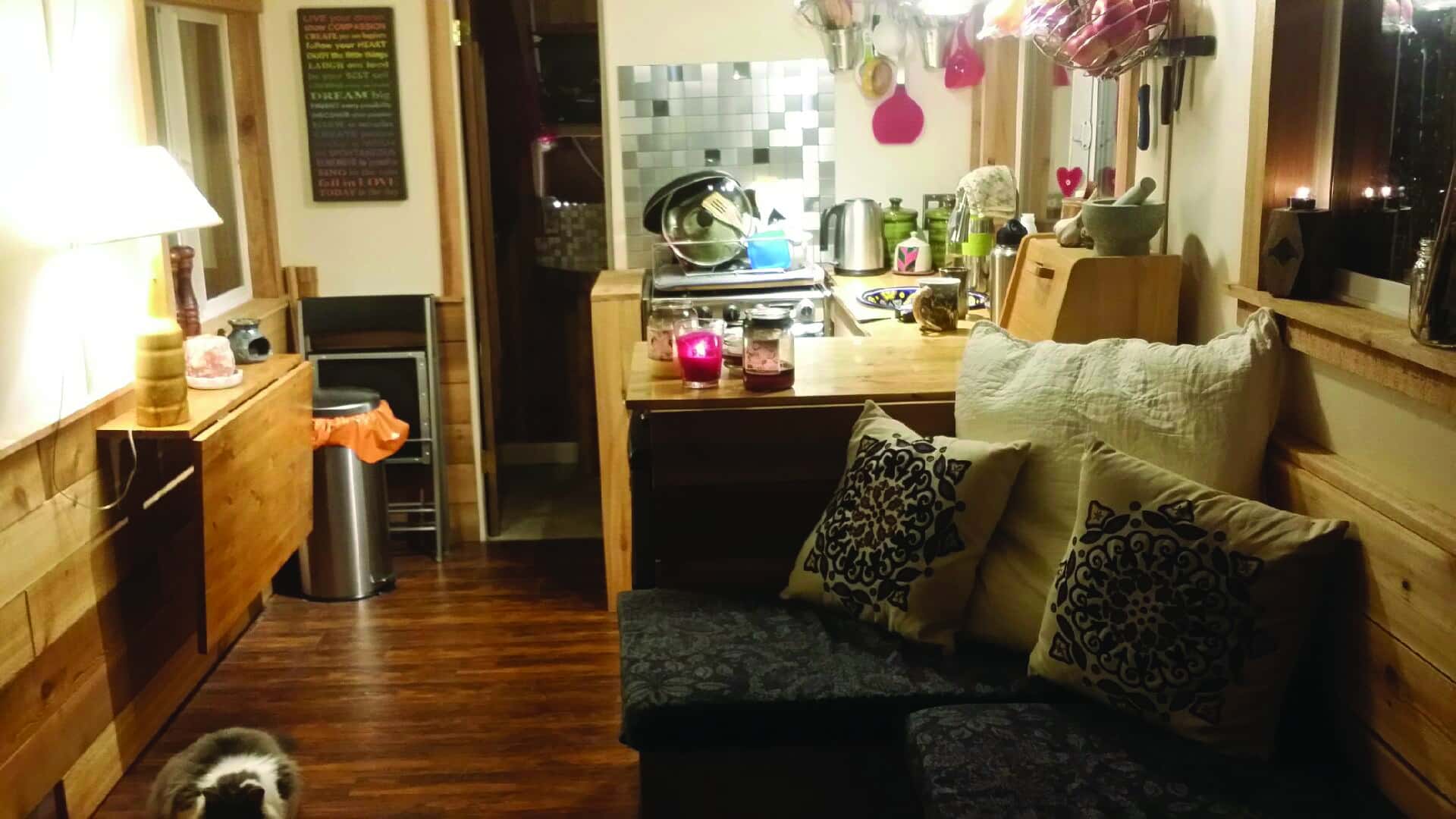
Inside a Revelstoke tiny home. Photo: contributed
In Canada, a micro-home community operates in Terrace, north of Vancouver, called Bluegrass Meadows Micro Village.
The future of something like this happening in Revelstoke is burgeoning. A group of innovators are strategizing for a facility called SLICK — Sustainable Living Innovation Centre for the Kootenays — a knowledge centre to test sustainable living options in Revelstoke.
They’re playing with the idea of proposing a bylaw that would allow tiny homes to rest legally in a space in Revelstoke. Revelstoke’s Mountain CoLab board member Jean-Marc La Flamme says they also plan to experiment with other sustainable alternatives that add to our housing crop.
“It could be tiny home, a modern modular or a shipping container,” La Flamme says.
“Canada has a housing situation that is going to get much worse,” La Flamme says. “There are very few homes up for sale in Revelstoke and the ones that are, are only fitting a certain demographic.”
The group, which includes Greg Hoffart of Tree Construction and many more, is hoping to get going as soon as possible and collaborate with the community. They have also been in talks with the city.
“We have already stated we would support an initiative,” Strachan says. “Location would have to be carefully selected — you want to fit with a form and nature of the neighbourhood.”
Revelstoke Mountain CoLab held a housing innovation night in late June that attracted well over 100 residents interested in making change happen. They discussed ideas such as tiny homes, co-living spaces, passive home construction and other innovative solutions tailored to residents interested pushing alternative living concepts into the mainstream.

A full house at the Mountain CoLab housing innovation night in Revelstoke in summer. Photo: contributed
This future embracing alternative living in Revelstoke is possible if current rules are relaxed. And the opportunity is right around the corner. Revelstoke’s Official Community Plan will be revised later this year and finalized next summer.
The process will include thorough community consultation on our land-use needs, with opportunity for zoning bylaws to become more flexible if there proves to be a need. The process will also include a population and housing inventory, giving us some real numbers that show our demographics and stock.
Housing is a complicated issue that communities are struggling with all over B.C. and Canada. For Revelstoke over the next decade, the issue is not going be going away anytime soon.
“There is not one solution that is going to solve the problem,” Strachan says. “Not a project we can build that we solve our problems. It will be a whole bunch of things, that will have cooperation from people, private and public, to help us move through this time of growth.”
The builder
Local resident Anna Minten successfully built and lived in a tiny home for two years before she met her husband and bought a house. Now they want to start a tiny home building company in Revelstoke.

Anna Minten and her husband Emmanuel Levesque Dupere want to start building tiny homes in Revelstoke. Photo: contributed
There are already a handful of companies in B.C. that build tiny homes but difficulties with the local bylaws often deter people from investing.
Minten believes tiny homes will answer Revelstoke’s need for housing and are a sustainable alternative to building apartment blocks that end up empty in the city’s quiet months.
“Something of this stature can be small and more temporary. It can move around as the seasons do, as jobs move around,” Minten says.

Inside Anna Minten’s tiny home during construction. Photo: contributed.
Overall Minten found living in a tiny home was a financial stepping-stone and a lesson in minimalism.
“It really did teach me how to live with less, and that has carried through to my home owning stage of life,” she says “I’m not just buying stuff because it’s on sale, and I’m not filling my fridge because I can. I’m really thinking seriously about stuff and think whether I really need it.”
The renter
Some of the concern with allowing tiny homes to be legal is the fear that shanty-town communities may spring up, and this is bolstered with negative connotations of transients and travellers.

Sophie Daleman wants tiny homes to be recognized in local bylaws. Photo: Emily Kemp
Sophie Daleman has experienced this first hand but rejects the stereotypes about nomadic youth. She lives in an RV transformed into a tiny home in the Columbia Shuswap Regional District with her partner. They both work; Daleman is a server at a fine-dining restaurant in town.
She says her minimalistic lifestyle is about choice.
“I’ve always lived outside of town in the countryside and I really have this need,” she says.
Their rent for one-acre of a 10-acre property is $300 a month, although they’re looking at moving. A neighbour thought they were squatting on the land and complained to bylaw authorities, who informed them they were not allowed to live there due to the zoning regulations.
Although the CSRD isn’t within the City of Revelstoke’s control, Daleman says she would like to see some regulation for this type of living.
“I think a bylaw that take tiny houses out of that grey zone and insecurity, if it was possible to do it legally it would be helpful for a lot of people,” Daleman says.
“I like living simple, in a minimal way. Some people are just going to do it for a few years. Because the money they’re saving on rent they can put on something else, or maybe buy a house in five to 10 years.”
This story was first published in the August Revelstoke Mountaineer Magazine — distributed all around Revelstoke.
What did you think of this story?
Your feedback after we publish a story helps ensure we're always improving our reporting to better serve you
Related Articles
Wastewater treatment plant upgrades set to future-proof facility for 2 decades
Plans to include Big Eddy residents and businesses into the updated facility still in the early stages, city director of engineering says.
Revelstoke granted $200,000 to rework development guidelines
Clarifying building requirements is key in speeding up development approvals, director of development services says.

More childcare spaces needed as families face estimated $35,000 income impact annually
Revelstoke Child Care Society still has over 160 families waitlisted as plans to expand into Okanagan College building take shape.