
B.C. NDP government ‘sets sights’ on $15 per hour minimum wage, starts with 50-cent hike to $11.35
B.C. government says they are still targeting a $15-per-hour minimum wage, but their first raise of 50 cents to $11.35 is still quite short of the target.
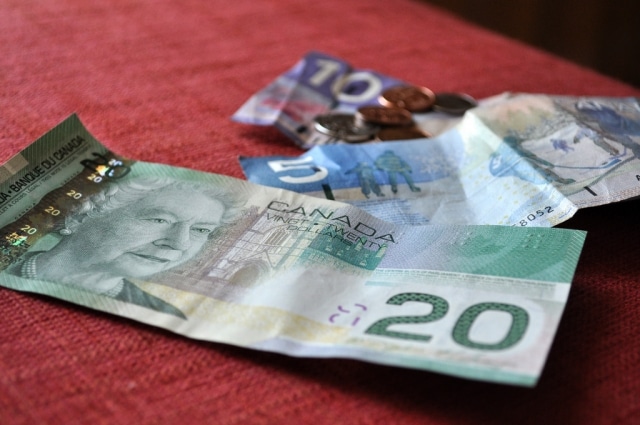
The new NDP B.C. government says its still committed to a promised $15 per hour minimum wage in B.C., but for now it’s settling for a 50-cent per hour raise from $10.85 to $11.35, effective Sept. 15.
“British Columbia’s lowest-paid workers need a raise,” Premier Horgan said in a statement that came with the Aug. 15 announcement of the “long overdue” minimum wage hike. “The action we’re taking will make life better for working parents, seniors, new Canadians, students and more – these are people struggling to get by.”
The government also announced plans to move ahead with a ‘fair wages commission’ that will look into wage issues in B.C. The commission is expected to submit its first report within 90 days of its first meeting.
Labour Minister Harry Bains said that details of the commission’s terms of reference and composition would be announced in the coming weeks. He added that the “overarching objective” of the commission is to “get British Columbia to $15 along a planned, responsible path.”
“We’ve listened to business owners, who have told us gradual, predictable increases are the way to go to minimize the impact on their businesses,” Bains said. “And they recognize that the move to a $15 minimum wage is good for retention for their businesses, and good for the B.C. economy.”
According to the B.C. government, the September raise will boost the B.C. minimum wage rate to third-highest in Canada from its current seventh-place ranking.
Liquor servers will also be getting a boost at the same time, by 50 cents from $9.60 to $10.10.
In B.C. 4.8% of employees make the minimum wage, whereas the national average is 6.9%. In 2016, 93,700 B.C.ers were making minimum wage. 50,600, or 54%, were youth aged 15 to 24 years. 13,100, or 14%, were aged 55 years or older. 57,700, or 62%, were female. 23,900, or 25%, did not have high school graduation. 12,200, or 13%, had a university degree.
Interested in providing local perspective on this story? Contact the Mountaineer at [email protected].
What did you think of this story?
Your feedback after we publish a story helps ensure we're always improving our reporting to better serve you
Related Articles
Wastewater treatment plant upgrades set to future-proof facility for 2 decades
Plans to include Big Eddy residents and businesses into the updated facility still in the early stages, city director of engineering says.
Revelstoke granted $200,000 to rework development guidelines
Clarifying building requirements is key in speeding up development approvals, director of development services says.
More childcare spaces needed as families face estimated $35,000 income impact annually
Revelstoke Child Care Society still has over 160 families waitlisted as plans to expand into Okanagan College building take shape.