
B.C. announces logging deferrals for 2.6 million hectares of old growth
Following the release of the old growth Technical Advisory Panel findings, the B.C. government is deferring the logging of 2.6 million hectares of old growth. The province is consulting affected Indigenous communities about the deferrals, and future management plans.
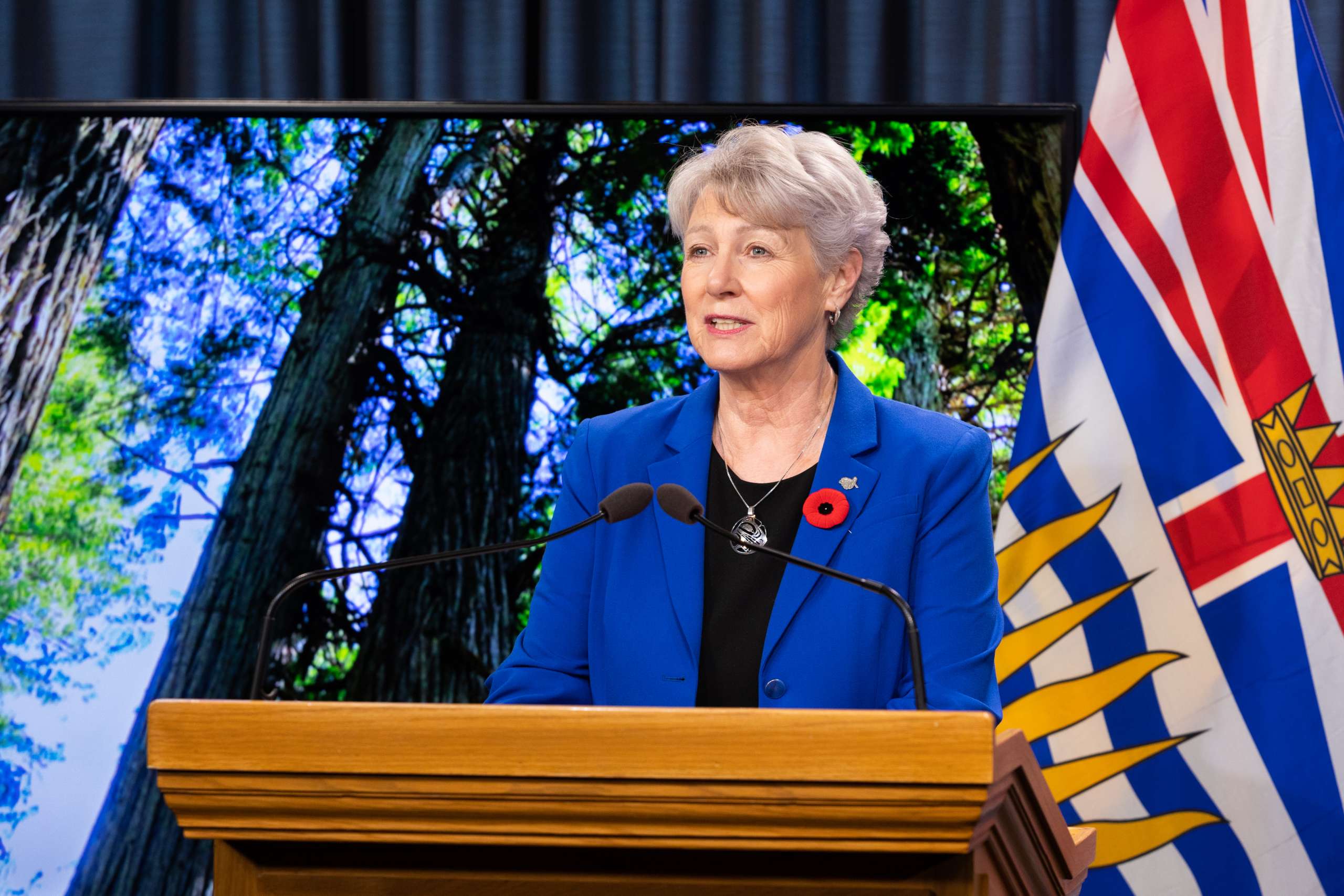
The B.C. government is expanding logging deferrals within the province’s at-risk old-growth forests.
During a Nov. 2 press conference, authorities announced harvesting deferrals across 2.6 million hectares of at-risk old-growth forest. The temporary deferrals, recommended in the 2020 Old Growth Strategic Review, aim to protect biodiversity while First Nations, the province and other partners develop sustainable forest management plans.
Maps of the targeted deferral areas have been shared with Indigenous leaders within their respective territories. The province asks that affected First Nations indicate within the next 30 days if they “support the deferrals, require further engagement to incorporate local and Indigenous knowledge, or would prefer to discuss deferrals through existing treaties.”
Additionally, the province is ceasing the advertising and selling of BC Timber Sales in the affected areas.
For the thousands of British Columbians employed in the forestry industry, the provincial government is enhancing pre-existing support programs to aid workers with the transition.

File photo: Pictures of old growth dangle from a clothesline at the logging blockade north of Revelstoke. Photo: Bailey Gingras-Hamilton
Old growth Technical Advisory Panel releases findings
To map the deferral areas, the province used recommendations from an independent Technical Advisory Panel (TAP).
TAP findings separate British Columbia’s old-growth into three categories: big-treed, ancient and rare. The remaining unprotected ancient and rare old growth forests, approximately 0.4 million hectares and 0.5 million hectares respectively, are recommended for deferral.
While TAP states that big-treed old growth is “now very rare compared to its historic distribution, putting it at extremely high near-term risk,” the panel advised that 1.7 million hectares of the remaining unprotected 4.1 million hectares be deferred. Under TAP recommendations, approximately 40 per cent of provincial big-treed old growth remains available for harvest.
However, the TAP emphasizes that “deferral is not equivalent
to protection; deferral maintains at-risk old forests in the short-term.”
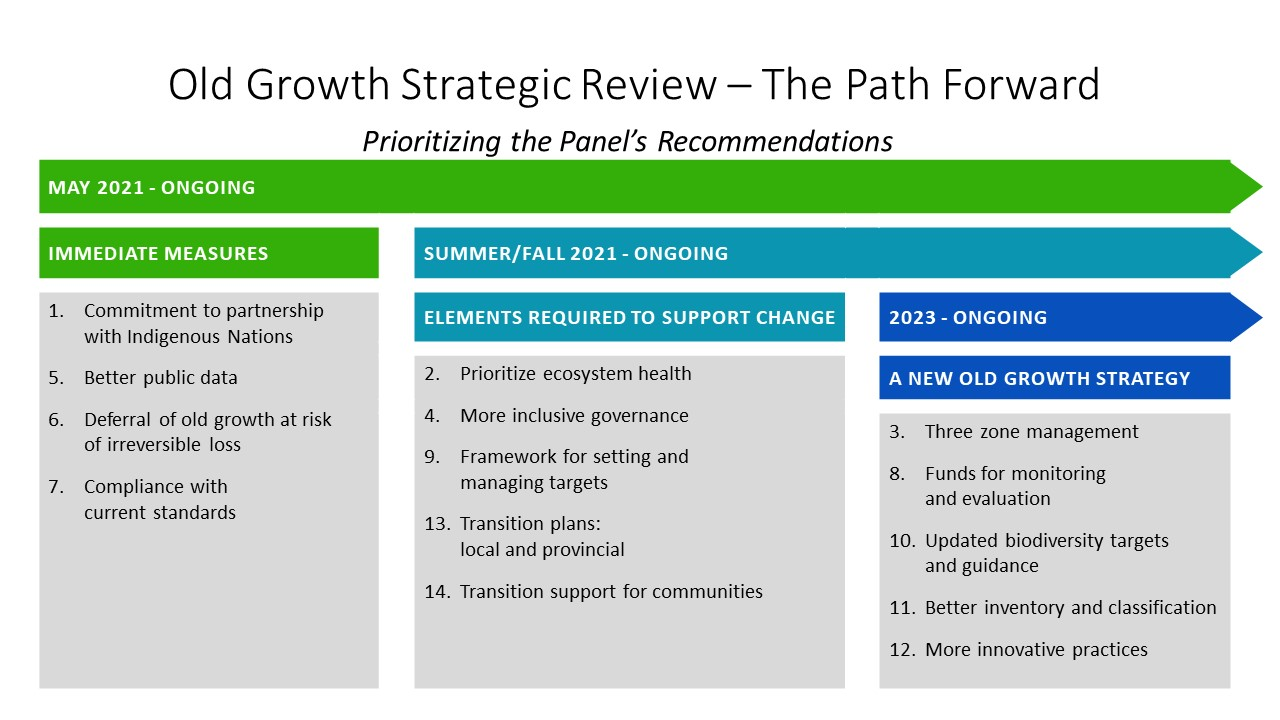
Other immediate measures mentioned in the Old Growth Strategic Review timeline include improved public data and compliance with previous standards.

File photo: Protest signs rest against Grizzly Plaza during a May rally for old growth. Photo: Bailey Gingras-Hamilton
Industry and opposition leaders react

File photo: The Downie Timber sawmill in Revelstoke. Photo: Aaron Orlando/Revelstoke Mountaineer.
The deferrals follow the biggest case of civil disobedience in Canadian history, and the B.C. NDP is already facing criticism from industry representatives and opposition.
According to Susan Yurkovich, president and CEO of the BC Council of Forest Industries, the deferrals could “result in the closure of between 14 and 20 sawmills,” threatening approximately 18,000 jobs.
“It is unfortunate that the panel has advanced their recommendations without due consideration for the impacts on the people and communities who depend on the forest, including a small portion of old growth, for their livelihoods,” said Yurkovich.

File photo: Logging trucks pass each other on Victoria Road in Revelstoke. Photo: Aaron Orlando/Revelstoke Mountaineer Magazine
Despite emphasizing Indigenous involvement during the announcement, the B.C. Green Party highlights a lack of long-term planning.
“Deferrals are important, but they must be paired with significant funding, and informed by a long-term vision for the paradigm shift that is necessary if we are going to truly manage forests for ecosystem health in B.C.,” said Sonia Furstenau, leader of the B.C. Green Party.
Correction: A previous version of this article said approximately 0.4 hectares of ancient old growth and 0.5 hectares of rare old growth are recommended for deferral. The correct amounts recommended for deferral are 0.4 million hectares of ancient old growth, and 0.5 million hectares of rare old growth.
What did you think of this story?
Your feedback after we publish a story helps ensure we're always improving our reporting to better serve you
Related Articles
Wastewater treatment plant upgrades set to future-proof facility for 2 decades
Plans to include Big Eddy residents and businesses into the updated facility still in the early stages, city director of engineering says.
Revelstoke granted $200,000 to rework development guidelines
Clarifying building requirements is key in speeding up development approvals, director of development services says.
More childcare spaces needed as families face estimated $35,000 income impact annually
Revelstoke Child Care Society still has over 160 families waitlisted as plans to expand into Okanagan College building take shape.