
Adaptive Homes receives funding for their low-carbon housing solutions
The Revelstoke-based company is receiving $480,000 from the CleanBC Building Innovation fund.
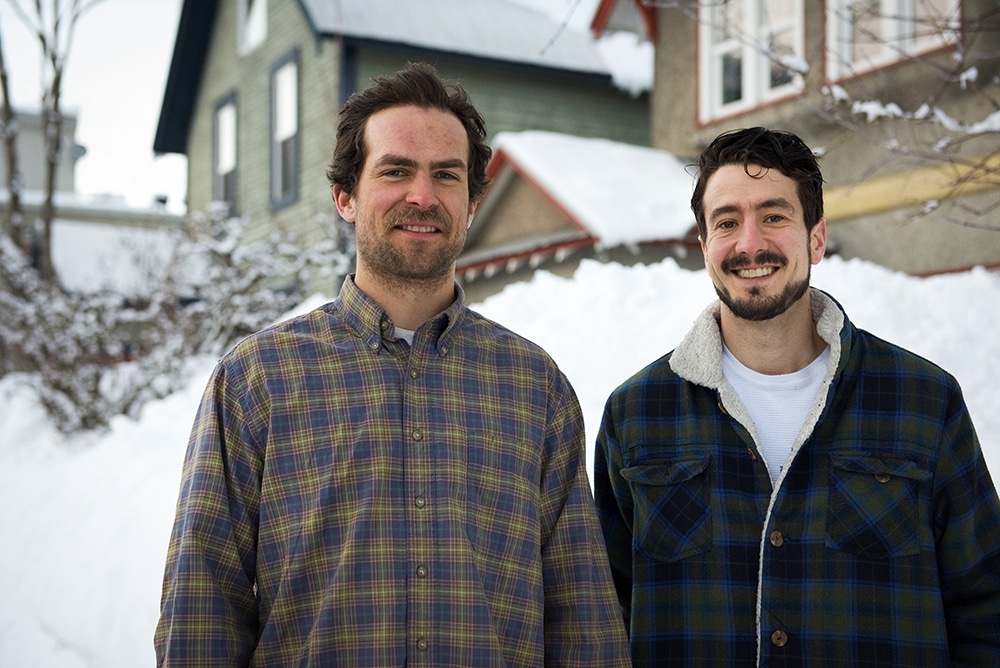
A Revelstoke-based housing company is receiving $480,000 from the provincial government as part of the CleanBC Building Innovation (CBBI) fund.
Adaptive Homes is receiving the funding to advance their manufacturing line for the prefabricated modular home plant. The money will reduce building costs on low-embodied carbon homes.
See our feature on Adaptive Homes from the January 2020 issue of Revelstoke Mountaineer Magazine here:
https://www.revelstokemountaineer.com/development/adapting-to-change/
The CBBI has aims to support low-carbon, energy-efficient building practices and technologies. So far, the initiative has distributed over $9 million in funding since 2019.
There are three different streams of funding for the CBBI: research, commercialization and demonstration. Each stream can earn up to $300,000, $250,000 and $500,000 respectively.
New Builders: Emerging contractors talk about the future of the Revelstoke building sector
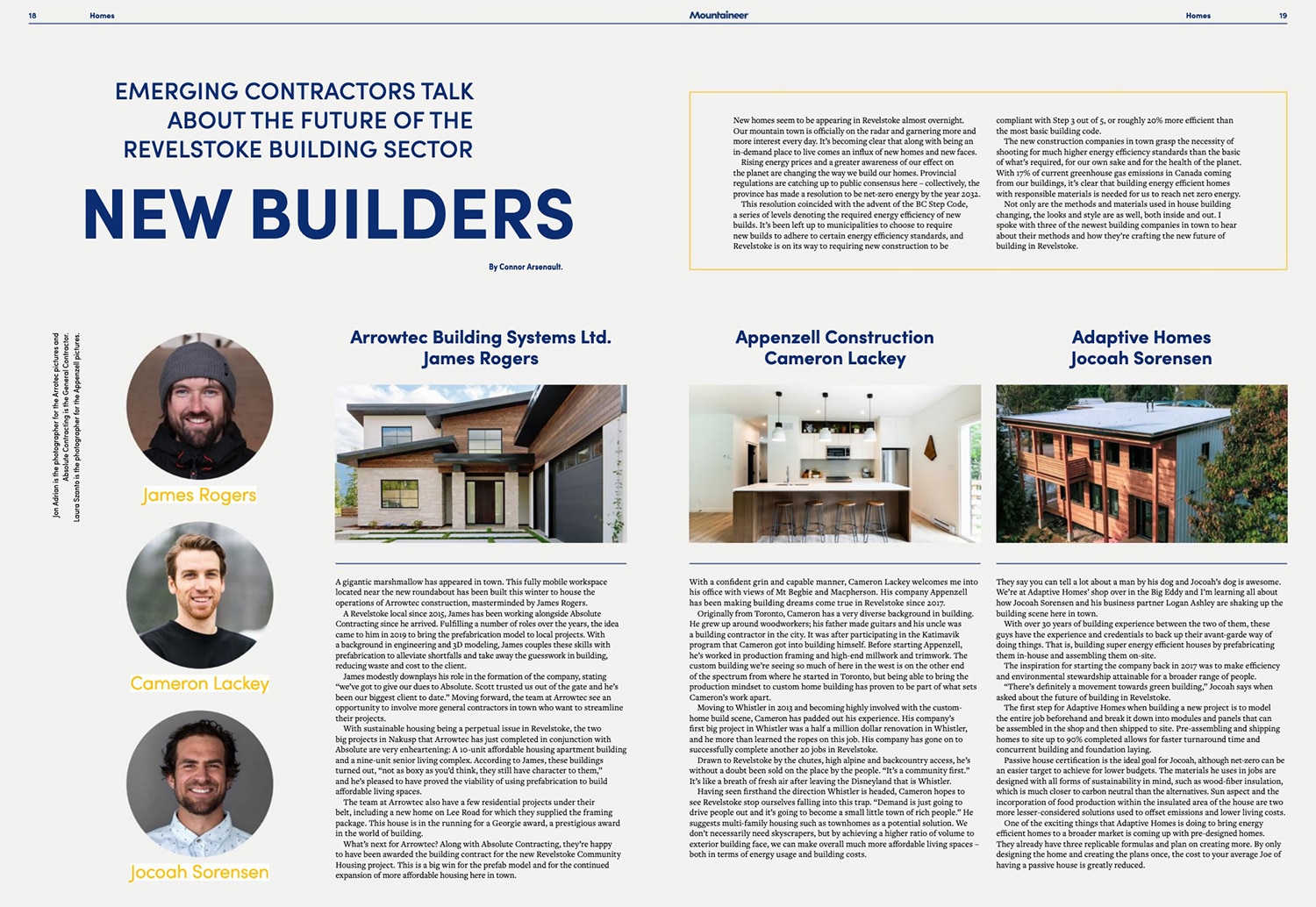
From the pages: Our feature on new builders in the Revelstoke market from the April/May issue of Revelstoke Mountaineer Magazine.
This story first appeared in the April/May 2021 print edition of Revelstoke Mountaineer Magazine.
By Connor Arsenault
They say you can tell a lot about a man by his dog and Jocoah’s dog is awesome. We’re at Adaptive Homes’ shop over in the Big Eddy and I’m learning all about how Jocoah Sorensen and his business partner Logan Ashley are shaking up the building scene here in town.
With over 31 years of building experience between the two of them, these guys have the experience and credentials to back up their avant-garde way of doing things. That is, building super energy-efficient houses by prefabricating them in-house and assembling them onsite.
Finding inspiration for a greener future
The inspiration for starting the company back in 2017 was to make efficiency and environmental stewardship attainable for a broader range of people.
“There’s definitely a movement towards green building,” Jocoah says when asked about the future of building in Revelstoke.
The first step for Adaptive Homes when building a new project is to model the entire job beforehand and break it down into modules and panels that can be assembled in the shop and then shipped to site. Pre-assembling and shipping homes to site up to 90% completed allows for faster turnaround time and concurrent building and foundation laying.
From a dream to a low-carbon reality
Passive house certification is the ideal goal for Jocoah, although net-zero can be an easier target to achieve for lower budgets. The materials he uses in jobs are designed with all forms of sustainability in mind, such as wood-fiber insulation, which is much closer to carbon-neutral than the alternatives. Sun aspect and the incorporation of food production within the insulated area of the house are two more lesser-considered solutions used to offset emissions and lower living costs.
One of the exciting things that Adaptive Homes is doing to bring energy-efficient homes to a broader market is coming up with pre-designed homes. They already have three replicable formulas and plan on creating more. By only designing the home and creating the plans once, the cost to your average Joe of having a passive house is greatly reduced.
What did you think of this story?
Your feedback after we publish a story helps ensure we're always improving our reporting to better serve you
Related Articles
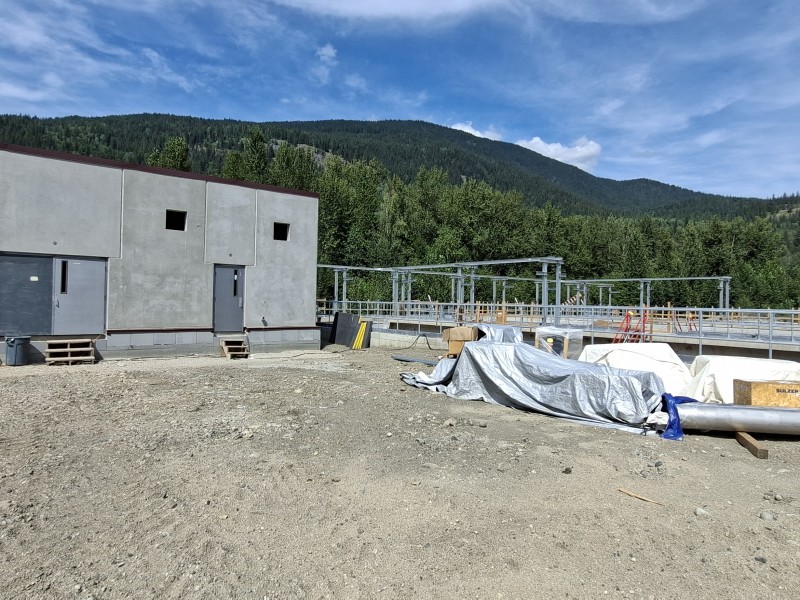
Wastewater treatment plant upgrades set to future-proof facility for 2 decades
Plans to include Big Eddy residents and businesses into the updated facility still in the early stages, city director of engineering says.
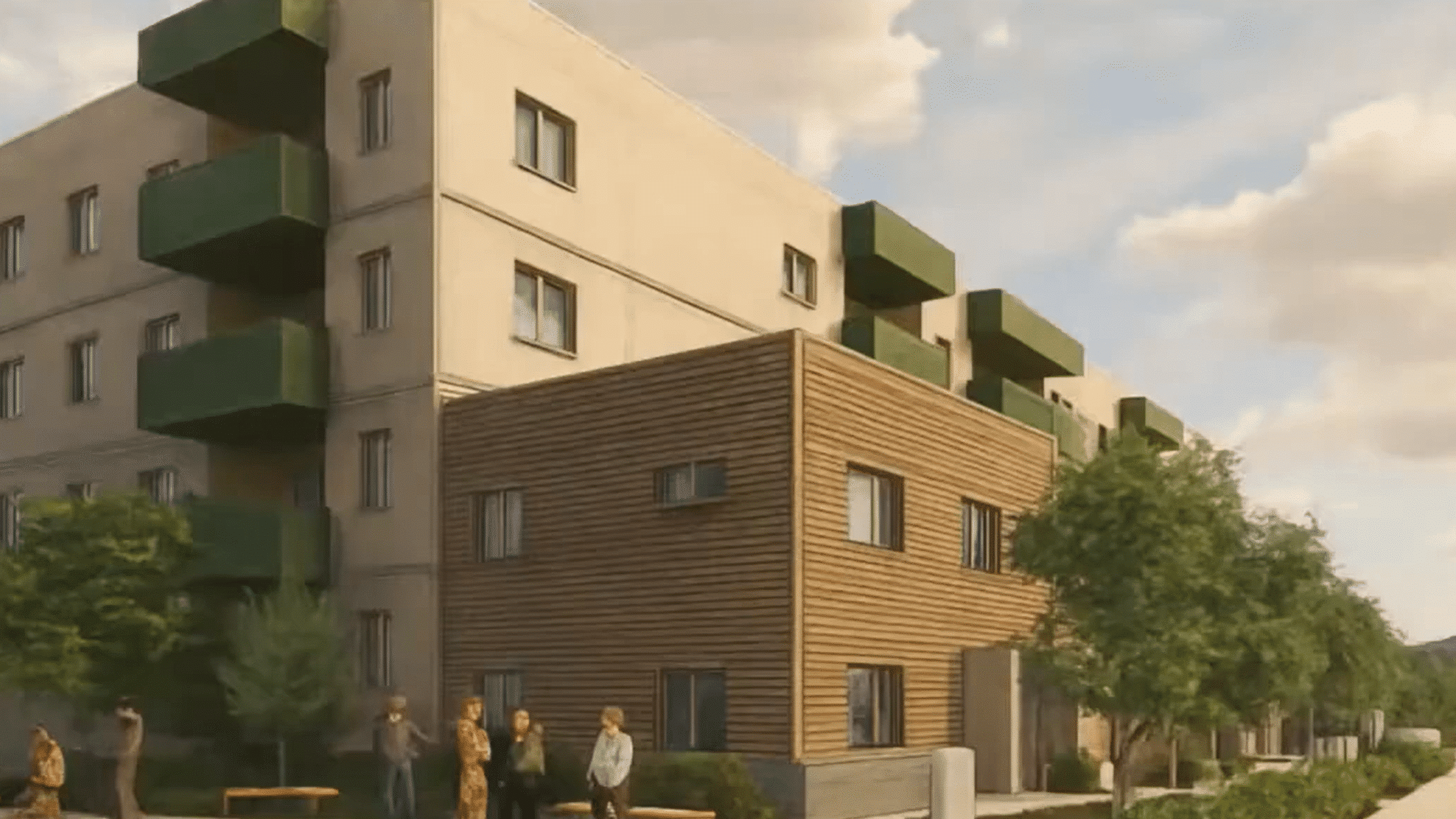
Revelstoke granted $200,000 to rework development guidelines
Clarifying building requirements is key in speeding up development approvals, director of development services says.
More childcare spaces needed as families face estimated $35,000 income impact annually
Revelstoke Child Care Society still has over 160 families waitlisted as plans to expand into Okanagan College building take shape.