
Invaders are second biggest threat to Revelstoke area biodiversity
Alien plants and animals calling Revelstoke home at an alarming rate, and human activity is their primary method of spread. Learn what you can do to help.
By Laura Gaster, Columbia Shuswap Invasive Species Society
What is the number one way invasive plants and animals are introduced into British Columbia? If you guessed people, you are correct.
Plants and animals have a natural extension range, but the rate and scale of which species can spread by human interaction tends to be much greater than would occur naturally. Pathways of introduction and movement of invasive species includes buying, selling, and trading invasive plants in the horticulture industry, releasing pets into the wild where they can become invasive, and stow-away species, such as the zebra mussel, attaching onto propellers of watercraft.
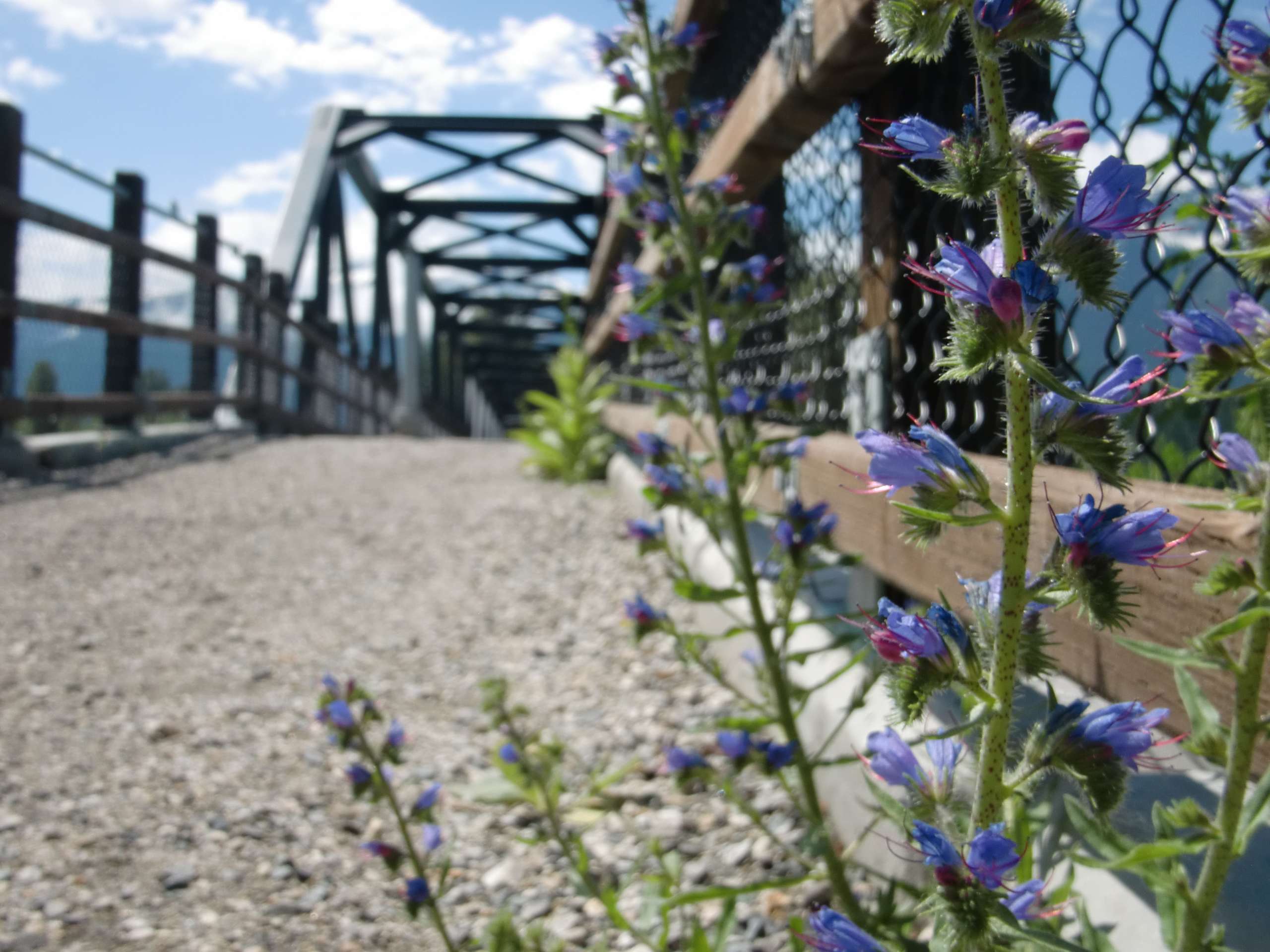
Invasive species rank only second to habitat destruction as a main threat to biodiversity, and here in Revelstoke we are not exempt. Many invasive plants such as knapweed and blueweed take over native ecosystems resulting in environmental degradation including habitat loss for native plants and animals.
Living in the Columbia Mountains, we are fortunate to be a part of the world’s only temperate inland rainforest, home to old growth forests and many unique vegetation communities. If invasive species continue to spread, we may be at risk of losing this important ecosystem forever.

Can you spot the invasive? The oxeye daisy can take over native ecosystems and can often be found in popular seed mixes. Photo: Columbia Shuswap Invasive Species Society
One doesn’t have to go far to find invasives growing locally. At least ten priority invasive plant species can be found by walking on the Revelstoke Greenbelt and homeowners are almost guaranteed to find invasives growing in their lawns and gardens.
One of the biggest problem species in Revelstoke backyards is Bohemian Knotweed or ‘False Bamboo’ which can grow through concrete and can reproduce from any plant fragment.
The problem doesn’t stop at plants, watch out for animal invaders as well. Zebra and quagga mussels are a fresh water mussel native to Russia. They were introduced to the Great Lakes in the 1980’s and have spread rapidly since. We are fortunate to not yet have this species in British Columbia, but a rise in boat traffic is drastically increasing our chances of bringing this alien invader to our waters.
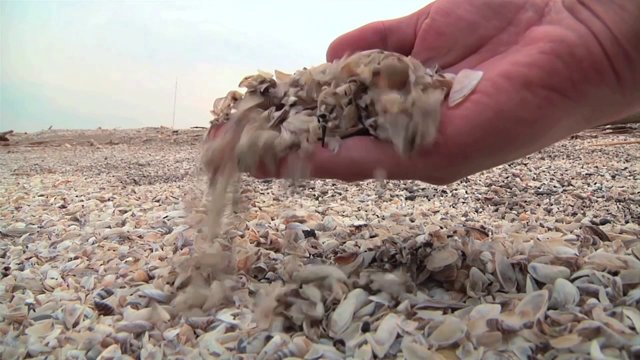
Invasive freshwater mussel shells coat the beach. They haven’t been found in the Arrow Lakes yet, and require continued effort to keep them out. Photo: Screenshot from Mussel Threat — Protecting B.C.’s Freshwater
Prevention is key when working with invasive species and there are many ways you can help. Learn to identify native and invasive plants, get involved with community weed pulls, be Plant Wise and choose only native plants to grow in your garden and remember to Clean, Drain and Dry your boat before transporting to a new water body.
For more information visit our website or find us on Facebook and for an in depth look at the impacts of zebra and quagga mussels watch Mussel Threat — Protecting B.C.’s Freshwater. Watch it here:
Mussel Threat – Protecting BC’s Freshwater from Protect Our Freshwater on Vimeo.
The Columbia Shuswap Invasive Species Society is a non-profit organization dedicated to the prevention, management and reduction of invasive species in the Salmon Arm, Revelstoke and Golden areas. We work closely with public and private land and aquatic managers to provide education and outreach for invasive species issues and further, to inventory and map the spread of invasive species across our region.
For more information, contact us at: [email protected] or visit our website: www.columbiashuswapinvasives.org
What did you think of this story?
Your feedback after we publish a story helps ensure we're always improving our reporting to better serve you
Related Articles
Wastewater treatment plant upgrades set to future-proof facility for 2 decades
Plans to include Big Eddy residents and businesses into the updated facility still in the early stages, city director of engineering says.
Revelstoke granted $200,000 to rework development guidelines
Clarifying building requirements is key in speeding up development approvals, director of development services says.
More childcare spaces needed as families face estimated $35,000 income impact annually
Revelstoke Child Care Society still has over 160 families waitlisted as plans to expand into Okanagan College building take shape.