
The devastating effects of climate change are becoming more evident each year, and with wildfires occurring earlier and becoming more extreme, the summer of 2023 took an emotional toll on B.C. wildland firefighter crews and the communities impacted. This year seems to be no different, as the unseasonably dry spring has already led to 116 active wildfires in the province, two of which were out of control near Quesnel and Dawson Creek, according to the latest updates of the BC Wildfire Dashboard on April 25.
Understanding the job behind the uniform
When it comes to wildfire management, the province can count on a team of highly skilled individuals trained to handle a range of situations. In British Columbia, there are three official types of wildland firefighters, each with a crucial role to play. At the highest level of training are the Type 1 firefighters, exclusively employed by the BC Wildfire Service (BCWS). They are certified and trained to tackle the most dangerous and high-risk incidents. Type 2 and Type 3 are hired by contract companies and are trained for lower-risk incidents.
On the field, they operate in distinct crews. The initial attack crews are quick-response teams of three to four people that can control up to 94 per cent of new wildfires. They act as the first line of defence. Unit crews are larger in size and more specialized in sustained attack operations like installing hose and pump lines, performing burn operations and removing fuel using chainsaws. Specific crews like Rapattack and Paratack operate from the air and can be deployed to tackle wildfires in inaccessible areas or where the terrain is too challenging for ground crews.
As rewarding and inspirational as it might be, becoming a wildland firefighter is no walk in the park. It requires not only resilience, strength and unwavering determination, but to pass a rigorous hiring and training process that tests the mental and physical aptitudes of recruits.
Dive into the BC Wildfire Service training program
BCWS training is divided into several modules, each designed to equip recruits with specific skills and knowledge required for the job. It covers everything from fire behaviour and safety to equipment operation and emergency response procedures. The recruits are also put through strict physical and mental tests to ensure they are up to the firefighting task.
Lisa Takkinen, a former local initial attack firefighter for three years – two in Revelstoke – explained that training typically begins with a “soft start” in February or March, depending on winter activity. While new hires officially start in May, employees use this time to get organized, refresh their minds with gear and exercise.
“Our training scenarios include simulating fake fires to troubleshooting under pressure, like purposely breaking something and having to figure it out alone,” Takkinen explained. “We also test water pumps and prepare trucks for deployment between our crew.”
Firefighting is a physically demanding job, often requiring long hours in harsh conditions. Therefore, fitness is expected to be maintained at a high level. Takkinen shared that most wildland firefighters try to maintain a good fitness routine during winter, so it is easier to get back into training come spring.
Aspiring firefighters in B.C. are gearing up for a critical time this spring. After the interview phase in April, potential new recruits undergo the WFX-Fit test, a pre-employment fitness standard completed as a timed circuit. Top-scoring applicants are invited to a series of online courses followed by the New Recruit Boot Camp (NRBC), based on the crew member vacancy.
“At NRBC, we prioritize educating recruits about the risks and hazards inherent in the job, both physically and mentally,” Southeast Fire Centre’s Information Officer Kim Wright explained. “Multiple boot camps are offered in Merritt and Prince George; they range from six to eight days and run from mid-April to mid-May.”

NRBC provides a sneak peek into firefighters’ daily lives, preparing for what lies ahead. After this boot camp, successful candidates will be offered a position on one of the fire crews in the province. Wright explained that a first-year wildland firefighter can expect to work until the end of October, with the chance of being offered an extension depending on fire conditions and activity.
After moving to their base, newly hired recruits take a strict fitness test to ensure they are ready for the job’s physical demands.
When asked if changes have been implemented in response to the challenging 2023 season, Wright told the Mountaineer that BCWS has introduced a Danger Tree Awareness course to the NRBC.
“Throughout the week, we emphasize a culture of safety, which includes empowering recruits to refuse unsafe work, speak up if they’re uncertain and focus on building trust and teamwork.”
Ongoing support for recruits and employees is also provided through proactive mental health programs like Resilient Minds and the Occupational Awareness Program.
“We foster a culture of peer support and encourage open discussions about mental health, creating a safe space for vulnerability rather than promoting a stoic approach,” she added. “We also offer mental health support services to all BCWS employees and their families, including a confidential 24/7 mental health support line.”
This year, the province received the highest number of applicants in the past 10 years for the position of wildland firefighters, with over 2,000 applicants.
“It is double the number of applicants received ahead of the 2023 wildfire season. On average, there are about 500 – 800 applicants each year,” Wright said.
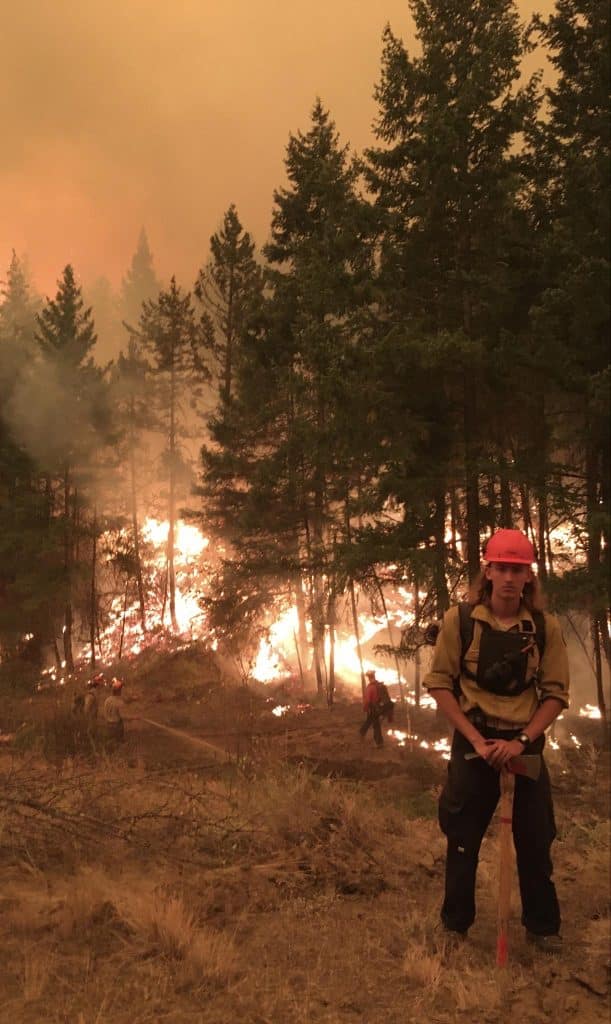
Insights from a contract wildland firefighter
In addition to its own crew, the BC Wildfire Service relies on the help of thousands of contract wildland firefighters each year. Two of them, Samuel Coeuret and Joshua Day, both 26 years old, were new to the job last summer. They worked as Type 3 wildland firefighters without any prior experience. The role of a Type 3 firefighter is to assist in mop-up and patrol operations once wildfires have been contained.
Coeuret and Day worked on the Cranbrook St Mary’s wildfire, employed by a contractor based in Nelson. Day was also deployed by local contract company Nakimu Ventures to Twin Lake’s wildfire in Penticton and the McDougall Creek wildfire in West Kelowna. Despite receiving only one day of learning in a classroom and one day of practical training, the two young firefighters were eager to help, undeterred by the short training session.
“It may seem light, but I had no clue what to expect at the time,” Day shared.
Once on the field, Coeuret and Day’s primary focus was identifying and eliminating hot spots that could cause the fire to reignite. Their crew leader gave them daily briefings, outlining the day’s objectives. Coeuret emphasized the importance of open communication.
“We need to think as a team, but it is equally important to feel comfortable to speak up when necessary,” Day said. “I was never alone; we were doing the buddy system, and when we encountered uncommon situations, we were given instructions.”
Despite the job not being guaranteed, Coeuret and Day both assured they loved the experience. They met caring, trustworthy people who shared the same interests and enjoyed the daily routine of sleeping outdoors and feeling useful every single day. Like many others this season, they hope to be involved again.
What did you think of this story?
Your feedback after we publish a story helps ensure we're always improving our reporting to better serve you