
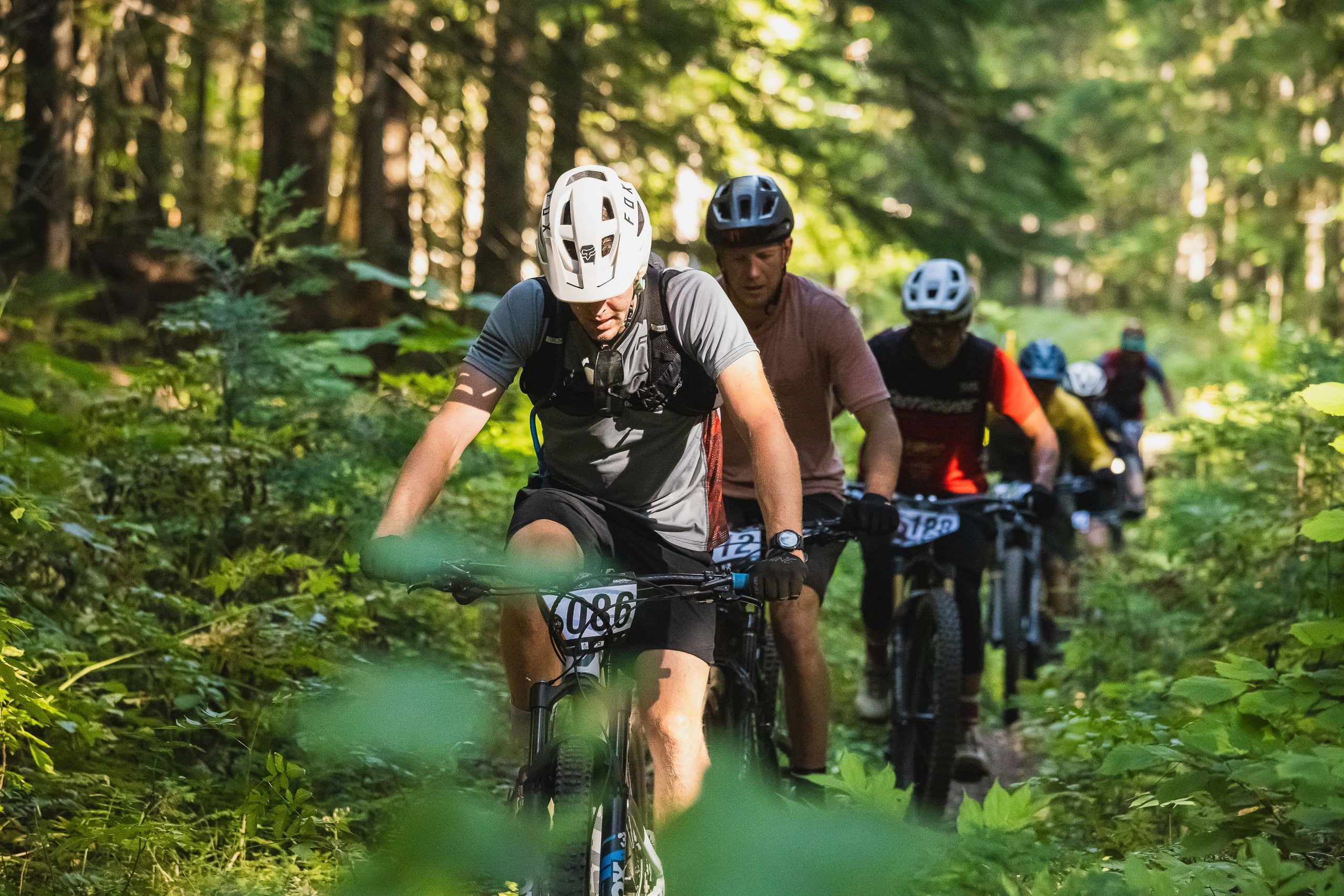
Spring snowmelt reveals a spanning network of trails around Revelstoke, etched down meandering hills and carved into steeper climbs. Some were previously logging roads, prone to heavy vehicles rumbling through and packing down the soil. Others are abandoned animal trails, cutting through bushes and weaving through trees. All of them are now familiar with rubber treads hugging tight to their corners and racing through any hint of a straight line.
Revelstoke’s mountain biking trail system has found ways to challenge riders with all types of terrain. From Sunnyside’s more windy profile that gives bikers a jump start to Revelstoke’s biking terrain, to Frisby Ridge’s changing trail conditions that challenge those looking for peak thrills.
Mountain bike trails don’t naturally maintain themselves, and trails as used and beloved as these need frequent maintenance. Enter Dig Days, hosted by Revelstoke Cycling Association (RCA) and sponsored by local bike stores such as Cycle Logic, Dig Days bring riders and volunteers together to give one trail some needed attention. On Saturday, May 11, volunteers gathered to give Sunnyside’s trails the works.
“Sunnyside is one of those first trails that opens up,” Jake Stanfield, RCA director of events and Cycle Logic store manager told the Mountaineer. “It gets a lot of sunlight, it gets rid of snow faster, so it sees a lot of usage in a year.”
Shoring up the trail for use, clearing debris, recarving out water pathways and maybe altering routes after a previous season highlighted obstacles is all part of the focus on Dig Days.
Volunteers gather to collect tools, a collection of rakes, shovels, picks and buckets before making their way up the trail. More knowledgeable volunteers point out how to spot the path water naturally takes through the trails, and how to carve out drainage spots to keep puddles from collecting along the trail.
Rakes pull plant matter and loose rocks, dragging them to the sides of the trail and over the edges, creating one more obstacle for water, oftentimes absorbing and diverting the extra moisture away from the paths.
“You’re fighting erosion,” Stanfield said. “Whether that’s erosion from water, snowmelt, wind or trail usage. Our focus on Dig Days is to mitigate that as much as possible.”
Rocks that once shaped the trails are now hazards, either catching tires and ankles with sharp edges or forcing riders to the sides of trails to eat away at the mulch used to soak up excess moisture. Volunteers work to dig out the problem stones, wedging shovels and picks underneath in an attempt to lever small boulders out of the dirt and down into the trees.
“It’s either we take the stone out and rebuild the trail, or we try and build around it but then it appears again this season or next,” Stanfield explained.
Rebuilding means collecting previously discarded smaller stones and fitting them into place to fill the gap left as much as possible before pulling dirt from excess areas and packing it in. A general dig day revolves around reusing materials pulled from other spots, an effort to not take from the environment.
“We’re sharing these trails with hikers, with different bikers. Some trails in B.C. you’re sharing with horse riders,” Stanfield said. “That’s a lot of usage, and if you keep pulling new stuff in instead of reusing what’s available, we’re going to lose these spaces.”

Trail users who volunteer for Dig Days not only are able to care for the trails they use, but they bring a knowledge on how they’re using the trails and what improvements are needed.
“Everyone gets to add their own flair,” Stanfield said. “There’s 1,000 ways to ride one trail, and each individual rider is going to ride that spot slightly differently. I think that’s a really cool thing, to be able to add your own style and personality.”
It takes a flair of creativity to deal with some obstacles that can’t neatly be dug out. Sunnyside, along with many of the trails around Revelstoke, are laced through the region’s heavily treed areas. Roots aren’t an obstacle one pulls out and fills in with loose stones.
Instead, volunteers collaborate to build bridges, ramps, or even just a leveled pathway over exposed roots. Bikers and runners alike comment on how Revelstoke’s recent winter had just enough snow to uncover a root that had been on many radars last summer.
Many hands work to find the right stones to fit together and the right amount of soil to fill in the gaps and keep everything from rocking as first a set of tires and then a pair of running shoes test the workmanship out over and over again before declaring the job well done.
“There’s so much value to coming out and putting in what I call your sweat tax,” Stanfield said when asked what brings volunteers out for Dig Days. RCA and sponsoring businesses work to provide some prizes and food for volunteers afterwards, but Stanfield stressed that Dig Days and other volunteer opportunities are vital to keeping RCA trails and the general biking community in Revelstoke in its best shape.
“You come out, you connect with the community, you get to see the work that goes into the trails we love. That’s incredibly valuable.”
Dig Days also offer the chance for RCA to connect with other trail users who might not have connected with the local biking association.
“More people on the trails, on bikes and in the forest is beneficial,” Stanfield said. “Not just for RCA, but for the whole community in general, no matter how they go about accessing biking or hiking.”
Dig Days operate throughout the summer season and details are announced via RCM social media channels and on their website. Volunteers are required to sign waivers before joining the dig, and all tools are provided.
What did you think of this story?
Your feedback after we publish a story helps ensure we're always improving our reporting to better serve you